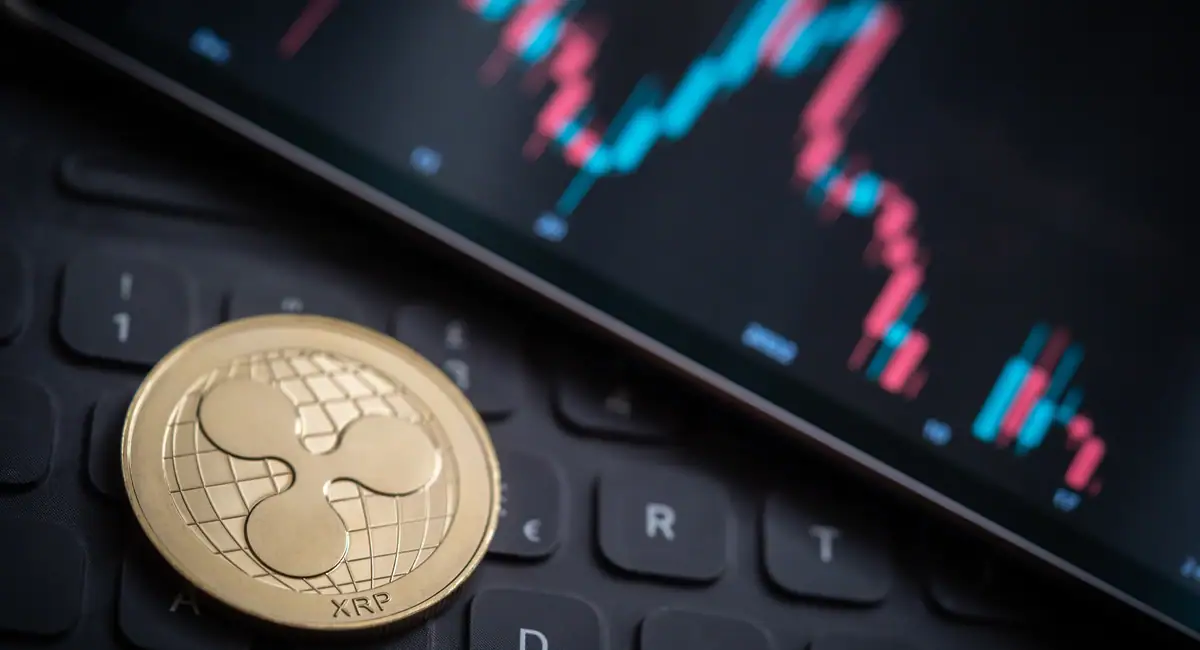
XRP has established itself as the third-largest cryptocurrency globally by market capitalization, backed by a uniquely clarified legal status following years of regulatory scrutiny in the United States. Developed to facilitate fast, low-cost cross-border payments, the digital asset operates on the XRP Ledger, a decentralized blockchain technology distinct from the proof-of-work mechanisms used by older networks like Bitcoin.
For investors, developers, and financial institutions navigating the digital asset economy, understanding how XRP functions requires examining its underlying technology, historical regulatory battles, and current market standing. Unlike many altcoins that face ongoing uncertainty regarding whether they constitute unregistered securities, XRP occupies a clearer compliance landscape following major court rulings involving creator firm Ripple Labs and the U.S. Securities and Exchange Commission (SEC).
As digital asset adoption accelerates globally, platforms across Europe and international markets feature various channels for purchasing and trading XRP. However, evaluating the asset demands a clear-eyed look at both its technological efficiency and the inherent volatility common across the cryptocurrency sector.
How XRP and the XRP Ledger Function
XRP serves as the native digital asset of the XRP Ledger (XRPL), an open-source, public blockchain launched in 2012 by its original developers, including Jed McCaleb, Arthur Britto, and David Schwartz. Unlike Bitcoin, which relies on energy-intensive mining to validate transactions, the XRPL utilizes a unique consensus protocol known as the XRP Ledger Consensus Protocol. Independent validating servers reach agreement on transaction orders every three to five seconds, allowing the network to process roughly 1,500 transactions per second with minimal fees.
The primary use case for XRP is bridging different fiat currencies during international money transfers. Traditional cross-border payments often rely on legacy messaging systems like SWIFT, which can take days and incur high conversion costs through correspondent banking networks. Ripple developed products such as On-Demand Liquidity (ODL)—now integrated into broader Ripple Payments offerings—to utilize XRP as an intermediate currency. Financial institutions can hold local currency, convert it instantly to XRP to cross borders, and convert it into the destination fiat currency within seconds without pre-funding accounts in destination countries.
Total supply is fixed at 100 billion tokens, with a significant portion initially placed in cryptographic escrow by Ripple to ensure predictable market release over time. Transaction fees on the network are burned rather than paid to validators, a mechanism designed to prevent spam attacks and gradually reduce the total circulating supply.
The Regulatory Landscape and Legal Clarity
The defining characteristic separating XRP from many competing altcoins is its legal status in the United States. In December 2020, the SEC filed a lawsuit against Ripple Labs and its executives, Brad Garlinghouse and Chris Larsen, alleging that the company raised over $1.3 billion through an unregistered, ongoing digital asset securities offering.
The multi-year legal battle culminated in landmark rulings by U.S. District Judge Analisa Torres of the Southern District of New York. In July 2023, the court ruled that programmatic sales of XRP on digital asset exchanges did not constitute securities offerings because institutional buyers and retail investors purchasing on secondary markets had no reasonable expectation of profit derived from the managerial efforts of Ripple. Although the court found that certain direct institutional sales of XRP to hedge funds and sophisticated buyers violated federal securities laws, the overarching clarity regarding exchange trading established XRP as distinct from tokens sold purely as investment contracts.
This judicial distinction provided market participants with a level of regulatory predictability absent for many other cryptocurrencies. Consequently, major financial platforms re-listed the asset, and institutional interest gradually stabilized, cementing its position near the top of global cryptocurrency rankings by market capitalization.
Chances, Risks, and Market Opportunities
Evaluating XRP involves weighing substantial growth opportunities against clear financial risks. On the opportunity side, the asset benefits from established partnerships with international banks, payment providers, and remittance firms seeking faster settlement times. Its speed, low transaction costs, and environment-friendly consensus mechanism make it attractive for enterprise-grade financial applications. Furthermore, ongoing developments surrounding tokenization of real-world assets (RWAs) and decentralized finance (DeFi) capabilities on the XRPL expand its potential utility beyond simple currency exchange.
Conversely, significant risks remain. Cryptocurrency markets are notoriously volatile, and XRP prices fluctuate based on broader macroeconomic trends, regulatory shifts, and Bitcoin’s market movements. While its U.S. legal status is largely clarified, global regulatory frameworks continue to evolve, and future compliance requirements could impact operations. Additionally, competition in the cross-border payment sector is intensifying, with central bank digital currencies (CBDCs) and competing blockchain networks vying for the same institutional clients.
For individuals looking to acquire XRP, purchasing options vary by jurisdiction. Regulated centralized cryptocurrency exchanges—such as Coinbase, Binance, Kraken, and European platforms like Bitpanda or trade-focused portals analyzed by financial information services like deal-monitoring sites—allow users to buy XRP using fiat currencies via bank transfers, credit cards, or payment processors. Investors typically store purchased assets in hardware wallets for enhanced security or leave them on exchanges subject to custodial policies.
As the digital asset sector moves toward broader institutional integration, market participants continue to monitor upcoming regulatory filings and technological upgrades to the XRP Ledger, such as native smart contract implementations and sidechain integrations. Observers should consult official corporate updates from Ripple and filings via the U.S. District Court for the Southern District of New York for verified developments regarding any remaining legal proceedings or appellate reviews.
Keep reading