Dr. Helena Fischer – Editor, Health
World Today Journal
Berlin, Germany
April 5, 2025
The convergence of artificial intelligence, healthcare delivery, and blockchain technology continues to generate significant interest among technologists, clinicians, and policymakers worldwide. One project drawing attention in this space is the XRP Healthcare ecosystem, which positions itself as a dual-asset system designed to incentivize real-world health engagement through verifiable user activity. At its core, the initiative seeks to move beyond speculative models by tying digital rewards directly to measurable interactions with AI-powered health tools.
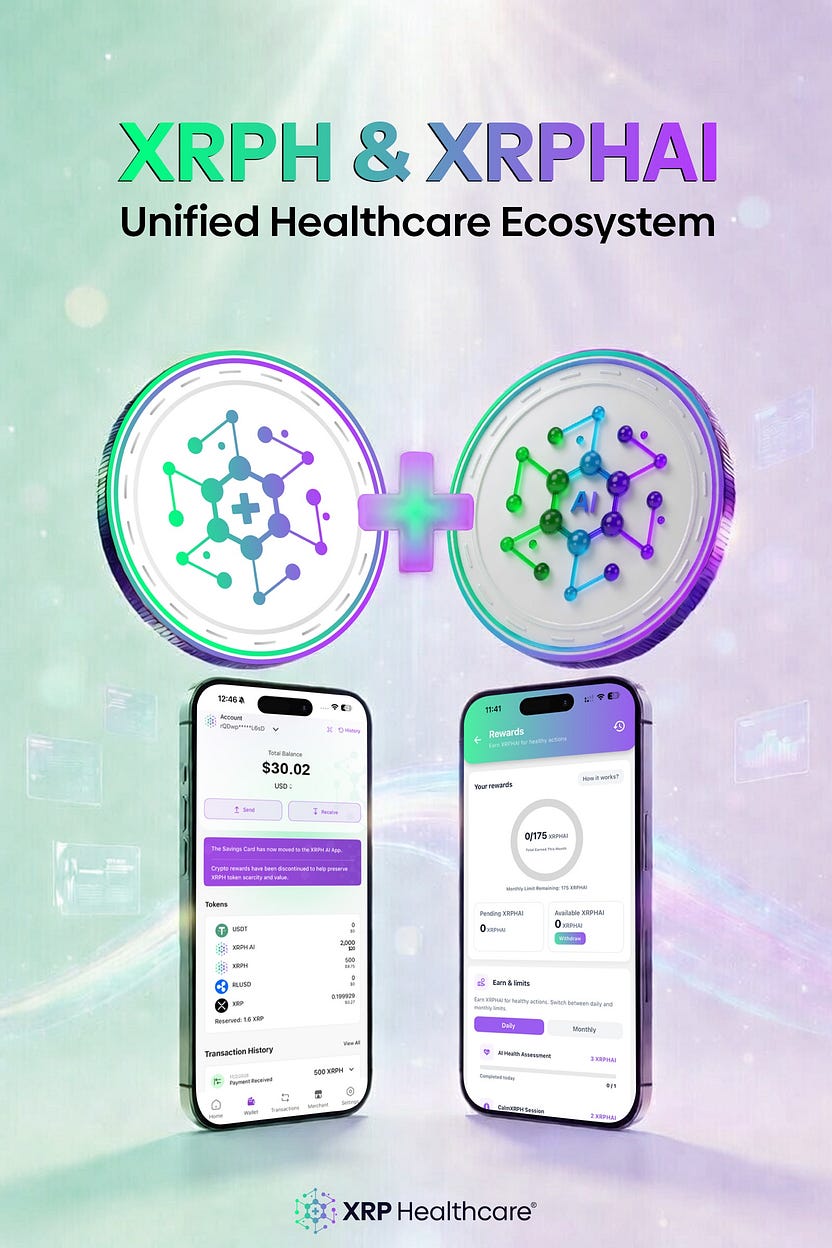
Central to this approach are two distinct but interoperable tokens: XRPH and XRPHAI. While XRPHAI functions as the utility token powering in-app rewards for specific health-related actions, XRPH remains foundational to the ecosystem, offering enhanced benefits and tiered access for holders. This structure aims to avoid fragmentation by ensuring both assets operate within a unified framework where value accrues through participation rather than mere possession. Understanding how this model works—and whether it delivers on its promise of sustainable utility—requires examining the mechanisms, stated goals, and independently verifiable components of the platform.
Understanding the XRP Healthcare Ecosystem
The XRP Healthcare ecosystem centers on the XRPH AI App, a mobile platform integrating several AI-driven health tools designed to encourage consistent user engagement. According to publicly available documentation from the project, these tools include AI-guided health assessments, breath and focus sessions under the CalmXRPH™ brand, vital signs tracking, prescription scanning via optical character recognition (OCR), counterfeit medicine verification, symptom reporting through image capture, and voice-based AI interactions. Each of these activities is intended to be measurable and verifiable within the app, forming the basis for reward distribution.
Rewards are distributed in the form of XRPHAI tokens, which the project describes as specifically engineered for incentivizing real healthcare activity rather than passive holding. The model operates on a simple premise: verified in-app engagement triggers XRPHAI-based rewards. This design attempts to address a common critique of blockchain-based reward systems—that they often prioritize speculation over tangible utility—by requiring actual use of health features to earn tokens.
Meanwhile, XRPH serves a complementary role. Rather than being replaced by XRPHAI, the project maintains that XRPH remains central to the ecosystem’s long-term functionality. Holding XRPH is said to unlock enhanced reward multipliers, increase earning potential, and provide access to higher participation tiers within the platform. This dual-token architecture is presented not as a competitive model but as a synergistic one, where XRPHAI powers the engagement layer and XRPH amplifies benefits for committed users.
The project emphasizes that no separation or replacement exists between the two tokens. Instead, they are framed as interdependent components of a single system designed for scalability and real-world utility. By linking rewards directly to observable actions—such as completing a health assessment or logging vital signs—the ecosystem aims to create a feedback loop where improved health engagement leads to tangible digital incentives, which in turn may encourage sustained participation.
Verified Components and Publicly Available Information
Independent verification of the XRP Healthcare ecosystem’s claims requires careful examination of publicly accessible sources. As of April 2025, the project’s primary online presence includes a website at xrphtoken.com, which hosts detailed explanations of the XRPH AI rewards model, tokenomics, and frequently asked questions. The site outlines the specific activities eligible for rewards and describes how XRPH and XRPHAI interact within the platform.
The CalmXRPH™ feature, referenced in the project’s materials as a guided breath and focus tool, appears to be a branded component of the app aimed at promoting mindfulness and stress reduction—a growing area of interest in digital therapeutics. While the specific efficacy of CalmXRPH™ sessions has not been independently validated in peer-reviewed studies as of this writing, the broader category of app-based mindfulness interventions has shown promise in reducing anxiety and improving focus in clinical trials, according to meta-analyses published in journals such as JAMA Internal Medicine and Nature Digital Medicine.
Other features like prescription scanning (OCR) and counterfeit medicine checks align with emerging uses of smartphone technology in global health. The World Health Organization has highlighted the potential of mobile-based authentication tools to combat substandard and falsified medical products, particularly in low-resource settings. Similarly, symptom tracking and AI-assisted triage tools are being explored by health systems worldwide as part of digital transformation efforts, though their integration with blockchain-based reward mechanisms remains novel.
The project states that all rewarded actions are based on verified activity within the app. However, independent confirmation of the verification mechanisms—such as how AI health assessments are validated or how symptom uploads are authenticated—is not readily available in public audits or third-party reviews as of April 2025. Users and observers are encouraged to consult the project’s FAQ and technical documentation for further detail on data validation processes.
The Role of Blockchain in Health Engagement Models
Blockchain technology has been proposed as a means to enhance transparency, security, and user agency in health data management. In the context of incentive systems, distributed ledgers can potentially enable tamper-proof recording of user achievements and automated reward distribution through smart contracts. The XRP Healthcare ecosystem utilizes the XRP Ledger, known for its low transaction costs and high throughput, which may support frequent micro-rewards for daily health activities.
Nevertheless, experts caution that the integration of blockchain with health applications raises important considerations regarding data privacy, regulatory compliance, and equitable access. The European Union’s General Data Protection Regulation (GDPR) and the U.S. Health Insurance Portability and Accountability Act (HIPAA) impose strict requirements on handling personal health information, any of which could apply depending on how user data is stored, processed, and shared within the ecosystem. As of now, the project has not publicly disclosed formal compliance certifications such as GDPR readiness or HIPAA adherence, though it states that user privacy is a design priority.
From a public health perspective, incentive-based models have shown mixed results in promoting long-term behavior change. Systematic reviews published in The Lancet and PLOS Medicine indicate that while financial or token-based rewards can increase short-term engagement with health apps, sustaining motivation beyond the initial incentive period remains challenging. Successful programs often combine rewards with social support, personalized feedback, and integration into broader care pathways—elements that may or may not be fully present in the current iteration of the XRP Healthcare platform.
Market Context and Industry Trends
The global AI in healthcare market is projected to grow significantly over the coming decade. According to estimates from Grand View Research, the sector was valued at approximately USD 15.1 billion in 2022 and is expected to expand at a compound annual growth rate (CAGR) of 37.5% from 2023 to 2030. This growth is driven by increasing demand for diagnostic assistance, personalized treatment planning, operational efficiency tools, and remote patient monitoring solutions.
Within this landscape, several platforms have experimented with tokenized incentives to promote health behaviors. Examples include MOVE Token, which rewards physical activity, and Sweatcoin, which converts steps into a digital currency redeemable for goods and services. However, few have explicitly combined AI-driven clinical tools with a dual-token structure aimed at both engagement rewards and enhanced access benefits. The XRP Healthcare ecosystem’s approach represents one attempt to differentiate itself in a crowded market by emphasizing verifiable utility over speculative value.
the regulatory status of tokens like XRPH and XRPHAI remains subject to evolving frameworks in various jurisdictions. In the United States, the Securities and Exchange Commission (SEC) has pursued enforcement actions against certain digital assets deemed to be unregistered securities, while other countries such as Switzerland and Singapore have established clearer guidelines for utility tokens under specific conditions. As of April 2025, neither XRPH nor XRPHAI has been formally classified by major financial regulators, and the project advises users to consult local laws regarding token ownership and use.
Practical Considerations for Users
For individuals considering participation in the XRP Healthcare ecosystem, several practical factors merit attention. First, the XRPH AI App is available for download on both iOS and Android platforms through major app stores, though users should verify the authenticity of the application to avoid counterfeit versions. Second, creating an account typically requires basic personal information, and users are advised to review the app’s privacy policy to understand how their health data may be used or shared.
Earning rewards depends on consistent interaction with the app’s features. Activities such as completing a weekly health assessment, logging vital signs daily, or using the prescription scanner when obtaining new medications may contribute to reward accrual. The project indicates that reward amounts vary based on activity type, frequency, and, for XRPH holders, applicable multipliers. However, specific reward rates are not fixed and may be adjusted over time based on ecosystem growth and tokenomics.
Users should also be aware that the value of XRPHAI and XRPH tokens, like all digital assets, can fluctuate significantly. While the project emphasizes utility over price speculation, market forces may still influence token valuation. Participation should be evaluated primarily in terms of access to health tools and potential behavioral benefits, rather than expected financial returns.
Looking Ahead: Developments and Accountability
As of early April 2025, the XRP Healthcare ecosystem has not announced any major partnerships with healthcare providers, insurance companies, or public health agencies that would independently validate its clinical utility or scalability. The project maintains a public roadmap outlining planned enhancements to the AI tools, expansion of reward categories, and potential integration with electronic health record systems in future phases. However, these milestones remain aspirational without verified timelines or third-party audits.
Transparency will be a key factor in assessing the project’s long-term credibility. Independent audits of the smart contracts governing token distribution, published reports on user engagement metrics, and peer-reviewed studies evaluating health outcomes associated with platform use could provide valuable insights into whether the ecosystem delivers on its promise of real-world utility. As of this writing, no such evaluations have been made publicly available.
Individuals interested in tracking official updates can follow the project’s announcements via its website or social media channels. For medical professionals, policymakers, or researchers seeking to evaluate similar models, resources from organizations such as the Digital Medicine Society (DiMe), the World Health Organization’s Digital Health Unit, and peer-reviewed journals like npj Digital Medicine offer frameworks for assessing the safety, efficacy, and ethical implications of AI-powered health incentives.
The intersection of AI, healthcare, and blockchain continues to evolve rapidly. While innovations like the XRP Healthcare ecosystem present intriguing possibilities for aligning individual health actions with digital incentives, realizing their full potential will require rigorous validation, adherence to data protection standards, and demonstrable improvements in population health outcomes. Until such evidence emerges, a cautious yet open-minded approach remains warranted for both users and stakeholders observing this developing space.
We encourage readers to share their experiences or perspectives on AI-driven health platforms in the comments below. Have you used an app that rewards healthy behaviors? What features motivated you to preserve engaging? Your insights help foster a deeper understanding of what works—and what doesn’t—in the pursuit of better health through technology.