South Korea Invests in Future Tech Workforce with Semiconductor Manufacturing Program for High School Students
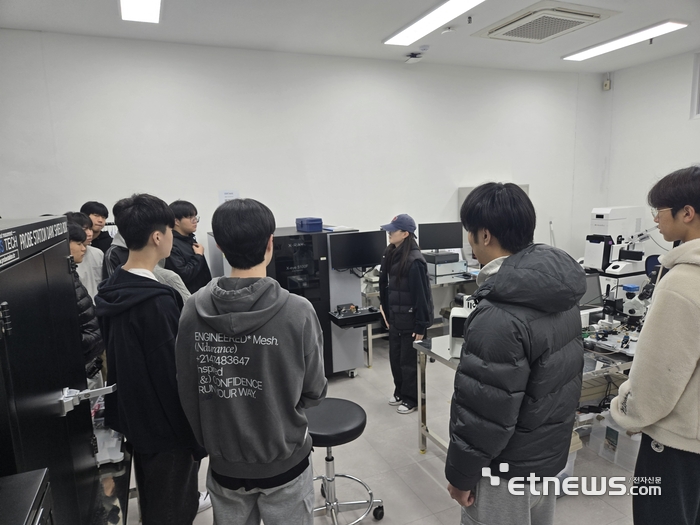
용인, South Korea – In a move to bolster the nation’s semiconductor industry and prepare the next generation of skilled workers, the Yongin Education Support Office has launched a collaborative program with Myongji University offering high school students hands-on experience in semiconductor manufacturing. The initiative, dubbed the ‘Yongin Mirai Shared School’ program, began on March 7, 2026, and will run through June 27, 2026, providing a 48-hour (3-credit) course designed to bridge the gap between academic learning and the demands of a critical industry. This program exemplifies a growing trend of educational institutions partnering with industry leaders to address skills shortages and foster innovation in key technological sectors.
The program specifically targets second-year students from general high schools in the Yongin region, offering a unique opportunity to engage with advanced manufacturing processes typically unavailable within standard school curricula. South Korea is a global leader in semiconductor production, and maintaining that position requires a continuous pipeline of qualified engineers and technicians. According to the Korea Semiconductor Industry Association, the industry faces a significant workforce gap, making initiatives like this crucial for sustained growth. Korea Semiconductor Industry Association
The ‘Yongin Mirai Shared School’ program isn’t simply theoretical; it’s deeply rooted in practical application. Students will benefit from access to Myongji University’s state-of-the-art research infrastructure, including cleanroom facilities, allowing them to participate in real-world semiconductor fabrication processes. This hands-on experience is a key differentiator, providing students with a competitive edge as they consider future career paths. The curriculum focuses on semiconductor process theory alongside practical cleanroom-based exercises, offering a comprehensive understanding of the manufacturing lifecycle. This approach aligns with the broader national strategy to strengthen the semiconductor ecosystem, as outlined in the government’s ‘K-Belt’ initiative, which aims to create a national semiconductor cluster. Visit Korea – K-Belt Initiative
Bridging the Gap Between Education and Industry
The program is structured as part of the Gyeonggi-do Shared School credit recognition program, a key component of South Korea’s high school credit system reform. This allows students to earn academic credit for their participation, further incentivizing engagement and recognizing the value of this specialized training. The initiative directly addresses the evolving needs of the Korean education system, which is increasingly focused on providing students with practical skills and career pathways. The high school credit system reform, implemented in recent years, aims to offer students greater flexibility in their course selection and prepare them for the demands of the 21st-century workforce.
“By connecting regional universities and industrial infrastructure with education, we are actively supporting students in developing the competencies needed in cutting-edge industries and exploring their career options,” stated Cho Young-min, Head of the Yongin Education Support Office. This sentiment underscores the program’s commitment to not only technical skill development but also to fostering informed career choices among students. The program’s emphasis on practical skills and industry relevance is a direct response to employer demands for graduates with readily applicable expertise.
Expanding the Scope of Shared School Programs
The Yongin Education Support Office plans to expand the ‘Yongin Mirai Shared School’ program to include robotics and artificial intelligence (AI) in the coming months, further diversifying the opportunities available to students. This expansion reflects a broader commitment to preparing students for a range of high-growth industries. The office intends to collaborate with various regional institutions and organizations to develop these novel programs, creating a network of shared learning resources. This phased approach allows for careful program development and ensures alignment with industry needs. The growing demand for skilled professionals in AI and robotics underscores the importance of these initiatives.
The success of the semiconductor manufacturing program is expected to serve as a model for future collaborations, demonstrating the effectiveness of linking education directly to industry demands. The program’s emphasis on practical skills and real-world experience is a departure from traditional classroom-based learning, offering students a more engaging and relevant educational experience. This approach is particularly valuable in rapidly evolving fields like semiconductor manufacturing, where theoretical knowledge must be complemented by hands-on expertise.
Looking ahead, the Yongin Education Support Office will continue to seek opportunities to partner with local universities and businesses to expand the range of shared school programs. The goal is to create a comprehensive ecosystem of learning opportunities that prepares students for success in the 21st-century workforce. The office is also exploring the possibility of offering similar programs to students in other school districts within Gyeonggi-do province. This collaborative approach is essential for addressing the growing skills gap and ensuring that South Korea remains a global leader in innovation.
Key Takeaways
- The Yongin Education Support Office and Myongji University have launched a semiconductor manufacturing program for high school students.
- The program provides hands-on experience in semiconductor fabrication using university-level research infrastructure.
- Students earn academic credit through the Gyeonggi-do Shared School program.
- The initiative aims to address the skills gap in the South Korean semiconductor industry and prepare students for future careers.
- Plans are underway to expand the program to include robotics and artificial intelligence.
The next step in this initiative will be the evaluation of the initial program’s impact on student engagement and career aspirations, with results expected in late 2026. We encourage readers to share their thoughts on this innovative approach to workforce development in the comments below.
Worth a look
- How Small-Scale Projects Create Big Global Influence
- Italy Car Market Up 3.9% in July as EV & Plug-in Hybrid Sales Surge Despite Subsidy Drop
- Sony Pictures Updates Box Office Projections for Christopher Nolan Film (newsdirectory3.com)
- Apple AirPods with cameras could launch sooner than expected (archyde.com)