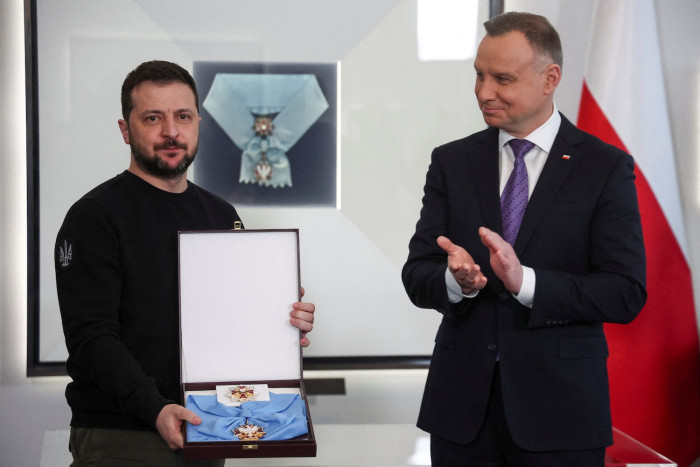
Ukrainian President Volodymyr Zelensky has faced a diplomatic setback following a decision by the head of the Polish Institute of National Remembrance (IPN), Karol Nawrocki, to rescind an honour previously bestowed upon him. The move, centered on deep-seated historical grievances regarding the Volhynia massacres of the 1940s, marks a significant cooling in the bilateral relations between Kyiv and Warsaw.
The dispute, which has escalated throughout 2024, stems from differing interpretations of the mass killings of Poles by the Ukrainian Insurgent Army (UPA) during World War II. According to reports from the Reuters news agency, the Polish state institution officially retracted the “Keeper of Memory” award, citing Zelensky’s perceived failure to adequately address the historical atrocities or facilitate necessary exhumations in Ukraine.
The Context of the Historical Dispute
The core of the friction lies in the events that occurred between 1943 and 1945 in the Volhynia and Eastern Galicia regions. Polish historians and government officials maintain that the UPA carried out a systematic campaign of ethnic cleansing against the Polish population, resulting in the deaths of approximately 100,000 Polish civilians, as documented by the Polish Ministry of Foreign Affairs. While Ukraine has expressed regret for the tragedy, Kyiv often frames the period as part of a broader conflict between the two nations, complicating efforts to reach a shared historical narrative.

Karol Nawrocki, who leads the IPN—the state body tasked with investigating crimes committed against the Polish nation—has been a vocal critic of the current Ukrainian government’s stance on these events. By stripping the president of an award that recognizes efforts to preserve historical memory, the IPN has signaled that the ongoing war with Russia does not grant immunity from historical accountability in the eyes of Polish nationalist and conservative institutions.
Diplomatic Fallout and Kyiv’s Response
Following the announcement from Warsaw, officials in Kyiv have moved to distance themselves from the Polish state honors. According to statements reviewed by international observers, the office of the Ukrainian presidency indicated that President Zelensky would not be seeking to retain distinctions from institutions that have chosen to engage in such public revisions of their past engagement.
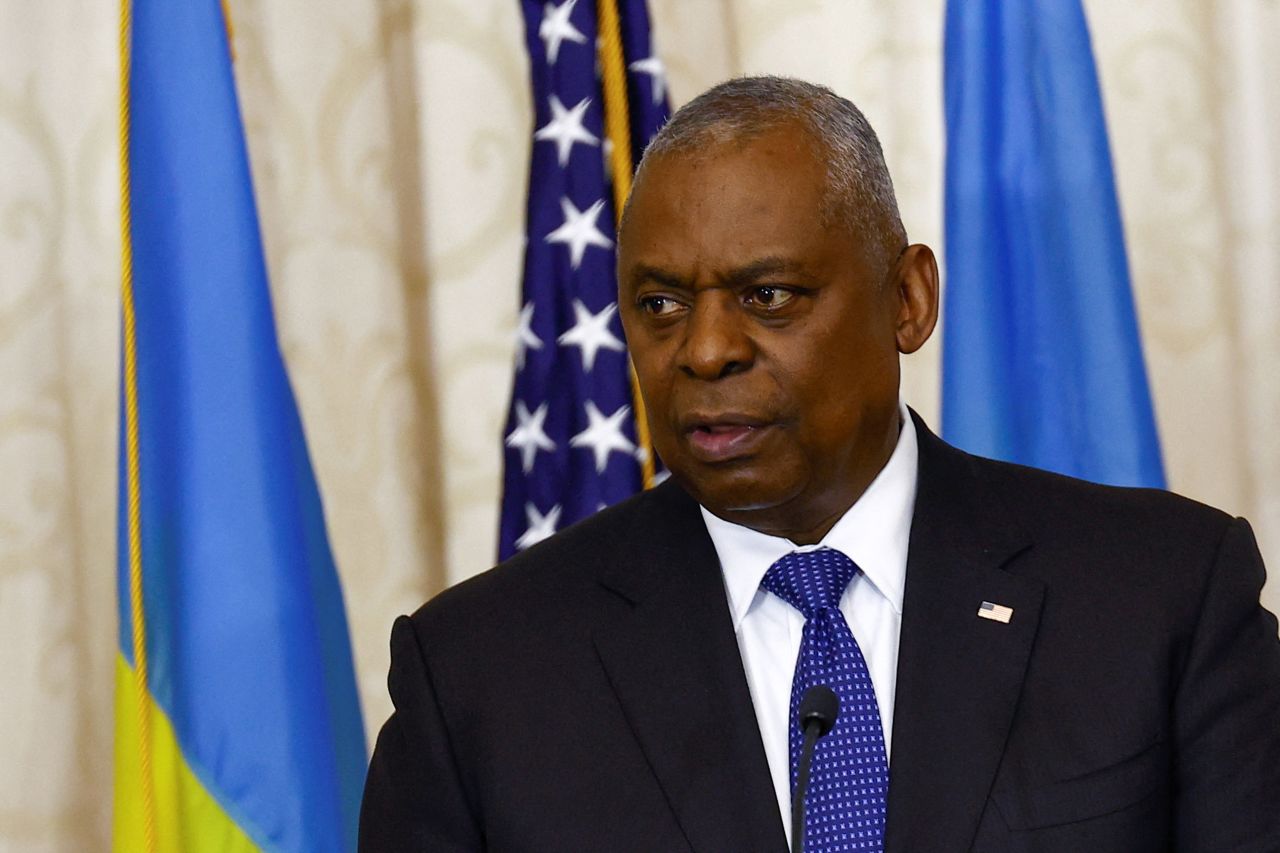
The decision to renounce the award reflects the broader strain on the Kyiv-Warsaw axis, which has served as a critical lifeline for Ukraine since the Russian full-scale invasion began in February 2022. While Poland remains one of Ukraine’s most steadfast military and humanitarian donors, historical disputes continue to act as a recurring friction point. As noted by the Financial Times, these cultural and historical disagreements have occasionally spilled over into trade and border policy, creating challenges for diplomatic cooperation.
Why History Remains a Stumbling Block
The issue of exhumations remains the most practical hurdle in the relationship. Poland has long pushed for the right to conduct formal archaeological searches and burials for victims of the Volhynia massacres. Ukraine, meanwhile, has placed restrictions on these efforts, citing the ongoing war and concerns over the political exploitation of such sites. This impasse has allowed historical trauma to remain a contemporary political issue rather than a resolved historical one.
Observers note that the timing of the award’s withdrawal is significant. With domestic political pressures rising in Poland, state-led institutions like the IPN are increasingly emphasizing national heritage and the protection of historical truth as defined by Warsaw. For the Zelensky administration, the priority remains the mobilization of international support for the front lines, leaving little political capital to navigate the sensitive and often polarizing debates surrounding World War II-era nationalism.
Future Trajectory of Polish-Ukrainian Ties
Despite the high-profile nature of this dispute, analysts suggest it is unlikely to result in a total collapse of security cooperation between the two nations. Poland’s strategic interest in maintaining a sovereign and stable Ukraine as a buffer against Russian aggression remains the primary driver of its foreign policy. However, the revocation of the medal serves as a clear warning that historical grievances will continue to be leveraged in future negotiations.
The next major checkpoint for these relations will likely occur during upcoming sessions of the bilateral commission on historical and educational cooperation. Until a compromise is reached regarding the exhumations and the official recognition of the massacres, the relationship between the two neighbors will likely remain characterized by this uneasy tension between immediate security needs and unresolved historical memory.
We encourage readers to engage with this topic in the comments section below. How do you view the role of historical memory in modern international alliances? Share your perspective with our global community.
Related reading