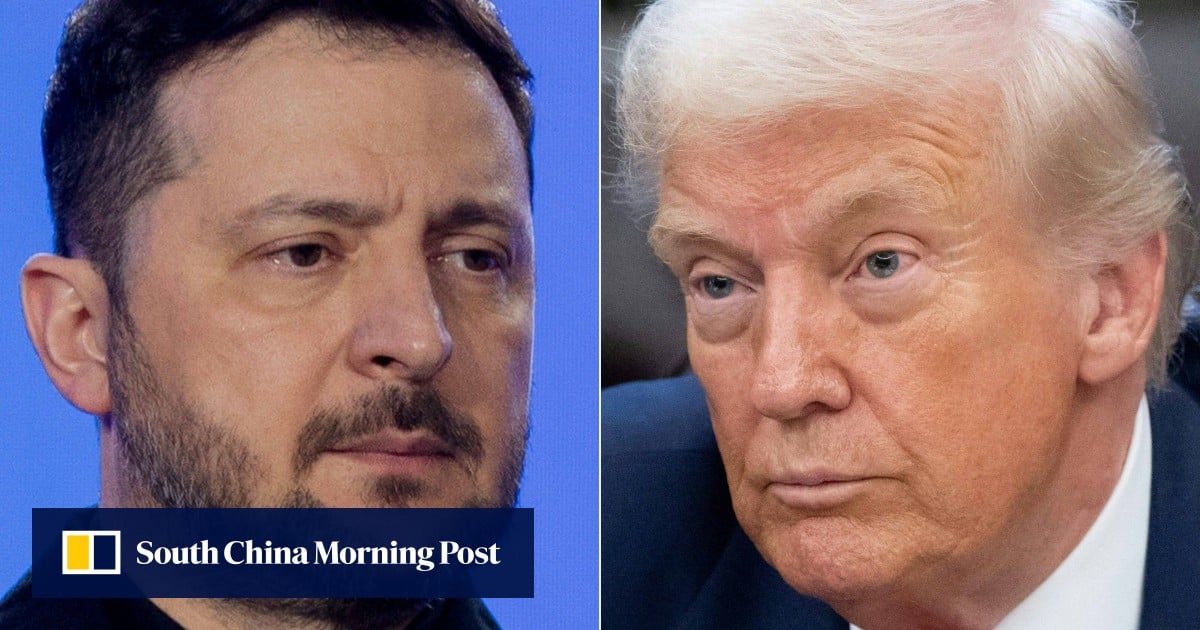
The pursuit of a diplomatic resolution to the ongoing conflict in Ukraine gained momentum this week as Ukrainian President Volodymyr Zelenskyy, and U.S. President Donald Trump held discussions focused on a potential pathway to peace talks with Russia. Zelenskyy indicated that the two leaders agreed on a sequence of events, culminating in a prospective meeting between the leaders of all three nations, a development that signals a renewed, albeit complex, effort to de-escalate the four-year-old war. This comes as negotiations, backed by the United States, have so far yielded limited progress, and as Ukraine continues to grapple with the realities of a protracted conflict.
Zelenskyy revealed details of the conversation on social media, stating that he and Trump concurred that upcoming trilateral negotiations in March should pave the way for a leaders’ summit. “We expect this meeting to create an opportunity to move talks to the leaders’ level. President Trump supports this sequence of steps,” Zelenskyy wrote. He emphasized that direct engagement at the highest level is crucial for resolving the “complex and sensitive issues” that continue to fuel the war. The Ukrainian president’s statement underscores a belief that a face-to-face meeting between himself, Trump, and Russian President Vladimir Putin is the most viable path toward a lasting peace, despite the significant obstacles that remain.
Trump’s Role and Previous Negotiations
This latest development builds upon a series of negotiations spearheaded by former President Trump, even as he campaigns for a return to the White House. While details of those earlier efforts have been closely guarded, they have reportedly focused on potential territorial concessions and security guarantees. According to reporting from the Associated Press, Trump believes both Zelenskyy and Putin “truly wish peace,” and hosted Zelenskyy at his Mar-a-Lago resort in Florida on December 28, 2025, to discuss potential pathways forward. During that meeting, Trump stated that Ukraine and Russia were “closer than ever before” to a peace deal, while also acknowledging the inherent complexities and potential for failure.
Prior to the December meeting, Trump had engaged in discussions with Zelenskyy, with U.S. Negotiators Steve Witkoff and Jared Kushner also participating in key conversations. A phone call on October 6, 2024, saw Zelenskyy thanking Trump for his “active involvement” in the negotiations, as reported by Yahoo News. This ongoing dialogue highlights Trump’s continued interest in brokering a resolution, even as his approach differs significantly from the Biden administration’s strategy of providing substantial military aid to Ukraine and imposing sanctions on Russia.
The Current State of Negotiations and Key Sticking Points
The upcoming trilateral talks, scheduled for early March, will involve negotiators from Ukraine, the United States, and Russia. These discussions are expected to build upon previous negotiations held in Switzerland, which, according to Zelenskyy, did not result in a breakthrough on critical issues. Russia has consistently maintained its demands for control over the eastern Donetsk and Luhansk regions, as well as the southern regions of Kherson and Zaporizhzhia, presenting a major obstacle to any potential agreement. Moscow also seeks to secure control over the remaining areas of Donetsk still held by Ukrainian forces.
The situation on the ground remains volatile, with ongoing fighting and continued Russian attacks. Zelenskyy recently marked the fourth anniversary of Russia’s full-scale invasion, using the occasion to appeal directly to Trump for a visit to Ukraine. In a video posted on X (formerly Twitter), Zelenskyy argued that only by witnessing the realities of the war firsthand could Trump truly understand the stakes involved. He also asserted that Putin has recognized his inability to defeat Ukraine on the battlefield, but continues to pursue its territorial ambitions.
Post-War Reconstruction Discussions
Alongside the efforts to secure a ceasefire, discussions are also underway regarding the long-term reconstruction of Ukraine. On the eve of the latest round of trilateral talks, Ukrainian and U.S. Negotiators met to discuss post-war rebuilding efforts. This indicates a recognition that even if a peace agreement is reached, the task of rebuilding Ukraine will be immense and require significant international assistance. The scale of destruction caused by the war, particularly in eastern and southern Ukraine, is staggering, and the economic costs of reconstruction are estimated to be in the hundreds of billions of dollars.
Challenges and Prospects for a Leaders’ Summit
While the prospect of a leaders’ summit is encouraging, significant challenges remain. The deep-seated mistrust between Ukraine and Russia, coupled with differing geopolitical objectives, makes a negotiated settlement exceedingly challenging. Russia’s continued insistence on territorial concessions, and Ukraine’s unwavering commitment to its sovereignty and territorial integrity, represent fundamental obstacles. The involvement of external actors, such as the United States, adds another layer of complexity to the negotiations.
The success of the upcoming trilateral talks, and the potential for a leaders’ summit, will depend on a number of factors, including the willingness of all parties to compromise, the ability to address the core security concerns of each nation, and the sustained engagement of international mediators. The Biden administration has provided substantial military and economic aid to Ukraine, while also imposing sanctions on Russia, a strategy that differs markedly from Trump’s approach. The outcome of the U.S. Presidential election in November 2024 could also have a significant impact on the trajectory of the negotiations.
Zelenskyy’s appeal to Trump underscores the urgency of finding a diplomatic solution to the conflict. The war has already resulted in hundreds of thousands of casualties and displaced millions of Ukrainians, creating a humanitarian crisis of immense proportions. A prolonged conflict would only exacerbate these challenges and further destabilize the region. The hope is that direct engagement between the leaders of Ukraine, Russia, and the United States can break the deadlock and pave the way for a lasting peace.
Key Takeaways
- Ukrainian President Zelenskyy and U.S. President Trump have agreed to pursue a leaders’ summit with Russia following trilateral negotiations in March.
- Previous negotiations, led by Trump, have made limited progress, with Russia demanding territorial control and Ukraine defending its sovereignty.
- Discussions are also underway regarding post-war reconstruction efforts, recognizing the immense task of rebuilding Ukraine.
- The success of the negotiations hinges on the willingness of all parties to compromise and address core security concerns.
The next key development to watch will be the outcome of the trilateral negotiations in early March. The results of those talks will determine whether a leaders’ summit can be arranged and whether a genuine pathway to peace can be established. The world will be watching closely as these critical discussions unfold, hoping for a resolution to this devastating conflict. Share your thoughts and perspectives on this developing story in the comments below.
Related reading
- When Will the World Run Out of Oil? Why Geologists’ Predictions Were Wrong
- New 5-Year Regional Investment Plan Aims for Lifestyle Services and Settlement Support with 88.1 Billion Won
- Henry Pollock Worth £1m-a-Year, Says Eddie Hearn Amid Northampton Contract Talks (archynewsy.com)
- Trump Slams Iran’s Duplicity and Warns Blockade Will Remain Amid Stalled Talks (world-today-news.com)