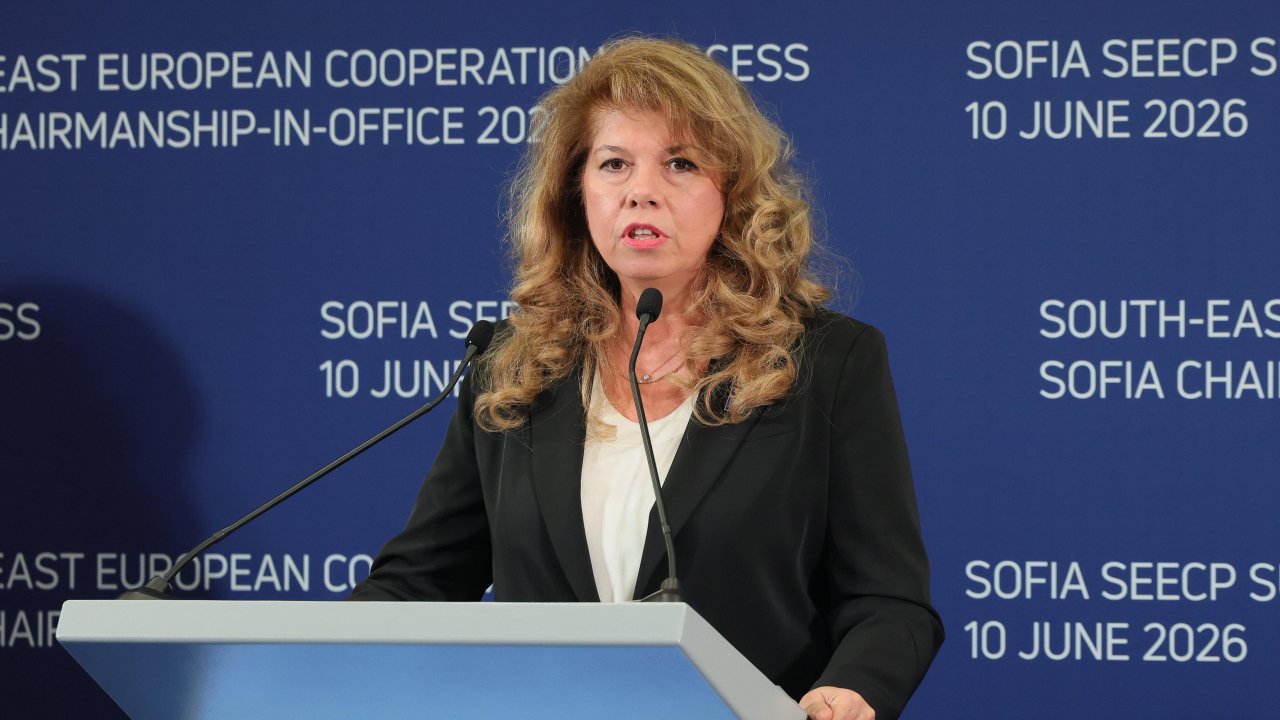
Bulgarian Vice President Iliana Iotova has reiterated that North Macedonia must fulfill specific European Union integration criteria, including constitutional amendments, to advance its path toward EU membership. During a recent meeting with North Macedonian President Gordana Siljanovska-Davkova, Iotova emphasized that the inclusion of the Bulgarian minority in the North Macedonian constitution remains a non-negotiable requirement for the opening of negotiating chapters with Brussels.
The diplomatic exchange highlights the ongoing tension between Sofia and Skopje regarding the 2022 “French proposal,” which outlined a framework for North Macedonia to begin EU accession talks. Under the terms of the agreement, North Macedonia is required to amend its constitution to recognize its Bulgarian minority, a step that the current government in Skopje has yet to implement. According to the European Commission’s 2022 framework, progress in the accession process is strictly linked to the fulfillment of these bilateral commitments.
Diplomatic Protocols and Language Barriers
The meeting between Iotova and Siljanovska-Davkova drew additional public attention due to the protocol observed during media engagements. Reports from the event indicated that President Siljanovska-Davkova requested to answer questions in English rather than Bulgarian or Macedonian. This approach prompted criticism from Bulgarian officials regarding the state of bilateral dialogue.
The linguistic choice served as a backdrop to the more substantive disagreements regarding the constitutional changes. While the North Macedonian government has expressed a desire to integrate into the European Union, it has faced internal political resistance concerning the constitutional amendment. The Council of the European Union has consistently maintained that all candidate countries must adhere to the rule of law and respect bilateral agreements as part of the Copenhagen criteria for membership.
Constitutional Amendments and EU Accession
The core of the dispute lies in the “Negotiating Framework” adopted by the European Union. North Macedonia’s path to the EU is currently stalled because the country has not yet secured the necessary parliamentary majority to amend its constitution. The European Commission’s 2023 Progress Report for North Macedonia explicitly cites the constitutional changes as a primary benchmark for the country to move to the next stage of the accession process.
For the Bulgarian government, the protection of the rights of ethnic Bulgarians in North Macedonia is a matter of fundamental human rights and regional stability. Vice President Iotova’s stance reflects the official Bulgarian position that no further progress can be made until Skopje meets its documented obligations. Conversely, officials in Skopje have argued for a renegotiation of the terms, a position that the European Union has repeatedly rejected as the framework was established by consensus among all 27 member states.
Status of Bilateral Relations
The current impasse underscores the fragility of relations between the two neighbors. Since the signing of the 2017 Treaty of Friendship, Good Neighborliness and Cooperation, the two nations have struggled to resolve historical and identity-based disputes. The Bulgarian Ministry of Foreign Affairs has frequently stated that the fulfillment of the 2022 agreements is the only path forward for North Macedonia’s European integration.

As the European Union continues its enlargement agenda, the situation remains a test case for how the bloc manages bilateral disputes involving candidate countries. The next official review of North Macedonia’s progress is expected to be included in the upcoming European Commission Enlargement Package. Observers anticipate that Brussels will continue to stress the necessity of constitutional reform, leaving the ball firmly in Skopje’s court.
Readers interested in the official documentation regarding the accession negotiations can monitor the updates provided by the European Commission’s Directorate-General for Neighbourhood and Enlargement Negotiations. We invite you to share your thoughts on the future of Balkan integration in the comments section below.