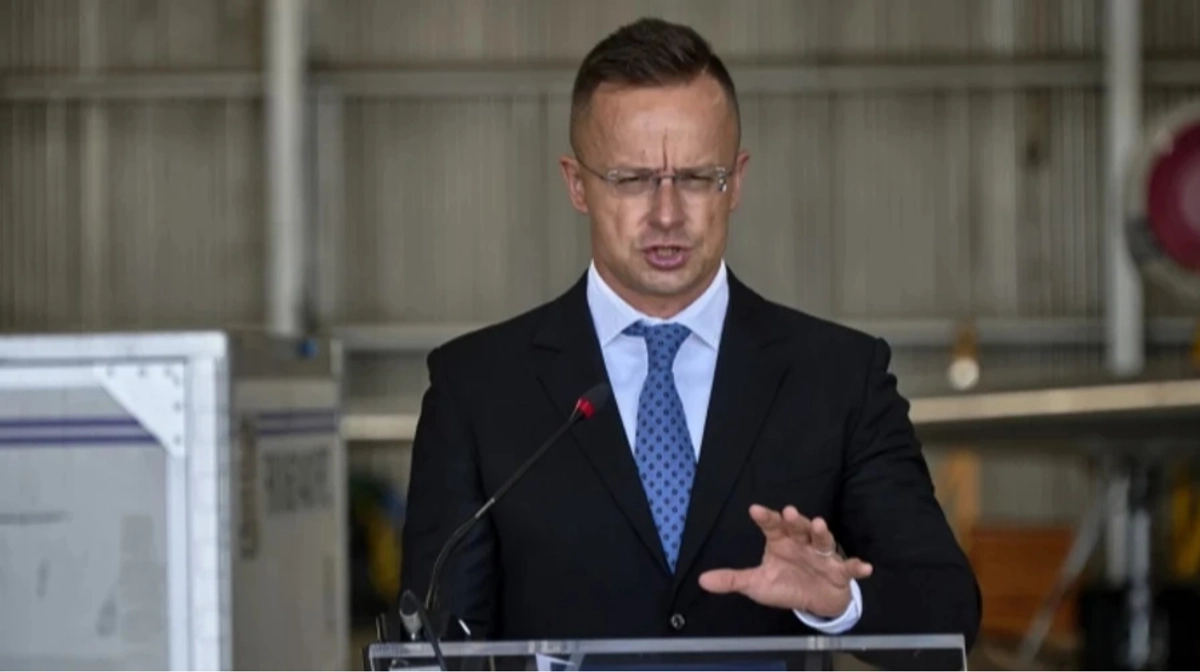
Budapest – Hungarian Foreign Minister Péter Szijjártó has voiced strong objections to a European Union proposal to assist Ukraine in restoring oil supplies through the Druzhba pipeline, characterizing the move as a politically motivated maneuver. The dispute underscores the complex energy dynamics at play in Eastern Europe and highlights Hungary’s continued reluctance to fully align with EU policies regarding Ukraine and Russia.
Szijjártó took to X (formerly Twitter) on Sunday, March 17, 2026, to express his discontent, accusing the EU of engaging in “political games” and criticizing the delayed response to what he termed a “oil blockade” of Hungary. His comments come as Ukraine considers restarting the flow of Russian oil through the Druzhba pipeline, a key transit route for supplying fuel to several European nations, including Hungary and Slovakia. The pipeline’s operation was partially suspended in early 2023 due to damage and subsequent disputes over transit fees and security concerns. European Pravda reported on the details of Szijjártó’s statement.
The Druzhba Pipeline and Hungary’s Energy Security
The Druzhba pipeline, meaning “friendship” in Russian, is one of the world’s longest oil pipelines, stretching over 4,000 kilometers (approximately 2,500 miles) and transporting crude oil from Russia to various countries in Central and Eastern Europe. Hungary relies heavily on Russian oil delivered via the Druzhba pipeline, and disruptions to the supply have raised concerns about the nation’s energy security. According to the International Energy Agency (IEA), in 2022, Hungary imported approximately 65% of its crude oil from Russia. IEA data shows a significant dependence on Russian energy sources.
In recent months, Ukraine has been seeking financial and technical assistance from the EU to facilitate the resumption of oil transit through the Druzhba pipeline. Ukraine’s state-owned pipeline operator, Ukrtransnafta, has stated that repairs to the pipeline infrastructure are necessary to ensure safe and reliable operation. The EU’s offer of support, accepted by Ukraine on March 17, 2026, aims to provide the necessary resources for these repairs and to address concerns about the security of the transit route. Eurointegration reported that Ukraine accepted the EU’s offer.
Szijjártó’s Criticism and Political Context
Szijjártó’s strong reaction to the EU’s proposal reflects Hungary’s increasingly strained relationship with both Ukraine and the EU on several fronts. Hungary has consistently opposed stringent sanctions against Russia, arguing that they harm its own economic interests. The country has also been critical of Ukraine’s policies towards its Hungarian minority population, alleging discrimination and violations of minority rights. These tensions have led to diplomatic clashes and have complicated Hungary’s position within the EU.
In his post on X, Szijjártó directly appealed to Ukrainian President Volodymyr Zelenskyy and European Commission President Ursula von der Leyen, urging them to “end this political theater” and lift the “oil blockade” on Hungary. He accused Kyiv and Brussels of coordinating their actions, suggesting a deliberate attempt to exert pressure on Hungary. Szijjártó’s rhetoric underscores his belief that Hungary is being unfairly targeted and that its energy security is being compromised for political reasons.
Ukraine’s Commitment to Resume Transit
Despite Szijjártó’s criticism, Ukraine has pledged to restore oil transit through the Druzhba pipeline. President Zelenskyy, in a letter to EU leaders, reportedly promised to restore transit within approximately one and a half months. Eurointegration detailed Zelenskyy’s commitment. This commitment is contingent upon receiving the necessary financial and technical support from the EU, as well as ensuring the safety and security of the pipeline infrastructure.
The resumption of oil transit through the Druzhba pipeline is crucial for maintaining stable energy supplies to Hungary and Slovakia. However, the situation remains delicate, and the potential for further disruptions cannot be ruled out. Geopolitical factors, including the ongoing conflict in Ukraine and the broader tensions between Russia and the West, continue to pose risks to energy security in the region.
Hungary’s Blocking of EU Sanctions and Aid
Szijjártó has also indicated that Hungary will continue to block the adoption of the 20th package of sanctions against Russia and a proposed €90 billion ($97.4 billion USD – conversion rate as of March 17, 2026) aid package for Ukraine until Kyiv restores oil transit through the Druzhba pipeline. Eurointegration reported on Szijjártó’s stance on sanctions and aid. This move demonstrates Hungary’s willingness to use its veto power within the EU to protect its national interests and to exert pressure on Ukraine and Brussels.
The EU has expressed concern over Hungary’s obstructionist tactics, but it has also acknowledged the need to address Hungary’s legitimate concerns about energy security. Negotiations between the EU, Ukraine, and Hungary are ongoing, with the aim of finding a mutually acceptable solution that ensures stable energy supplies and promotes regional stability.
Key Takeaways
- Hungarian Foreign Minister Péter Szijjártó has criticized an EU proposal to help Ukraine restore oil transit through the Druzhba pipeline, calling it a “political game.”
- Hungary relies heavily on Russian oil delivered via the Druzhba pipeline and has expressed concerns about its energy security.
- Ukraine has pledged to restore oil transit within approximately one and a half months, contingent on receiving EU support.
- Hungary is currently blocking the adoption of recent EU sanctions against Russia and a large aid package for Ukraine, linking its approval to the resumption of oil transit.
- The dispute highlights the complex geopolitical dynamics in Eastern Europe and the challenges of balancing energy security with political considerations.
The situation remains fluid, and further developments are expected in the coming weeks. The EU is scheduled to hold further discussions on the matter, and Ukraine is working to expedite repairs to the Druzhba pipeline infrastructure. The next key checkpoint will be the assessment of the pipeline’s readiness for resuming transit, anticipated by late April 2026. We encourage readers to share their thoughts and perspectives on this evolving situation in the comments below.
Worth a look