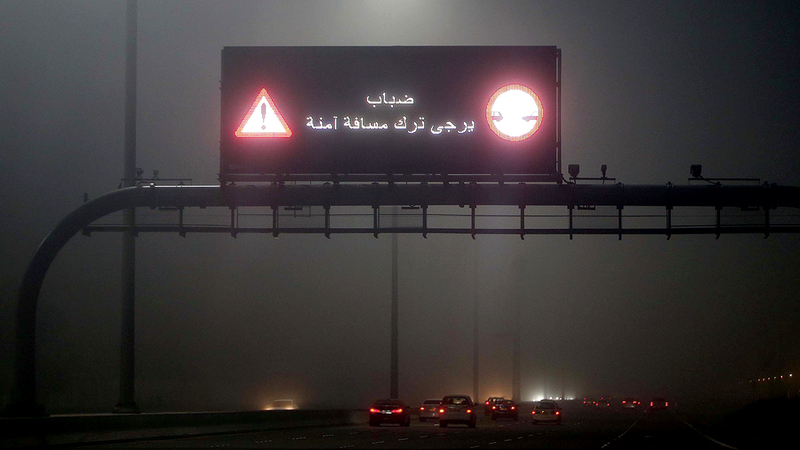
The National Center of Meteorology (NCM) has issued a weather advisory for the United Arab Emirates, warning of fog that may reduce visibility during early morning hours. While daytime conditions are expected to remain clear, the NCM forecasts increased humidity levels overnight across several emirates, potentially impacting travel and outdoor activities.
The advisory comes as the region experiences shifting atmospheric conditions. According to the NCM, the weather pattern for the upcoming period will feature a distinct contrast between daytime and nighttime conditions. Residents can expect clear skies during the day, but these will give way to higher humidity levels once darkness falls.
What weather conditions are expected in the UAE?
The NCM reports that the daytime weather will be characterized by clear skies across most parts of the country. This clarity is expected to persist through the afternoon, providing stable conditions for most activities. However, the meteorological outlook changes significantly after sunset.
As night falls, the NCM indicates that humidity levels will rise. This increase in moisture in the air, combined with cooling temperatures, creates the specific environmental conditions necessary for fog formation. Such weather patterns are common in the UAE during seasonal transitions, where the drop in temperature meets high moisture content.
In addition to the humidity shift, recent data shows significant temperature fluctuations in specific regions. Ruknah has been identified as the location recording the lowest temperatures in the UAE, marking a notable point in the country’s current meteorological trends.
How will fog impact visibility and road safety?
The primary concern regarding the NCM’s fog warning is the impact on visibility, particularly for motorists on major highways and intercity roads. Fog can rapidly reduce sightlines, making it difficult for drivers to navigate safely, especially during the early morning hours when visibility is at its lowest.
Safety experts and meteorological officials suggest several precautions for those traveling during these periods:
- Maintain safe distances: Increased following distances help compensate for sudden visibility drops.
- Use appropriate lighting: Drivers should utilize fog lights rather than high beams, as high beams can reflect off the fog and further obscure vision.
- Reduce speed: Lower speeds allow for better reaction times in low-visibility environments.
- Monitor official alerts: Regularly checking NCM updates can provide advance notice of changing conditions.
The NCM continues to monitor atmospheric pressure and moisture levels to provide timely updates to the public. These warnings are designed to mitigate the risks associated with sudden shifts in visibility that can lead to traffic accidents.
Why is humidity rising in the UAE?
The rise in humidity observed in the UAE is a direct result of the interaction between maritime air masses and cooling land temperatures. As the heat from the day dissipates, the air temperature drops, reducing its ability to hold water vapor. This leads to the increased humidity levels reported by the NCM.
When the air becomes saturated with moisture, it can lead to the formation of fog, especially in low-lying areas or near coastal regions. This process is a standard meteorological occurrence in the Arabian Peninsula, where the proximity to the Arabian Gulf and the Gulf of Oman plays a significant role in moisture distribution.
The temperature recorded in Ruknah serves as a key indicator of these localized cooling trends. Inland areas often experience more pronounced temperature drops than coastal cities, which can accelerate the condensation process and lead to localized fog patches.
Key Weather Summary
| Condition | Expected Timing | Impact Level |
|---|---|---|
| Clear Skies | Daytime | Low |
| Fog/Low Visibility | Early Morning | Moderate to High |
| High Humidity | Nighttime | Moderate |
| Low Temperatures | Overnight (Ruknah) | Localized |
The NCM will issue further updates as new data becomes available from its network of weather stations across the Emirates. Residents and travelers are advised to stay informed through official government channels to ensure safety during the forecasted period.

Please share this update with anyone traveling through the UAE and leave your comments below regarding the weather conditions in your specific area.