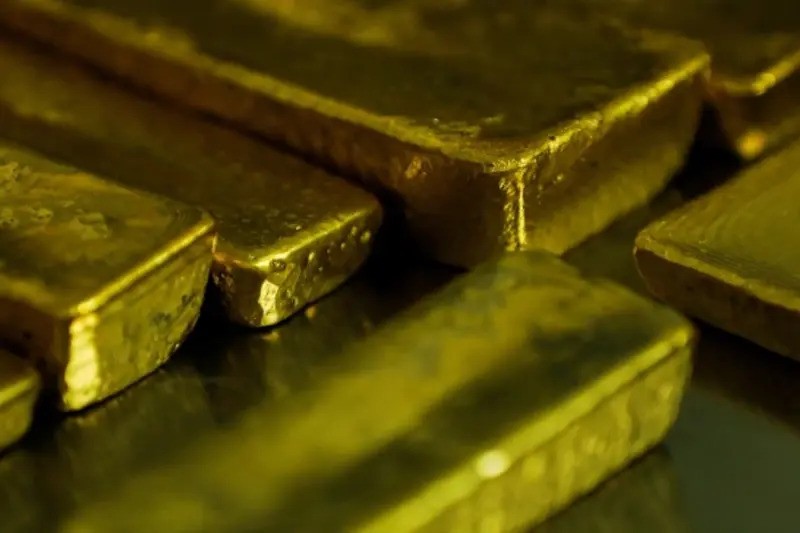
Gold prices have retreated by approximately 2% this week, marking a third consecutive week of losses as markets react to the Federal Reserve’s latest policy stance. The decline follows a period of heightened sensitivity to U.S. monetary policy, where the decision to maintain current interest rates has prompted a fresh wave of selling among investors. According to data tracked by the Federal Reserve, the decision to hold rates steady has bolstered the U.S. dollar, creating a challenging environment for non-yielding assets like bullion.
Market Dynamics and the U.S. Dollar Correlation
The recent downward pressure on gold is primarily driven by the inverse relationship between the precious metal and the strength of the U.S. currency. As the Federal Reserve signals a commitment to its current interest rate path, the dollar has strengthened against a basket of major currencies. When the dollar rises, gold—which is priced in dollars—becomes more expensive for holders of other currencies, typically dampening global demand.
Market analysts observe that this trend has persisted for three weeks, as investors weigh the implications of high-for-longer borrowing costs. The Reuters financial market report confirms that gold’s inability to maintain its price floor is a direct result of capital shifting toward dollar-denominated assets that now offer more competitive yields compared to the zero-interest return of holding physical gold.
Impact of Monetary Policy on Global Prices
The impact of the Federal Reserve’s policy decisions is not limited to U.S. markets; it carries significant weight for global investors and local markets, including Egypt. Following the announcement of the interest rate hold, local gold markets have seen a corresponding adjustment in prices. As noted by the World Gold Council, regional market volatility often mirrors global trends, but with added sensitivity to local currency fluctuations and import costs.
While some market participants previously anticipated a shift in policy, the Fed’s recent communication has solidified expectations that rates will remain in their current range for the foreseeable future. This clarity, while stabilizing for bond markets, has acted as a catalyst for the current sell-off in the precious metals sector, as institutional investors rebalance their portfolios to account for sustained higher yields on fixed-income securities.
Geopolitical Factors and Market Sentiment
Beyond monetary policy, market sentiment remains influenced by shifting geopolitical landscapes. Reports regarding ongoing diplomatic efforts, such as potential international agreements, often introduce volatility into gold prices, as the metal is frequently viewed as a “safe-haven” asset. When global tensions appear to ease, demand for such defensive assets typically softens.
However, the current decline appears more fundamentally linked to macroeconomic data than to specific geopolitical events. Investors are closely monitoring upcoming releases from the U.S. Bureau of Labor Statistics, as inflation data remains a critical variable for future Federal Reserve deliberations. Any significant deviation from expected economic performance could alter the current trajectory of both the dollar and gold.
What Investors Should Monitor Next
For those tracking the precious metals market, the next significant checkpoint will be the upcoming meeting minutes and further commentary from Federal Reserve officials. These documents often provide deeper insight into the internal debates among policymakers regarding the timing of potential future adjustments to the federal funds rate.
Market participants are also advised to monitor the daily fixings from major exchanges, which provide a more accurate picture of liquidity and physical demand. As the market continues to recalibrate, maintaining a diversified approach remains a standard recommendation from financial advisors. We encourage our readers to share their perspectives on these market movements in the comments section below, as we continue to track the evolving economic landscape.