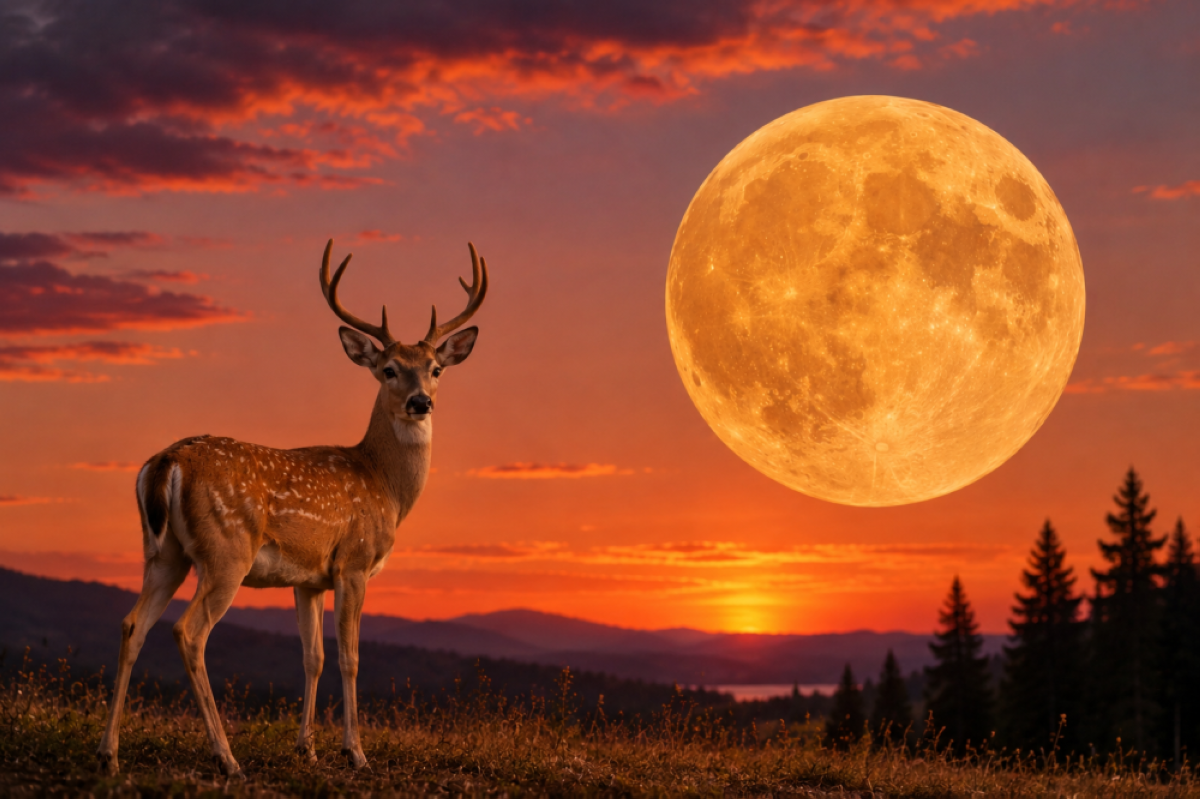
The “Buck Moon,” traditionally known as the July full moon, will reach its peak illumination on July 21, 2024, offering skywatchers a significant astronomical event. According to NASA, the moon will appear full for approximately three days, starting from the morning of July 19 through the morning of July 22, providing multiple opportunities for observation across the globe.
This lunar phase is colloquially referred to as the “Buck Moon” because it coincides with the time of year when the antlers of male deer—or bucks—are in their prime growth phase, according to the Farmers’ Almanac. As an editor in the health and science sector, I often remind our readers that while lunar cycles are primarily gravitational and astronomical phenomena, they remain a vital point of connection between human culture and the natural rhythms of our planet.
Understanding the Mechanics of the July Full Moon
The full moon occurs when the Moon is located on the opposite side of the Earth from the Sun, allowing its face to be fully illuminated. During this period, the Earth, Moon, and Sun form a near-straight line. As noted by the NASA Science Mission Directorate, this alignment is what creates the appearance of a perfectly round, bright lunar disk.

For observers, the July full moon is particularly notable because of its position relative to the horizon. Depending on your geographic location, the moon may appear lower in the sky, which can create the “moon illusion”—a psychological phenomenon where the moon appears larger when viewed near the horizon compared to when it is high overhead. While the size of the moon does not physically change, the proximity to terrestrial objects like trees or buildings provides a scale that tricks the human brain into perceiving it as more massive.
Why the ‘Buck Moon’ Matters for Observers
Beyond the cultural naming conventions, the July full moon provides an accessible entry point for amateur astronomy. Unlike events such as meteor showers or planetary transits, which may require specialized equipment or precise timing, the full moon is visible to the naked eye from almost anywhere with clear skies.

The Sky & Telescope publication emphasizes that the best time to view the moon is during “moonrise,” shortly after sunset. During this time, the contrast between the darkening sky and the rising moon is at its most dramatic. For those living in urban environments, the brightness of the full moon is sufficient to overcome most light pollution, making it one of the few astronomical events that does not require traveling to a dark-sky preserve.
How to Safely Observe the Lunar Event
Observing the full moon requires no special protective gear, unlike solar eclipses. However, for those interested in seeing the lunar surface in greater detail, a pair of standard binoculars or a small telescope can reveal the moon’s maria—the ancient volcanic plains—and its prominent impact craters.
From a public health perspective, I encourage readers to be mindful of local conditions. If you are planning an evening of observation, ensure you are in a safe, well-lit area and remain aware of your surroundings, especially if you are venturing away from home to find a better vantage point. Checking your local weather forecast via the National Weather Service or your national meteorological agency is a practical step to ensure that cloud cover does not obstruct your view.
Future Astronomical Milestones
The July full moon is part of a larger sequence of lunar events scheduled throughout the year. Following the Buck Moon, the next full moon, often referred to as the Sturgeon Moon, is expected to occur in August. Astronomical data maintained by the U.S. Naval Observatory provides precise lunar phase calendars for those interested in tracking upcoming cycles.
As we look toward the remainder of the year, these events serve as a consistent reminder of the predictable, rhythmic nature of our solar system. Whether you are an experienced stargazer or simply someone looking to enjoy a quiet moment outdoors, the July full moon offers a rare, shared experience for observers worldwide. We invite our readers to share their experiences and observations in the comments section below as we track this and other upcoming celestial highlights.