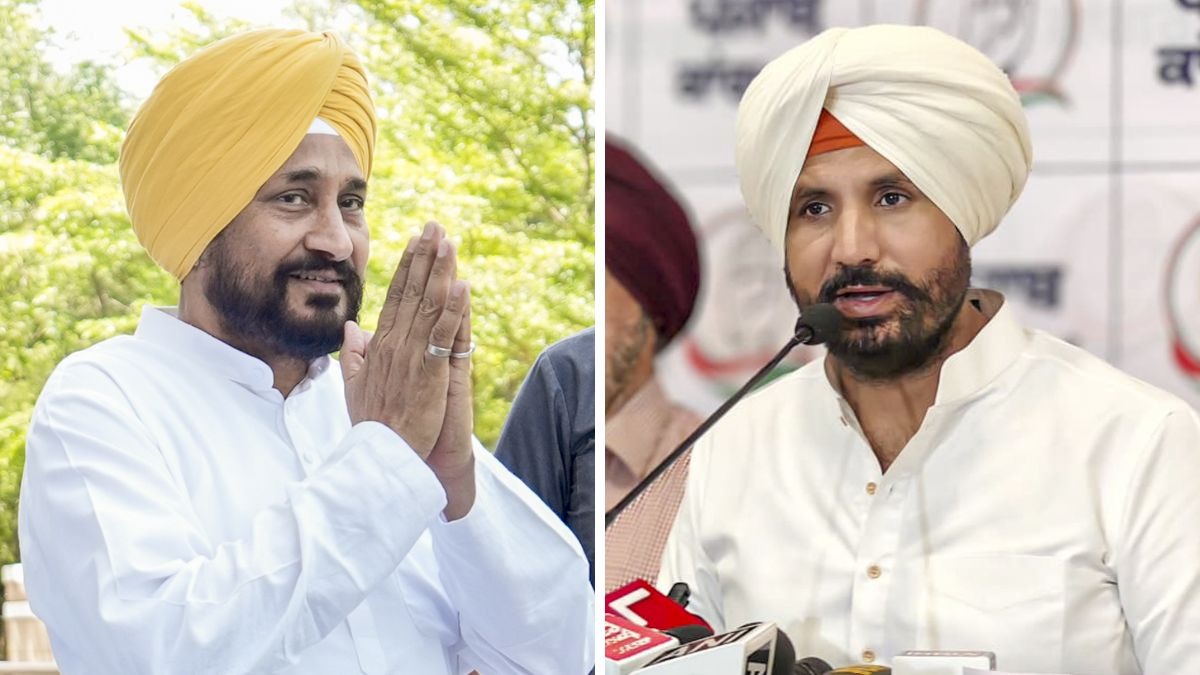
The Indian National Congress faced significant internal turmoil in Punjab as the party’s central leadership overrode perceived local support for former Chief Minister Charanjit Singh Channi leading up to the 2022 Assembly elections. This disconnect between the state unit’s preferences and the decisions of the party’s “high command” in New Delhi contributed to a period of instability that preceded the party’s historic defeat in the state.
Charanjit Singh Channi assumed the Chief Minister’s office in September 2021 following the forced resignation of Captain Amarinder Singh. While reports from within the Punjab Congress indicated that a majority of the state’s legislators supported Channi’s leadership, the central leadership’s intervention in candidate selection and strategic direction created a rift between local representatives and the party’s national executives.
The tension peaked during the finalization of the candidate lists for the February 2022 elections. According to reports from the The Hindu, the high command’s decision to replace several sitting MLAs and disregard local preferences led to widespread discontent, effectively neutralizing the perceived majority support for the state leadership.
Why did the Congress high command override support for Charanjit Singh Channi?
The decision to shift the party’s trajectory in Punjab was driven by the central leadership’s desire to “refresh” the party image and address perceived anti-incumbency. The high command, led by Sonia Gandhi and Rahul Gandhi, sought to move beyond the legacy of Captain Amarinder Singh, whose departure had already fractured the party’s base. Although Charanjit Singh Channi was seen as a grassroots leader with significant support among the Dalit community and many MLAs, the central leadership remained skeptical of his ability to consolidate all factions of the party.


Internal party dynamics suggest that the high command prioritized a centralized strategy over local autonomy. By controlling the ticket distribution process, the national leadership aimed to ensure loyalty to the central party line rather than to a state-level strongman. However, this approach ignored the political reality on the ground, where many legislators felt that Channi’s leadership was the only viable shield against the rising popularity of the Aam Aadmi Party (AAP).
The conflict was not merely about Channi himself but about the autonomy of the Punjab Congress. According to reports by The Indian Express, the disconnect between the state’s political requirements and the high command’s mandates led to a scenario where the “majority” view of the local MLAs was treated as secondary to the strategic vision of the Delhi-based leadership.
How the decision led to turmoil within the Punjab Congress
The “khalbali” or turmoil within the Punjab Congress manifested through public dissent and a lack of coordination during the campaign. When the high command finalized the candidate list, several senior leaders and loyalists of the previous administration felt sidelined. This created a vacuum of leadership where candidates were more focused on their internal party battles than on fighting the opposition.
The turmoil was exacerbated by three primary factors:
- Ticket Distribution: The decision to deny tickets to established leaders who had supported Channi created an atmosphere of mistrust.
- Communication Gap: Local leaders claimed that the high command ignored the feedback provided by state observers and the Chief Minister’s office.
- Public Perception: The visible friction between the state leadership and the central command signaled instability to the electorate, which the Aam Aadmi Party exploited in its campaign messaging.
The internal friction became a liability during the election cycle. While Channi attempted to project an image of unity, the underlying resentment among the MLAs who felt their “majority” voice had been ignored led to a lackluster campaign effort in several key constituencies.
The aftermath of the 2022 Punjab Assembly elections
The result of the internal strife was a catastrophic electoral loss for the Indian National Congress. In the 2022 Punjab Assembly elections, the Aam Aadmi Party won a landslide victory, securing 92 out of 117 seats. The Congress party was reduced to just 13 seats, its worst performance in the history of the state. According to the Election Commission of India, the shift in voter preference was stark, with the Congress losing its grip on both rural and urban strongholds.
Political analysts suggest that the party’s failure was a direct consequence of the leadership crisis. The transition from Amarinder Singh to Channi, and the subsequent undermining of Channi’s local support by the high command, left the party without a coherent narrative. The electorate viewed the party as being in a state of permanent conflict, making the promise of “change” offered by AAP more appealing.
The defeat triggered a period of introspection within the Congress. The incident serves as a case study in the dangers of over-centralization in regional politics, where the “high command” culture clashes with local political dynamics and the preferences of the elected representatives on the ground.
The next critical checkpoint for the Punjab Congress will be the upcoming local body elections and the reorganization of the state party unit, as the leadership attempts to reconcile the factions that were divided during the 2022 crisis.
Do you believe the high command’s intervention was the primary cause of the Congress’s defeat in Punjab, or were there larger systemic issues at play? Share your thoughts in the comments below.