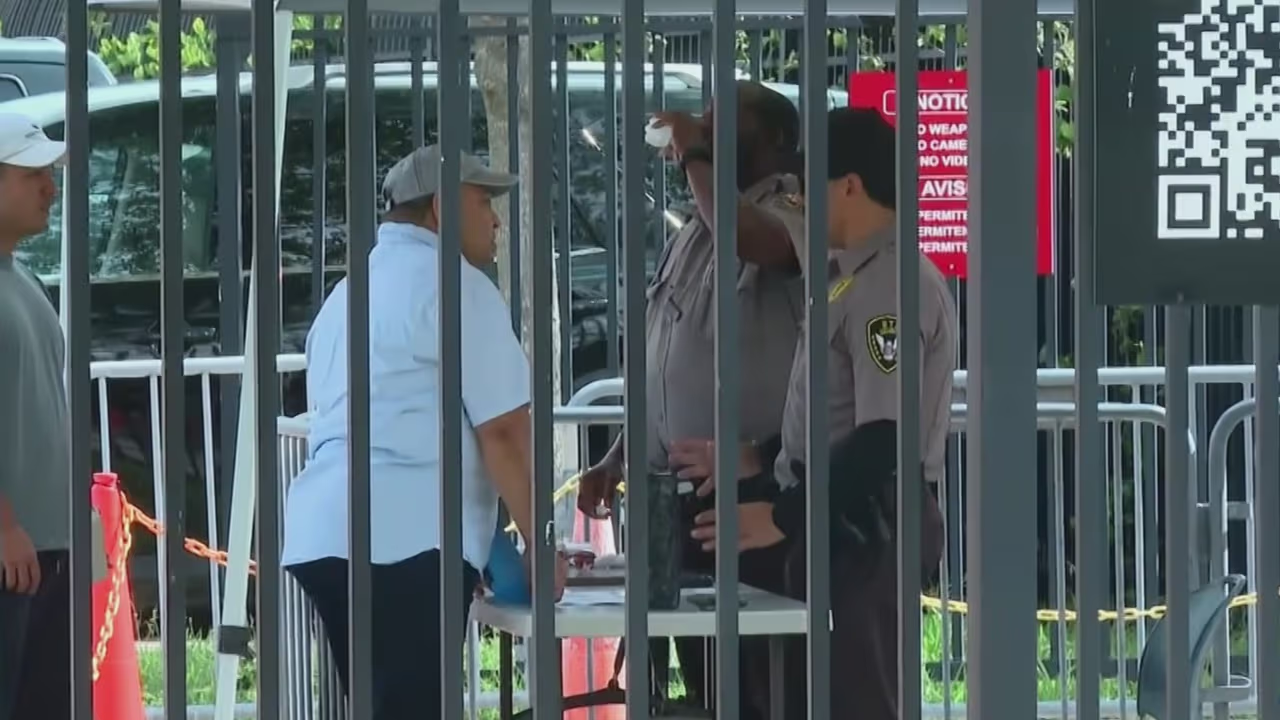
A husband of a woman detained at the U.S. Immigration and Customs Enforcement (ICE) processing center in Miramar, Florida, has alleged the facility is maintaining inhumane conditions, according to reports and inquiries initiated by U.S. Representative Debbie Wasserman Schultz. The family claims the woman has been held for 10 days under conditions that treat detainees “like animals,” prompting a congressional investigation into the facility’s treatment of migrants.
The allegations center on the lack of basic necessities and medical care provided to the woman during her short-term detention. Her husband reported that the conditions are unacceptable, stating that detainees are not animals and deserve fundamental human dignity. Representative Debbie Wasserman Schultz, whose district includes the Miramar facility, has intervened to request information from ICE regarding the woman’s health status and the specific conditions of her confinement.
The Miramar facility, officially known as a processing center, is designed for short-term holds before detainees are transferred to longer-term detention centers or released. However, reports of medical neglect and poor sanitation have frequently surfaced regarding this specific location. The current case has drawn attention to the gap between official ICE detention standards and the reported experiences of those held in South Florida.
Why conditions at the Miramar ICE facility are under scrutiny
The allegations brought forward by the detainee’s husband highlight systemic issues often reported at the Miramar processing center. According to family members, the woman has faced inadequate food, poor hygiene facilities, and a lack of necessary medical attention during her 10-day stay. These claims mirror previous complaints filed by advocacy groups regarding the “processing” nature of the site, which often leads to a lack of long-term infrastructure for health and wellness.

Under the U.S. Immigration and Customs Enforcement Performance-Based National Detention Standards (PBNDS), ICE is required to provide detainees with access to medical care, nutritious meals, and sanitary living conditions. The husband’s claim that his wife is being treated “like an animal” suggests a failure to meet these federal mandates. Such allegations often trigger reviews by the Department of Homeland Security (DHS) Office of Inspector General (OIG), which monitors facility compliance.
Detainees in processing centers often experience “administrative limbo,” where they are held for several days or weeks without a clear timeline for transfer. This period is frequently where the most severe reports of neglect occur, as these facilities are not equipped for extended stays. The 10-day window mentioned in this case exceeds the typical immediate processing time, increasing the risk of health deterioration if medical needs are ignored.
The role of Representative Debbie Wasserman Schultz in the investigation
Representative Debbie Wasserman Schultz has a documented history of challenging ICE operations within her district. In this instance, the Congresswoman’s office acted as a conduit for the family’s grievances, formally reporting the inhumane conditions to ICE officials. According to statements from her office, the goal is to ensure the detainee receives immediate medical attention and that her legal rights are respected.

Wasserman Schultz has previously called for increased transparency and oversight of the South Florida immigration facilities, citing a pattern of complaints from constituents. By bringing this specific case to light, the Congresswoman is leveraging congressional oversight to force a response from ICE regarding the specific treatment of the woman in Miramar.
The intervention of a member of Congress often accelerates the review of a detainee’s case. When a representative requests a status update or reports medical neglect, ICE is typically required to provide a formal response detailing the care provided to the individual. This process creates a paper trail that can be used in legal challenges or civil rights litigation if the conditions are found to be substandard.
Understanding the legal standards for ICE detention
The legal framework governing ICE facilities is based on the principle that detention is a civil, not a criminal, matter. Therefore, the conditions must not be “punitive.” The PBNDS mandates that all detainees have access to a primary healthcare provider and that emergency medical needs are met without delay. When families report that a detainee is being treated “like an animal,” it usually refers to a breach of these basic humanitarian standards.
Legal advocates argue that processing centers like the one in Miramar often bypass these standards because they are categorized as temporary. However, the law does not grant a waiver for human rights based on the duration of the stay. If a detainee is denied water, food, or medication for a period of 10 days, it may constitute a violation of the Fifth Amendment’s Due Process Clause, which protects individuals from arbitrary government action.
Furthermore, the use of “processing” facilities for extended periods is a point of contention among immigration lawyers. They argue that these sites lack the psychiatric and medical staff necessary to handle a diverse population of migrants, many of whom arrive with trauma or chronic illnesses. The lack of specialized care in Miramar has been a recurring theme in reports from human rights observers in Florida.
What happens to detainees facing inhumane conditions
When allegations of inhumane treatment are formalized, several legal and administrative paths open. The first is the filing of a writ of habeas corpus, which allows a lawyer to challenge the legality of the detention and the conditions under which the person is being held. If a judge finds that the conditions are truly inhumane, they can order the immediate release of the detainee or their transfer to a facility with adequate medical care.
Administrative complaints can also be filed with the DHS Office for Civil Rights and Civil Liberties (CRCL). The CRCL investigates claims of abuse, neglect, and discrimination within DHS facilities. While the CRCL cannot always force a release, its findings can lead to policy changes and disciplinary action against facility staff.
For the woman in Miramar, the immediate priority is medical stabilization. If the allegations of neglect are verified, her legal team can argue that she is unfit for detention and should be released on parole or bond for humanitarian reasons. This is a common outcome in cases where congressional intervention reveals a failure to provide basic medical care.
Impact on families and the community
The psychological toll on families is significant when a loved one is detained in a facility where communication is limited. The husband’s public outcry is a response to the perceived helplessness of the situation. In many ICE processing centers, phone access is restricted, and visits are strictly controlled, leaving families to rely on sporadic updates or the intervention of third parties like members of Congress.

This case reflects a broader tension in South Florida, where the intersection of high-volume immigration and limited facility resources often leads to crises in care. Community organizations have noted that the fear of detention is compounded by reports of “inhumane” treatment, which can discourage individuals from seeking legal counsel or reporting abuses for fear of retaliation from ICE officials.
The phrase “No somos animales” (We are not animals) has become a rallying cry for various migrant rights groups in Florida. It highlights a fundamental demand for the recognition of human dignity regardless of immigration status. By framing the issue as one of basic humanity rather than just legal status, advocates aim to garner broader public support for detention reform.
The next confirmed checkpoint in this case is the official response from ICE to Representative Debbie Wasserman Schultz’s inquiry. The agency is expected to provide a report on the detainee’s health and the conditions of her confinement. This response will determine whether the family pursues further legal action in federal court to secure the woman’s release on humanitarian grounds.
Readers are encouraged to share this report and leave comments regarding their experiences or perspectives on detention oversight.