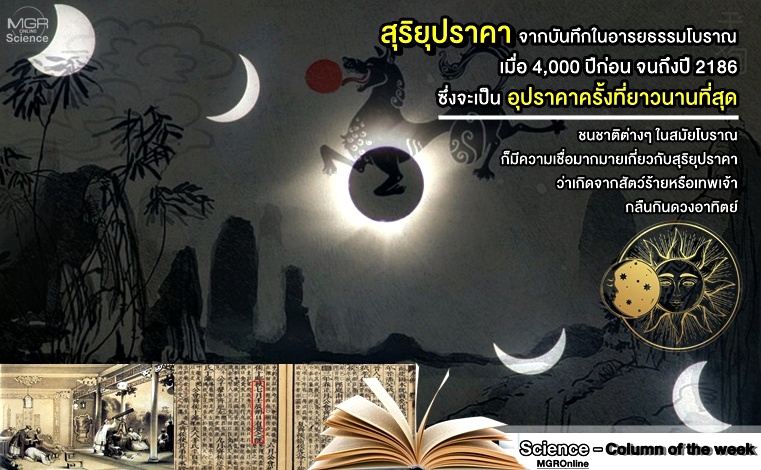
For millennia, humanity has looked to the heavens with a mixture of dread and wonder. Solar eclipses, once viewed as omens of doom or divine interventions, have transitioned from mythological puzzles to precision tools for modern science. Today, astronomers and historians are using these celestial alignments to solve earthly mysteries, from the exact location of ancient capitals to the fluctuating speed of the Earth’s own rotation.
The intersection of astrophysics and archaeology is currently yielding startling results. By analyzing ancient solar eclipse records, researchers are not only uncovering the lost geography of the ancient world but are also refining our understanding of planetary dynamics. This synergy of data allows us to look backward 4,000 years into the Minoan era and forward to the year 2186, when the world is expected to witness one of the longest total solar eclipses in recorded history.
These discoveries highlight a fundamental truth about our planet: the Earth is not a perfect clock. The rotation of our world slows down over time due to tidal friction caused by the moon. This variance, known to scientists as Delta T ($Delta T$), creates a discrepancy between the time we calculate using orbital mechanics and the time actually recorded by ancient observers. By bridging this gap, scientists can pinpoint exactly where an eclipse was visible, thereby identifying where ancient cities actually stood.
The 709 BCE Eclipse and the ‘Shifting’ City of Qufu
A recent breakthrough in this field has centered on a total solar eclipse that occurred in 709 BCE. In a study published in The Astrophysical Journal Letters, a research team led by Hisashi Hayakawa of Nagoya University analyzed ancient Chinese reports to determine the precise path of totality for that event. The findings suggest that historical records of the eclipse were more accurate than the geographical assumptions previously held by historians.
The research focused on the city of Qufu, an ancient center of power in China. For years, historians believed the city was located in a position where the 709 BCE total eclipse would not have been visible as a total event. However, the Nagoya University team discovered that the actual location of Qufu was approximately 8 kilometers away from the site previously assumed. This seemingly small distance is critical; it places the city directly within the path of totality, validating the ancient records that described a total darkening of the sun.

This correction does more than just move a city on a map. It provides a concrete data point for calculating the Earth’s rotation speed nearly 2,700 years ago. Because the visibility of a total eclipse depends on the precise orientation of the Earth relative to the moon and sun, any shift in the observed location of the eclipse serves as a proxy for how much the Earth’s rotation has slowed. This allows physicists to refine the $Delta T$ curve, which is essential for high-precision historical astronomy.
From Minoan Shadows to Orbital Mechanics
The practice of using eclipses as historical markers extends even further back, reaching into the dawn of Western civilization. Records and astronomical alignments from approximately 4,000 years ago, tied to the Minoan civilization on the island of Crete, suggest that early humans were already tracking celestial cycles with surprising sophistication. The Minoans, who laid the groundwork for later Greek civilization, observed the heavens not just for navigation, but as a means of understanding the rhythms of the natural world.
When historians find references to “darkness at noon” in texts from these eras, they are often looking at the first “clocks” of humanity. By cross-referencing these ancient descriptions with modern retro-calculations—using software that can simulate the positions of celestial bodies thousands of years in the past—scientists can verify the dates of ancient reigns, the timing of volcanic eruptions and the movement of early populations.
The complexity of this work lies in the “wobble” of the Earth. Beyond the slowing rotation, the Earth undergoes precession and nutation—slight shifts in its axis. For a technology editor, this is akin to debugging a legacy system where the hardware (the planet) has slightly changed its specifications over millions of cycles. The ancient records act as the “logs” that allow modern scientists to calibrate the system.
The Longest Shadow: Looking Toward 2186
While we use the past to calibrate our instruments, the same mathematics allow us to predict the future with staggering accuracy. Astronomers have identified a future event that will likely stand as a benchmark for generations: the total solar eclipse of May 16, 2186.
A total solar eclipse occurs when the moon passes directly between the Earth and the sun, completely obscuring the solar disk. The duration of “totality”—the period of complete darkness—depends on the distance between the Earth, moon, and sun. When the moon is at perigee (its closest point to Earth) and the Earth is at aphelion (its farthest point from the sun), the moon appears larger in the sky and the sun appears smaller, resulting in a longer period of coverage.

The eclipse in 2186 is projected to be one of the longest in history. While the theoretical maximum for a total solar eclipse is approximately 7 minutes and 32 seconds, the 2186 event is expected to approach these limits, offering an unprecedented window for solar research. During totality, the sun’s outer atmosphere, the corona, becomes visible. This region is millions of degrees hotter than the surface of the sun, and longer durations of totality allow scientists to gather more data on solar winds and coronal mass ejections, which can disrupt satellite communications and power grids on Earth.
Why Celestial Tracking Matters for Modern Tech
To the casual observer, calculating the position of a city in 709 BCE or predicting an eclipse in 2186 might seem like academic curiosity. However, the implications for modern technology are profound. Our global infrastructure relies on the Global Positioning System (GPS) and other satellite-based timing networks, which require nanosecond precision.
The study of $Delta T$ and the Earth’s rotational variance is directly linked to how we define time. Universal Time (UT), based on Earth’s rotation, is inconsistent. Terrestrial Time (TT), a theoretical uniform time scale, is what we use for planetary ephemeris. The gap between the two is exactly what the Nagoya University study helps refine. Without this constant calibration, the mathematical models used to navigate spacecraft to Mars or maintain the synchronization of global financial markets would eventually drift.
the ability to predict the 2186 eclipse demonstrates the maturity of our orbital models. We are no longer guessing based on omens; we are calculating the movements of the solar system as a giant, predictable machine. This level of precision is the foundation for all deep-space exploration and the protection of Earth from near-Earth objects (NEOs).
Key Takeaways: The Science of Solar Shadows
- Historical Calibration: Ancient eclipse records are used to calculate $Delta T$, the difference between Earth’s actual rotation and a theoretical uniform time scale.
- Geographic Correction: Research by Nagoya University on a 709 BCE eclipse shifted the accepted location of the ancient city of Qufu by 8 kilometers to match the path of totality.
- Planetary Slowdown: The Earth’s rotation is gradually slowing due to tidal friction from the moon, making ancient astronomical records essential for understanding planetary history.
- Future Records: The total solar eclipse of May 16, 2186, is predicted to be one of the longest ever recorded, providing a critical opportunity for coronal research.
- Technological Impact: Precision in celestial mechanics is fundamental to the operation of GPS, satellite communications, and deep-space navigation.
As we continue to refine the bridge between ancient archives and modern astrophysics, we find that the shadows of the past are the best guides for our future. The next major milestone in this journey will be the continued refinement of the $Delta T$ curve as more ancient records from Asia and the Americas are digitized and analyzed using AI-driven astronomical models.
Do you think our reliance on digital timekeeping makes us lose touch with the celestial rhythms our ancestors tracked? Share your thoughts in the comments below or share this article with a fellow space enthusiast.