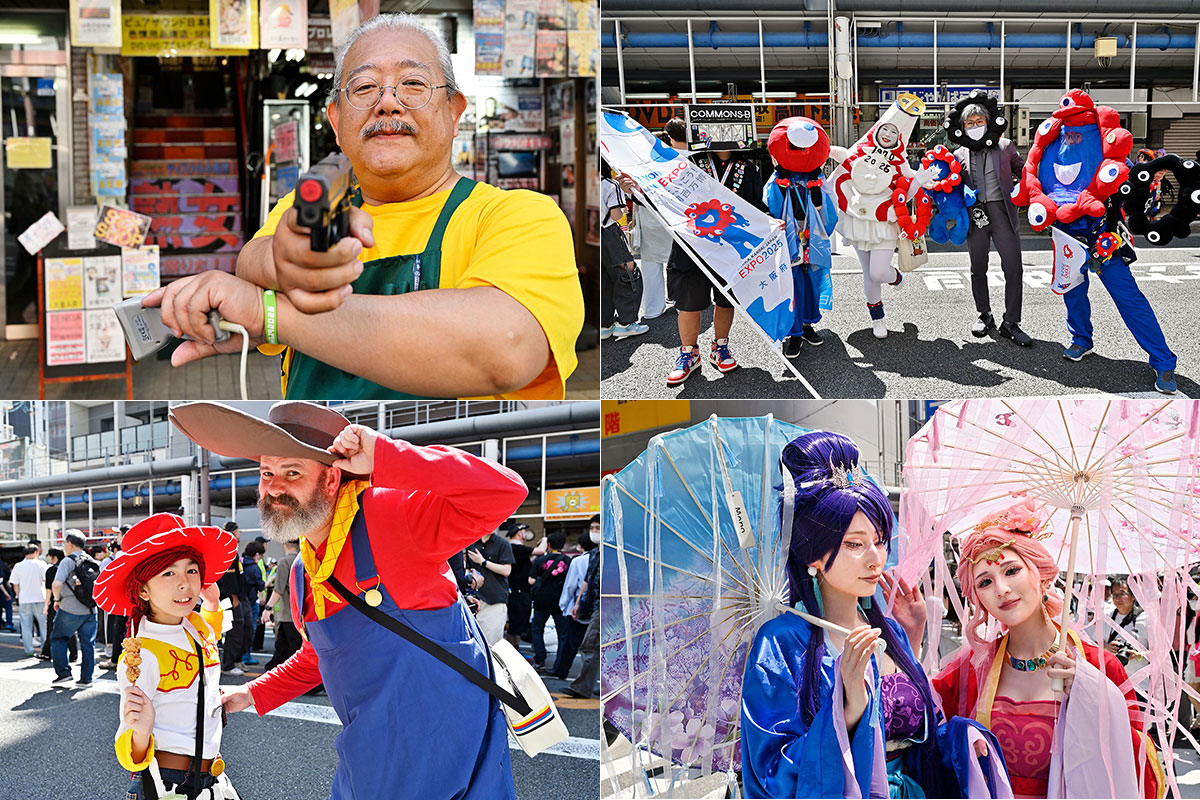
The streets of Osaka’s Naniwa Ward were transformed into a vivid kaleidoscope of color and creativity this Sunday, May 17, as the city hosted the annual Nipponbashi Street Festa. Known affectionately as “Suto-Fesu,” this massive gathering serves as one of Japan’s premier cosplay events, drawing thousands of enthusiasts from across the country to the heart of the city’s electronics and anime district.
The event took place against the backdrop of Den Den Town, Osaka’s renowned hub for gaming, manga, and electronics. For one day, the commercial district shifted from a shopping destination into a living gallery of pop culture, where the boundaries between fiction and reality blurred. Participants arrived dressed as iconic characters from anime, manga, and video games, turning the urban landscape into a sprawling stage for performance art and photography.
However, the celebration was met with an unexpected climatic challenge. Despite being mid-May, Osaka experienced “manatsubi”—a Japanese term for a midsummer day where temperatures soar—creating a grueling environment for cosplayers wearing heavy wigs, elaborate armor, and multi-layered costumes. The oppressive heat added a layer of physical endurance to the artistic display, with many attendees battling high temperatures to showcase their craftsmanship.
The Cultural Epicenter: Den Den Town’s Role in Global Otaku Culture
To understand the significance of the Nipponbashi Street Festa, one must first understand the geography of Osaka’s tourism and cultural landscape. Den Den Town, located in the Nipponbashi area, is often viewed as the Kansai region’s counterpart to Tokyo’s Akihabara. While Akihabara is the global face of “Otaku” culture, Den Den Town offers a more concentrated, grassroots energy that is deeply embedded in the local Osaka identity.
The district is characterized by dense clusters of specialty shops selling everything from rare figurines and vintage electronics to the latest indie manga. For the cosplay community, this area is more than just a venue. We see a sanctuary. The annual Street Festa leverages this existing infrastructure, allowing cosplayers to move seamlessly between the streets and the shops that provide the very materials used to create their costumes.
The event is not merely a parade but a social phenomenon. It provides a critical space for “cosplay photographers” and “cosplayers” to network. In Japanese cosplay culture, the relationship between the model and the photographer is symbiotic; the photographer captures the costume’s detail in a professional setting, while the cosplayer brings a fictional character to life. The Nipponbashi Street Festa facilitates these interactions on a massive scale, creating thousands of impromptu photo shoots across the district.
Enduring the Heat: The Physicality of Cosplay
The “midsummer” conditions reported on May 17 highlighted the often-overlooked physical toll of high-level cosplay. Many of the costumes seen at the festa are engineering marvels, featuring EVA foam armor, heavy synthetic fabrics, and intricate headpieces that trap heat. When ambient temperatures reach midsummer levels in May, the risk of heat exhaustion becomes a primary concern for participants.
Observers noted the resilience of the community, with many cosplayers utilizing portable fans, cooling sheets, and frequent hydration breaks to maintain their appearances. The dedication required to remain in character while facing extreme heat is a testament to the passion that drives the hobby. For many, the goal is not just to wear a costume, but to achieve a level of “screen accuracy” that demands sacrifice, including enduring the elements.
This intersection of art and endurance is a recurring theme in Japanese street festivals. Whether it is the traditional Gion Matsuri or modern events like the Street Festa, the ability to maintain a public persona and a rigorous aesthetic despite the weather is often seen as part of the event’s spirit.
Economic Impact and Community Engagement
Beyond the visual spectacle, the Nipponbashi Street Festa serves as a significant economic driver for the Naniwa-ku district. Historically, the event has attracted upwards of 200,000 attendees, creating a surge in foot traffic that benefits local vendors, cafes, and specialty hobby shops. The influx of visitors from outside Osaka transforms the neighborhood into a high-density commercial zone for the duration of the day.
Local businesses often lean into the festivities, offering themed promotions or providing spaces for cosplayers to rest. This synergy between the event organizers, the participants, and the local business owners ensures that the festa remains a sustainable annual tradition. By integrating the event directly into the streets rather than confining it to a convention center, the organizers maximize the exposure for the small businesses that define Den Den Town.
Key Elements of the Nipponbashi Street Festa
| Feature | Detail |
|---|---|
| Primary Location | Den Den Town, Nipponbashi, Osaka |
| Core Activity | Outdoor Cosplay and Photography |
| Key Challenge (2026) | Unseasonably high “midsummer” temperatures |
| Cultural Significance | Major hub for Kansai region Otaku culture |
| Estimated Reach | Historically attracts hundreds of thousands of visitors |
What This Means for the Future of Urban Festivals
The success of events like the Nipponbashi Street Festa suggests a growing trend toward “decentralized” conventions. Rather than paying for tickets to enter a closed hall, fans are increasingly drawn to events that take over public spaces, integrating the city itself into the experience. This approach not only democratizes access to the event but also turns the city into a living museum of contemporary pop culture.
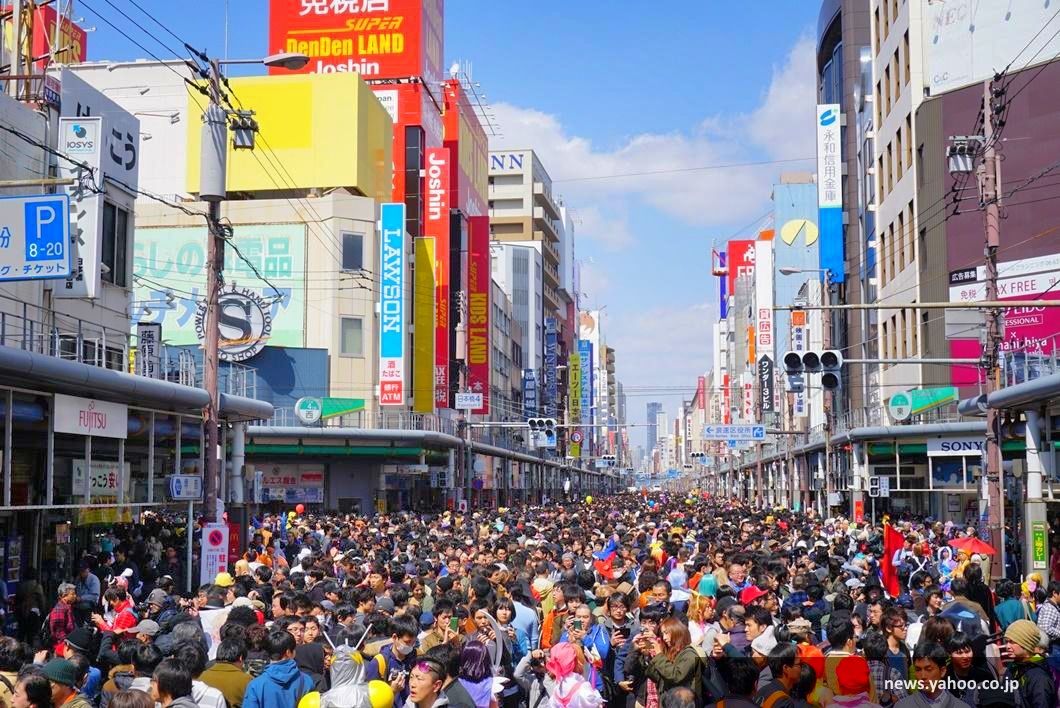
However, the 2026 event also serves as a reminder of the need for climate adaptation in urban planning. As extreme weather events become more frequent, organizers of large-scale outdoor gatherings must consider enhanced safety measures, such as designated cooling stations and more robust medical support for participants in restrictive clothing.
As the sun set over Osaka this Sunday, the vibrant costumes began to disappear, replaced by the usual bustle of the electronics district. But the images captured and the connections made during the Nipponbashi Street Festa will continue to circulate through social media and community forums, cementing the event’s status as a cornerstone of the global cosplay calendar.
For those looking for official updates on future dates or safety guidelines for attending events in the Nipponbashi district, the Osaka City Official Website provides general guidelines on public gatherings and city ordinances.
The next major checkpoints for the regional cosplay community typically involve the summer convention circuit and the preparation for autumn festivals, which offer more temperate conditions for the more elaborate costume designs.
Do you have a favorite character you would have cosplayed at the Street Festa? Share your thoughts and photos in the comments below!
Worth a look