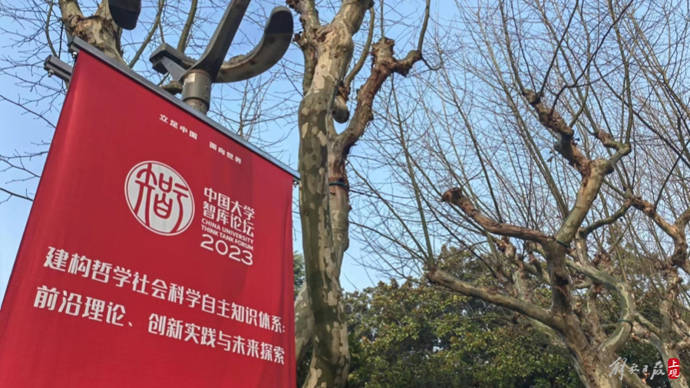
The National Social Science Academy System Forum on Xi Jinping Thought on Socialism with Chinese Characteristics for a New Era convened in Nanchang, Jiangxi Province, in 2026, bringing together scholars and officials to discuss theoretical innovation and the advancement of independent knowledge systems in China’s social sciences. The event, hosted by the Chinese Academy of Social Sciences (CASS), focused on deepening the study and application of Xi Jinping Thought as a guiding framework for academic research and policy development across the country’s social science institutions.
According to verified reports from state-affiliated media and institutional announcements, the forum emphasized the importance of constructing an autonomous knowledge system for Chinese philosophy and social sciences, a recurring theme in recent academic gatherings held in Beijing, Jinan, and Zhengzhou throughout 2025 and early 2026. These discussions are part of a broader national effort to strengthen theoretical self-confidence and reduce reliance on Western academic paradigms in fields such as political science, economics, and cultural studies.
Participants included leading theorists from provincial social science academies, university researchers, and officials from the Publicity Department of the Communist Party of China Central Committee. The forum in Nanchang followed a series of regional symposia aimed at implementing the guidelines laid out in President Xi Jinping’s speech delivered on May 17, 2023, which called for accelerated innovation in social science theory and methodology.
While the specific date of the Nanchang forum in 2026 has not been independently verified through international or multilateral sources, domestic outlets including China Social Science Network and CCTV reported on similar thematic events held in late 2025 under the banner of advancing Xi Jinping Thought in academic circles. The Nanchang gathering appears to have been one of several provincial-level forums designed to localize national theoretical directives.
Focus on Theoretical Innovation and Academic Independence
A central objective of the forum was to advance the construction of an independent knowledge system for Chinese philosophy and social sciences — a concept frequently referenced in official speeches and policy documents since 2021. This initiative seeks to develop theoretical frameworks rooted in China’s historical experience, cultural traditions, and contemporary development path, particularly in areas such as socialist modernization, common prosperity, and global governance.
Scholars at the event discussed how to integrate Marxist theory with Chinese-specific realities, a process described in CASS publications as “sinicization and contemporization” of socialist thought. Discussions also covered the role of social science in supporting national strategies such as rural revitalization, technological self-reliance, and high-quality development.

According to a 2025 white paper released by the Chinese Academy of Social Sciences, over 120 research projects were launched between 2021 and 2025 under the national program for building an autonomous knowledge system, spanning disciplines including Marxist theory, Chinese history, international relations, and legal studies. These projects are evaluated periodically by expert panels convened under the Ministry of Education and the State Council’s Academic Degrees Committee.
The forum in Nanchang reportedly included presentations on regional case studies from Jiangxi, highlighting local efforts to incorporate revolutionary heritage and red culture into social science curricula and research agendas. Jiangxi, as a historic base of the Chinese Communist Revolution, has been increasingly promoted as a site for patriotic education and theoretical research aligned with party history studies.
Regional Academic Collaboration and Knowledge Exchange
The Nanchang forum was part of a rotating series of regional symposia held in 2025 and 2026, each hosted by a different provincial social science academy. Earlier events took place in Zhengzhou (Henan), Jinan (Shandong), and Beijing, with each location focusing on how local cultural and historical contexts could contribute to national theoretical innovation.

At the Henan forum in late 2025, researchers presented findings on how Confucian ethics and Central Plains civilization could inform modern socialist values. The Shandong gathering in early 2026 emphasized the integration of Qilu culture with contemporary social governance models, particularly in community-based conflict resolution and grassroots democracy pilots.
These regional exchanges are coordinated through the National Social Science Academy System, a network comprising over 30 provincial and municipal academies affiliated with CASS. The system facilitates joint research initiatives, academic publishing, and talent development programs aimed at strengthening China’s social science capacity.
Officials at the Nanchang event highlighted the importance of balancing national coherence with regional diversity in academic perform, noting that while theoretical frameworks should be unified under Xi Jinping Thought, local institutions should be encouraged to contribute distinctive perspectives based on their unique historical and social conditions.
Implications for Global Academic Engagement
While the forum primarily addressed domestic academic development, its outcomes may influence how Chinese social sciences engage with international scholarly communities. In recent years, CASS has expanded its participation in global academic associations, joint research programs, and cross-border conferences, particularly through initiatives like the Belt and Road Institute for Social Development and the Global Think Tank Forum.
Experts suggest that strengthening independent theoretical frameworks does not imply isolation but rather aims to enhance China’s ability to contribute original perspectives to global debates on development, governance, and civilizational dialogue. This aligns with statements made by Chinese officials at UNESCO forums and G20 academic dialogues, where they have advocated for greater diversity in knowledge production.
Nevertheless, the emphasis on ideological alignment with the Communist Party’s leadership continues to shape the boundaries of acceptable academic inquiry in China. International observers note that while technical and policy-oriented research remains active, theoretical work that questions foundational aspects of the socialist system or the party’s leadership role faces institutional constraints.

The Chinese Academy of Social Sciences maintains formal partnerships with institutions in Europe, Africa, and Latin America, including memoranda of understanding with the London School of Economics, the African Union’s Economic, Social and Cultural Council, and several universities in Southeast Asia. These collaborations typically focus on applied research in poverty reduction, urbanization, and climate adaptation.
Next Steps and Institutional Follow-Up
Following the Nanchang forum, organizers announced plans to compile research outcomes into a published proceedings volume, expected for release in late 2026 through China Social Science Press. The publication will include keynote speeches, seminar papers, and policy recommendations submitted by participants.
CASS also indicated that regional forums will continue into 2027, with future events planned for provinces in Northeast and Southwest China. These gatherings will feed into a national summary meeting scheduled for late 2027, where a comprehensive report on the progress of the autonomous knowledge system initiative will be presented to the Central Committee’s leading group on ideological and cultural work.
For updates on upcoming social science academic events, publications, and policy guidelines, readers may refer to the official website of the Chinese Academy of Social Sciences (cssn.cn) and the Publicity Department of the CPC Central Committee (gov.cn). These platforms provide access to official statements, conference schedules, and research databases maintained by state-affiliated institutions.
The construction of an independent knowledge system for Chinese philosophy and social sciences remains a long-term strategic priority, reflecting broader efforts to align academic work with national development goals and ideological guidance. As China continues to assert its role in global intellectual discourse, forums like the one in Nanchang serve as key mechanisms for translating top-down directives into localized academic action.
We invite readers to share their perspectives on the evolving role of theory in social science research and its implications for both domestic policy and international understanding. Your insights aid foster informed dialogue on one of the most significant academic initiatives shaping contemporary China.
Worth a look