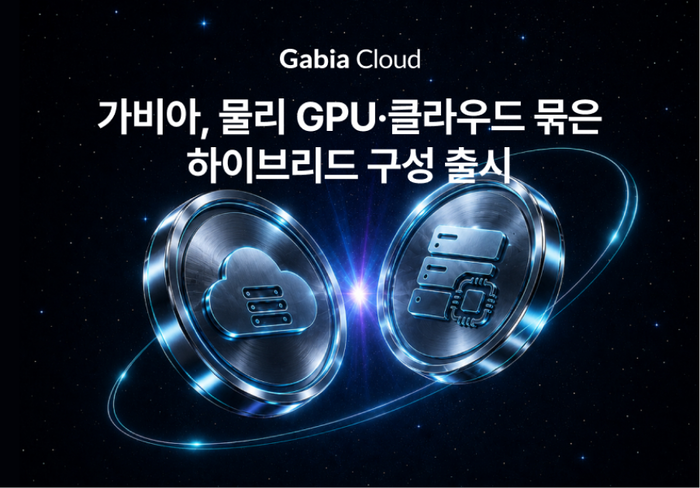
Gabia, a Seoul-based IT infrastructure provider, has launched a new hybrid cloud configuration that integrates dedicated GPU server hosting with its virtualized cloud environment. The service is designed to lower the financial barrier to entry for businesses requiring high-performance computing power, allowing users to leverage specialized hardware for intensive tasks while maintaining the flexibility of a scalable cloud infrastructure, according to official company announcements regarding their recent infrastructure expansion.
By combining physical GPU resources with a virtualized cloud framework, the company aims to address the rising demand for AI model training, data analysis, and 3D rendering services. This hybrid approach allows enterprises to maintain core workloads in a standard cloud environment while offloading compute-heavy processes to physical GPUs, effectively optimizing resource allocation and reducing unnecessary expenditure on idle high-performance hardware.
Strategic Integration of GPU Hosting and Virtualization
The core of this offering lies in the interoperability between Gabia’s existing cloud platform and its physical server hosting infrastructure. Traditionally, organizations requiring significant graphics processing power faced a binary choice: invest in expensive on-premises hardware or rely on high-cost, fully virtualized GPU instances from major global cloud providers. Gabia’s hybrid model seeks to bridge this gap, providing a middle ground for domestic firms in South Korea, as noted in the latest industry reports on local infrastructure trends.
The integration enables seamless data transfer between the virtualized cloud environment and the physical GPU servers. This is particularly relevant for developers who need to train machine learning models that require sustained, high-bandwidth access to GPU memory without the latency issues often associated with multi-tenant virtual environments. By providing a dedicated physical path, the architecture ensures that performance metrics remain consistent during peak processing demands.
Addressing Cost Efficiency in AI Development
Cost remains the primary driver for many businesses adopting this hybrid configuration. Physical GPU servers are often underutilized when used for intermittent tasks, while cloud-based GPU instances can become prohibitively expensive at scale. Gabia’s model allows clients to configure their resource usage more granularly, paying for the virtual cloud infrastructure on a consumption basis while utilizing the physical GPU servers for sustained, heavy-duty computational tasks.
The scalability of this setup is supported by the company’s cloud management portal, which allows administrators to monitor resource consumption across both physical and virtual domains. This unified view is intended to help IT managers identify bottlenecks and adjust their resource footprint in real-time, preventing the “cloud sprawl” that frequently leads to unexpected operational costs in complex AI development environments.
Market Context and Industry Impact
The introduction of this service comes as South Korean enterprises face increasing pressure to modernize their digital infrastructure to support generative AI and large-scale data processing initiatives. According to data from the Ministry of Science and ICT, the domestic cloud market has seen a consistent upward trend in demand for specialized, high-performance computing resources, particularly among small and medium-sized enterprises (SMEs) looking to compete with larger tech conglomerates.

For organizations, the primary benefit of this hybrid model is the ability to retain data sovereignty and infrastructure control within a domestic ecosystem. By utilizing a local provider, firms can ensure compliance with local data protection regulations while benefiting from the technical support and reduced network latency associated with regional data centers. This alignment with local operational requirements serves as a differentiator for Gabia as it attempts to capture a larger share of the enterprise infrastructure market.
Future Developments and Operational Updates
Gabia has indicated that it will continue to update its hardware inventory to include the latest GPU architectures as they become available. Users are encouraged to monitor the company’s official technical documentation for updates on supported hardware specifications and availability. The company has not yet released a roadmap for further expansion into edge computing or specific AI-as-a-Service (AIaaS) modules, but industry observers expect the firm to continue focusing on infrastructure-level optimizations through the end of the current fiscal year.
For current clients, the hybrid configuration is available immediately through existing service agreements. Prospective customers can find detailed pricing models and technical specifications on the provider’s website. We welcome your thoughts on how hybrid infrastructure models are changing the way your organization manages high-performance workloads—please share your experiences in the comments section below.