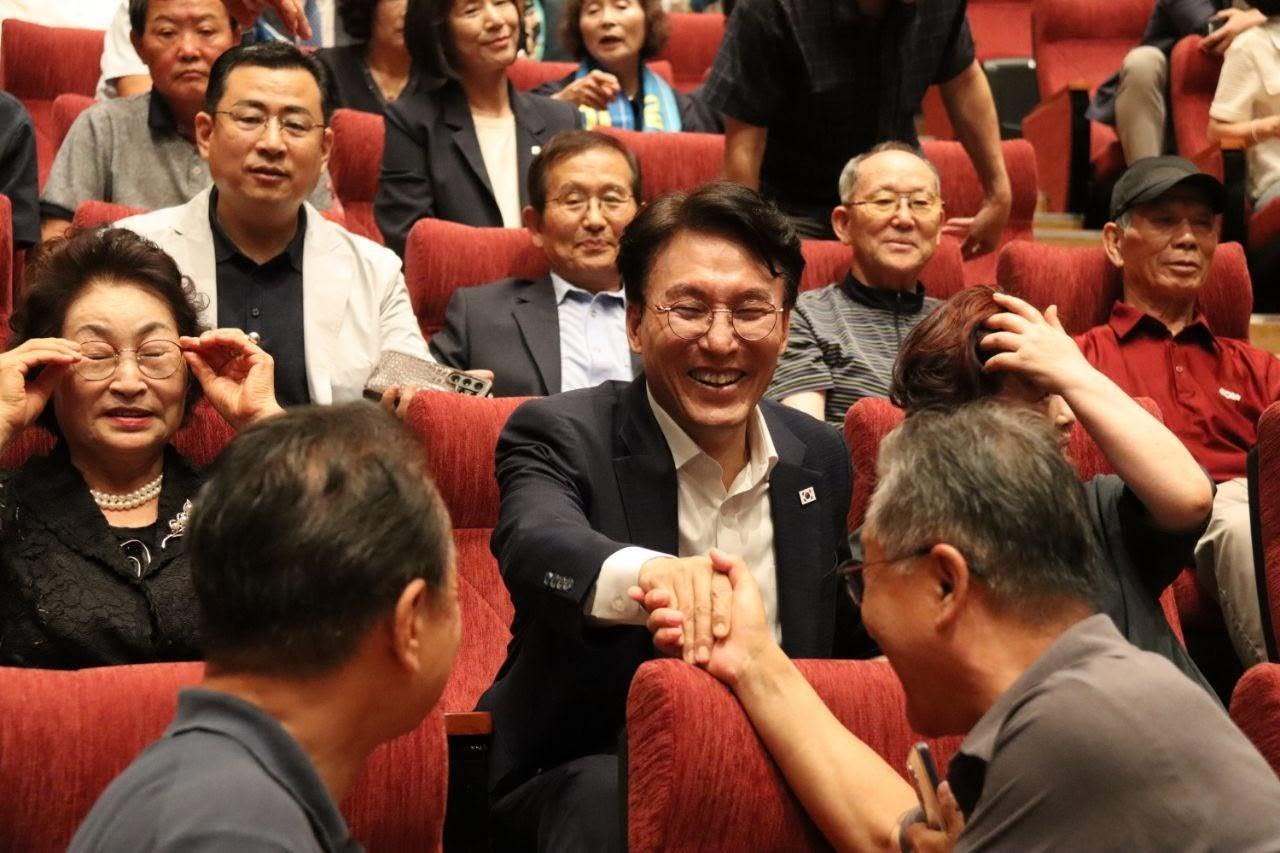
South Korea’s ruling Democratic Party leadership race has ignited fierce infighting over presidential loyalty, with contenders trading sharp accusations over factional opposition, past defections, and public commentary as a crowded electoral calendar looms.
Clashing Over Presidential Allegiance
Kim Min-seok publicly asserted that undermining the sitting president equates to factional opposition. He focused his critique on disloyal rhetoric within the party ranks, arguing that attempts to undermine the presidential administration directly harm the broader political movement. In remarks reported by the Hankyoreh, Kim warned against candidates who offer only superficial allegiance, vowing to hold such figures accountable during the election.
Rival candidate Jung Cheong-rae countered that true defense of the leadership stems from maintaining party unity without defection. Mounting a robust defense of his own political track record, Jung emphasized his steadfast commitment to the party through past political turbulence. In statements highlighted by the Kyunghyang Shinmun, Jung drew a sharp distinction between himself and rivals who have abandoned the party in prior cycles, declaring that his refusal to bolt remains the ultimate proof of his loyalty to party leadership.
External Controversies and Ranks
The intensifying war of words highlights deep factional divisions within the ruling Democratic Party as candidates prepare for a busy electoral calendar. The public sparring escalated further as three key contenders traded pointed accusations regarding party loyalty, past defections, and controversial public commentary. The friction underscores the high stakes of the internal contest, where candidates are vying for decisive voter mandates as primary voting approaches.
The sparring also drew in broader controversies involving outside political commentators. Candidates exchanged barbs over silence regarding contentious public remarks made by figures such as former lawmaker Rhyu Si-min, illustrating how external commentary continues to ripple through internal party deliberations, according to the Kyunghyang Shinmun.
June 29 Broadcast Debate
The intra-party contest moves to a critical public phase this week as the election commission ramps up campaign events. The first official broadcast debate is set for June 29, providing voters with a direct platform to evaluate the candidates’ policy proposals and leadership styles, according to scheduling announcements published by the Dong-A Ilbo. The race has drawn intense scrutiny from voters and political analysts alike.
Nationwide Regional Primaries
Following the broadcast debate, the campaign shifts immediately to regional primaries across the country over the weekend. Campaign managers and candidates are adjusting their strategies to capture momentum in these early voting contests, with frontrunners aiming for decisive pluralities or outright majorities to secure the leadership post, as regional news reports cover the unfolding convention race.