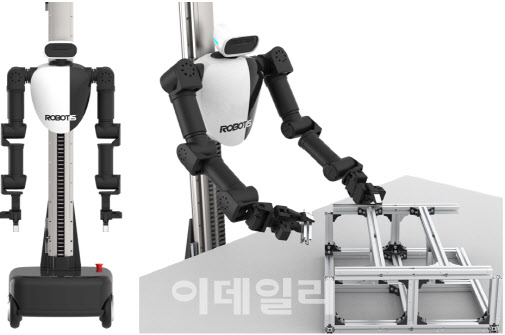
South Korean robotics firm ROBOTIS has announced a strategic investment of 18.1 billion KRW into the “CL Robo-Automation New Technology Investment Association,” a move aimed at accelerating the automation of its actuator production processes. According to official regulatory filings, this capital injection grants ROBOTIS a 62.85% stake in the investment vehicle, signaling a concentrated effort to enhance manufacturing efficiency and scale its core component production.
Strategic Investment in Manufacturing Automation
The decision to secure a controlling interest in the investment association reflects ROBOTIS’s broader corporate strategy to transition from manual or semi-automated production lines to fully integrated automated systems. Actuators, often described as the “muscles” of a robot, are a critical component of the company’s product portfolio, which includes the well-known DYNAMIXEL series used in research, education, and service robotics. By automating the production of these high-precision parts, the company seeks to lower unit costs and improve output consistency, both of which are essential for maintaining a competitive edge in the global robotics market.

According to the company’s disclosure through the Data Analysis, Retrieval and Transfer System (DART) operated by the Financial Supervisory Service of South Korea, the primary objective of this capital allocation is to establish a robust framework for large-scale production. The investment is intended to provide the necessary infrastructure to meet the increasing demand for specialized actuators, which are increasingly utilized in autonomous mobile robots (AMRs) and service-oriented hardware.
Market Context and Operational Impact
ROBOTIS has historically focused on the development of smart actuators, which integrate motors, gears, and controllers into a single module. The shift toward automated manufacturing aligns with the industry-wide trend of “smart factories,” where robotics companies are increasingly deploying their own technology to optimize their supply chains. This move is particularly significant as the company navigates the complexities of global logistics and the rising costs of precision manufacturing components.
By controlling over 60% of the investment association, ROBOTIS retains significant influence over the direction of the funding. Analysts tracking the robotics sector have noted that such capital structures are frequently used by technology firms to bypass traditional R&D bottlenecks and rapidly deploy new production technologies without diluting internal operational focus. The 18.1 billion KRW investment represents a substantial commitment to capital expenditure, aimed at long-term profitability rather than immediate short-term gains.
Future Production Milestones
The company has not provided a specific timeline for the full transition to automated actuator assembly, but investors are looking toward upcoming quarterly earnings calls and future regulatory filings for updates on the implementation phase. As the robotics industry faces pressure to deliver affordable, reliable hardware for service and logistics sectors, the success of this automation initiative will likely serve as a benchmark for ROBOTIS’s manufacturing scalability.

Stakeholders monitoring these developments can find the latest official corporate disclosures through the Financial Supervisory Service DART portal. The company is expected to provide further updates regarding the integration of these new production facilities in its next annual report, as it continues to expand its footprint in the international robotics market.
For ongoing coverage of the robotics industry and further updates on ROBOTIS’s manufacturing initiatives, readers are encouraged to follow our business and technology sections. We welcome your thoughts on how automation in robotics production might impact the future of the service industry in the comments section below.