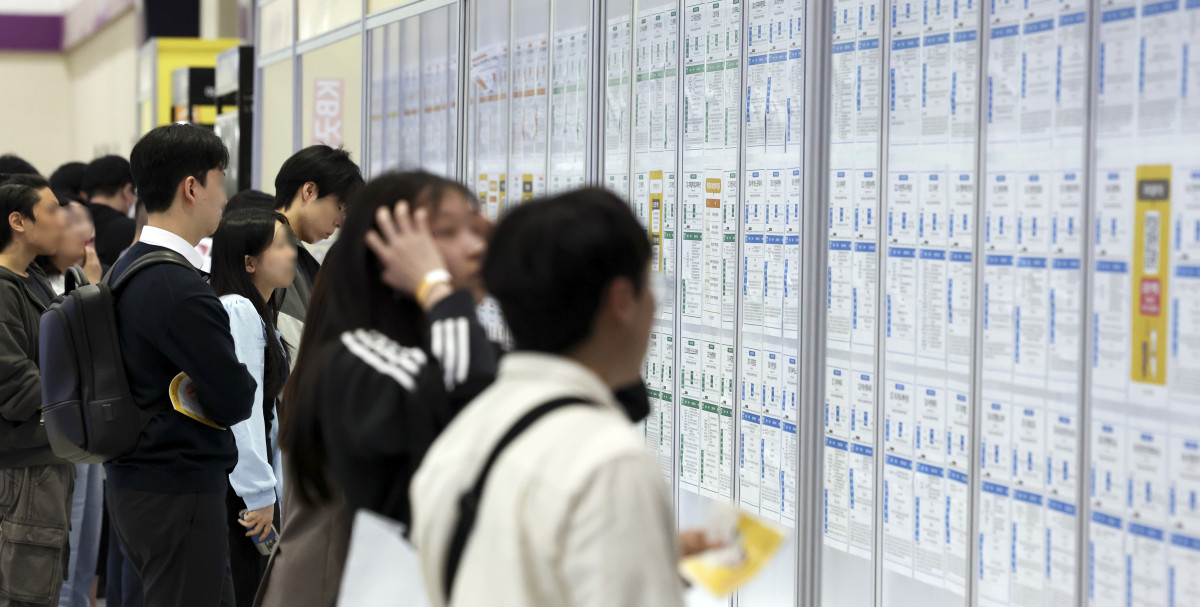
Recent empirical data from South Korea reveals a troubling economic cycle where young adults burdened by debt find themselves pushed into precarious labor conditions, exacerbating psychological distress and limiting their long-term career prospects. According to a landmark study released by the Korea Employment Information Service (KEIS), approximately 70% of indebted young job seekers enter the secondary labor market, taking on non-regular or temporary positions out of immediate financial necessity.
The research, which provides the first empirical analysis of how personal debt shapes youth employment transitions in the country, highlights the heavy toll financial obligations take on career planning. Researchers found that the pressure to service debts shortens the average job search period by 1.2 months compared to peers without debt liabilities. Driven by mounting repayment pressures, these individuals often accept unstable work hastily, only to face repeated career friction that erodes their psychological motivation to find stable employment.
For global economists and labor market analysts, the findings underscore a growing structural challenge: financial instability among youth does not merely reflect existing economic hardships; it actively restricts upward mobility. By trapping vulnerable graduates in low-quality jobs with limited wage growth, personal debt creates a self-reinforcing loop that impacts broader economic productivity and consumer spending patterns across South Korea’s metropolitan centers.
Understanding the Secondary Labor Market Trap
The secondary labor market typically encompasses non-regular, contract, or part-time roles characterized by lower wages, fewer social security benefits, and minimal job security. According to the KEIS findings, indebted graduates frequently gravitate toward this segment because immediate debt servicing demands leave them with zero financial runway to sustain a prolonged job search for primary labor market positions.
This forced compromise creates long-term structural disadvantages. Workers entering the secondary labor market often struggle to transition into stable corporate careers, widening the wage gap between them and their debt-free peers. Financial obligations thus function as a compressed timeline, forcing young job seekers to abandon career alignment in favor of immediate cash flow.
Policy experts note that this dynamic places an invisible ceiling on youth entrepreneurship and professional development. When graduates are consumed by debt repayment immediately after leaving university, their capacity to take calculated career risks—such as participating in professional training programs or waiting for suitable job openings—is severely diminished.
The Psychological Toll of Repeated Career Friction
Beyond immediate financial pressures, the study emphasizes a severe psychological dimension. As indebted youth cycle through temporary jobs and face repeated career setbacks, their intrinsic motivation and confidence steadily decline. The exhaustion of managing debt while navigating unstable employment manifests as diminished job-seeking drive.
Behavioral economists point out that chronic financial stress alters decision-making processes, often leading to risk-averse or fatalistic attitudes toward future planning. For young adults in South Korea, this psychological fatigue compounds the structural difficulties of the job market, creating a dual barrier of economic constraint and mental burnout.
Public health and labor advocacy groups have increasingly called attention to this mental health dimension, arguing that youth employment support policies must incorporate financial counseling and psychological assistance rather than focusing solely on job placement statistics.
Policy Responses and Future Checkpoints
As policymakers review the empirical data from the Korea Employment Information Service, discussions are underway to recalibrate national youth support frameworks. Stakeholders are evaluating how debt relief programs, restructured student loan repayment schedules, and targeted wage subsidies can interrupt the cycle between financial liability and precarious employment.
Official policy updates and subsequent research findings are expected to be reviewed in upcoming parliamentary committee sessions regarding youth employment strategy. Researchers and labor economists continue to monitor these metrics to assess the long-term efficacy of intervention programs designed to stabilize the financial and professional footing of young adults entering the workforce.
We welcome your perspective on this issue. Please share your thoughts or join the discussion in the comments below.