Nuclear Non-Proliferation Treaty Review Ends Without Consensus, Fueling Global Arms Race Concerns
NEW YORK — The 11th Review Conference of the Treaty on the Non-Proliferation of Nuclear Weapons (NPT) has concluded without reaching a consensus on a final declaration, marking a significant setback for international nuclear disarmament efforts. After four weeks of intense negotiations at the United Nations Headquarters in New York, Member States failed to agree on a unified document to modernize the landmark treaty, leaving the future of global nuclear security in a state of heightened uncertainty.
The failure to secure an agreement comes at a period of profound geopolitical instability. As nations continue to modernize their nuclear arsenals and the total number of weapons globally increases, the inability of the NPT’s States parties to reaffirm their commitments raises urgent fears regarding a renewed and uncontrolled nuclear arms race.
The Breakdown of Consensus in New York
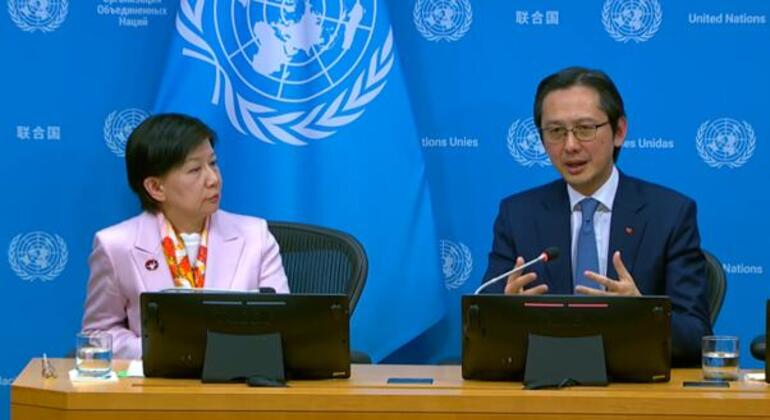
The negotiations, which spanned the past month, reached a critical impasse on Friday. Despite efforts to produce a fourth draft of the outcome document, delegates were unable to bridge the divides that prevented a final consensus. The impasse was formally acknowledged during a late-night press conference held at the UN Headquarters, where leadership expressed deep disappointment over the outcome.
Ambassador Do Hung Viet, the President of the conference, addressed journalists late Friday evening to discuss the fruitless attempts to bring the negotiations to a successful close. While Ambassador Viet praised the “sincere and meaningful engagement” of the delegates throughout the four-week session, he admitted that the failure to reach a consensus was a missed opportunity to enhance global safety.

Joining him at the press conference was Izumi Nakamitsu, the UN disarmament chief, who emphasized the gravity of the situation. The lack of a final declaration means that the measures intended to modernize and strengthen the NPT—which is now more than half a century old—remain unratified by the collective body of Member States.
The inability to reach an agreement highlights the deep-seated tensions currently characterizing the international landscape, making the consensus-based model of the NPT increasingly tough to maintain.
“The current international environment, which is marked by deep tensions and an elevated risk posed by nuclear weapons, demands very urgent action,” warned Ambassador Viet during the closing proceedings.
A Sixteen-Year Stalemate in Nuclear Diplomacy
The current failure is not an isolated incident but rather part of a concerning trend in nuclear diplomacy. It has now been sixteen years since the commitments made during the 1970 Treaty adoption were successfully reaffirmed or strengthened at a Review Conference. This prolonged gap in meaningful progress suggests a growing paralysis within the international community’s ability to manage nuclear proliferation and disarmament.
The NPT has long been regarded as the cornerstone of international efforts to prevent the spread of nuclear weapons and promote disarmament. However, the treaty’s aging framework is being tested by modern military doctrines and the expansion of nuclear capabilities among various global powers. Without a consensus-driven update to the treaty’s implementation, the gap between the treaty’s objectives and the reality of modern nuclear arsenals continues to widen.
The lack of a unified declaration means that the international community must now wait for a significant period before another formal opportunity to synchronize these efforts. The next scheduled Review Conference is not expected to take place until 2031, leaving a multi-year vacuum in formal, multilateral oversight and commitment-building.
Escalating Risks and the Modernization of Arsenals
The primary concern for security analysts and diplomats alike is the potential for an accelerated arms race. As the formal mechanisms of the NPT face stagnation, the trend toward the modernization of existing nuclear stockpiles has become more pronounced. Rather than moving toward reduction, many states are investing heavily in the technological advancement of their delivery systems and warhead capabilities.
The combination of rising tensions and the lack of a cohesive, updated NPT framework creates a volatile environment. Experts warn that the absence of a clear, agreed-upon roadmap for disarmament may embolden states to pursue unilateral nuclear advancements, further destabilizing the global security architecture.
The concerns raised during the New York negotiations underscore a fundamental tension: while the NPT remains the primary legal instrument for preventing nuclear proliferation, the political will required to sustain its effectiveness is being eroded by global shifts in power and military strategy.
Key Takeaways from the 11th NPT Review Conference
- Consensus Failure: After four weeks of negotiations, the conference ended without a final declaration or agreement on modernization measures.
- Diplomatic Impasse: The failure marks a significant breakdown in the ability of Member States to act collectively on nuclear disarmament.
- Historical Gap: It has been 16 years since a Review Conference successfully reaffirmed or strengthened NPT commitments.
- Arms Race Fears: The lack of consensus coincides with a global trend of nuclear arsenal modernization and increased weapon counts.
- Long-Term Delay: The next formal Review Conference is not scheduled to occur until 2031.
Looking Ahead: The Path to 2031
The conclusion of the 11th Review Conference leaves the international community in a precarious position. With no immediate multilateral forum to address the modernization of nuclear weapons or to reaffirm the principles of the NPT, the burden of maintaining stability shifts toward bilateral agreements and regional security frameworks, which may not offer the same level of global legitimacy or coverage as the NPT.

As the UN disarmament office and various Member States process the results of the New York negotiations, the focus will likely shift to how individual nations navigate the “deep tensions” cited by Ambassador Viet. Whether the current stalemate will prompt a renewed push for diplomacy or further entrench the current trend toward nuclear expansion remains the defining question for global security in the coming decade.
The next major checkpoint for the NPT will be the scheduled Review Conference in 2031, though many observers argue that the urgency of the current nuclear climate may require more frequent, albeit less formal, diplomatic interventions in the interim.
For more updates on global economic policy and international security, please subscribe to our newsletter and share this report with your network. We welcome your thoughts in the comments below.
Keep reading