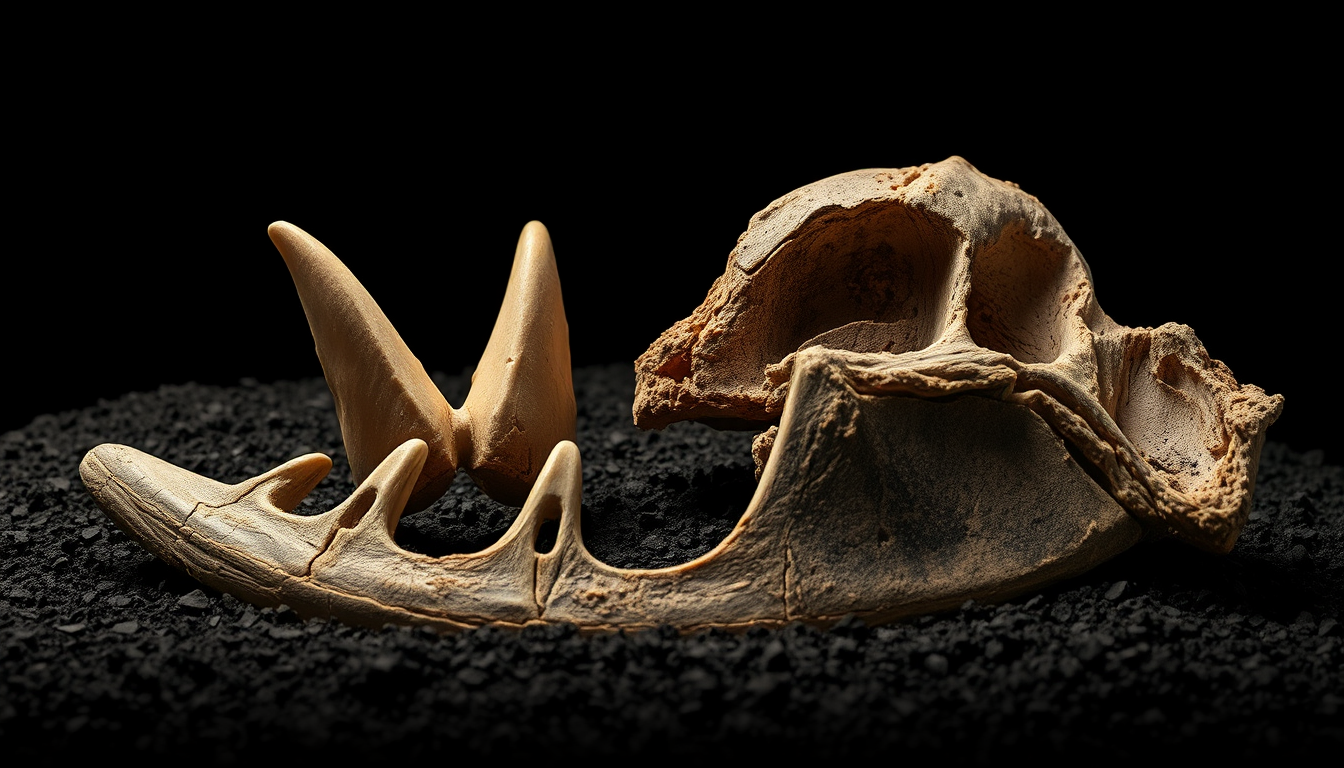
New evidence from Ethiopia’s Afar region is reshaping our understanding of early human evolution. A cache of 13 fossilized teeth—belonging to two distinct hominin species—suggests that nearly 2.8 million years ago, two lineages of early humans lived side by side, possibly competing for resources or even interbreeding. The discovery, published in Nature last month, challenges the linear narrative of human ancestry that has dominated paleontology for decades.
Led by an international team of researchers including Dr. Briana Pobiner of the Smithsonian Institution and Dr. Yonatan Sahle of the University of Chicago, the study analyzed teeth from the Australopithecus afarensis lineage—famous for the “Lucy” specimen—and a newly identified species, provisionally named Australopithecus deyiremeda. The teeth, dated to between 3.39 and 2.78 million years ago, were found just 10 kilometers apart in the same geological layer, indicating contemporaneous habitation.
The implications are profound. For years, scientists assumed early hominins evolved in isolation, with each species replacing the last in a neat succession. But these teeth—some belonging to A. Afarensis, others to A. Deyiremeda—paint a picture of ecological overlap, where two species with different diets (one adapted to harder foods, the other to softer vegetation) shared the same landscape. “This isn’t just about two species living near each other,” says Pobiner. “It’s about them interacting in ways we’re only beginning to understand.”
Why This Discovery Matters
- Coexistence, not replacement: The teeth prove two hominin species thrived simultaneously, contradicting the “single lineage” model of human evolution.
- Dietary niche separation: Differences in tooth enamel thickness suggest one species ate tougher foods (like nuts), while the other preferred softer plants.
- Behavioral complexity: Shared tool use or territorial overlap may have occurred, though direct evidence (like stone tools) is still scarce.
- Genetic implications: If these species interacted, it raises questions about early interbreeding—though no DNA has been recovered from these fossils.
The Science Behind the Teeth
The breakthrough hinges on microwear analysis and isotope dating. Researchers examined microscopic scratches on the teeth to determine diet, while uranium-lead dating of volcanic ash layers pinned the fossils to the Pliocene epoch. “The precision of these methods is what makes this study so compelling,” notes Dr. Sahle, who led the fieldwork.

Critics argue the sample size (13 teeth) is too small for definitive conclusions. However, the team cross-referenced the findings with earlier discoveries in the region, including the 3.2-million-year-old Australopithecus anamensis fossils, to build a stronger case for diversity. “This is the first time we’ve seen such clear evidence of multiple hominin species occupying the same ecological niche at the same time,” says Pobiner.
Early Hominin Timeline: What We Know Now
| Species | Time Period | Key Traits | Overlap with Other Species |
|---|---|---|---|
| Australopithecus afarensis | 3.9–2.9 million years ago | Bipedal, small-brained, “Lucy” specimen | A. Deyiremeda (new study) |
| Australopithecus deyiremeda | 3.39–2.78 million years ago | Larger molars, possible tool use | A. Afarensis, Paranthropus (debated) |
| Paranthropus spp. | 2.7–1.2 million years ago | Robust jaw, specialized for tough foods | A. Afarensis, A. Deyiremeda? |
Note: Overlap periods are based on fossil records and may evolve with new discoveries. Full study.
What Happened Next? The Fate of These Species
The story doesn’t end with these teeth. Around 2.5 million years ago, a new player entered the scene: Homo habilis, the first member of our genus. Some researchers speculate that competition with this early human may have contributed to the decline of A. Afarensis and A. Deyiremeda. However, the exact reasons remain debated.
One leading theory, proposed in Science Advances (2022), suggests climate shifts—specifically drying trends in East Africa—forced these species into closer contact, increasing competition for food and water. “The Afar region was a hotspot for hominin evolution, but it was also a volatile environment,” explains Dr. Kaye Reed of Arizona State University.
FAQ: Your Questions Answered
Were these species direct ancestors of modern humans?
No. While A. Afarensis is part of our lineage, A. Deyiremeda represents a separate branch that went extinct without leaving descendants. Our direct ancestors later emerged from the Homo genus.

Could these species have interbred?
Possibly, but no genetic evidence exists yet. The close proximity of their fossils suggests interaction, but whether it included mating remains unknown.
Why didn’t we know about this earlier?
Fossil records are incomplete. The Afar region is vast, and many sites remain unexplored. Advanced dating techniques (like laser ablation) have only recently allowed precise age estimates.
What’s next for this research?
Teams are now searching for associated skeletal remains (not just teeth) to clarify whether these species had overlapping lifespans or if one succeeded the other. Excavations in the Ledi-Geraru region may yield more clues by 2025.
Beyond the Fossils: What Which means for Us
The discovery forces us to reconsider how human evolution unfolded. For decades, textbooks portrayed a single line of progress from apes to Homo sapiens. But the Afar teeth reveal a branching bush, where multiple species experimented with different adaptations—some thriving, others fading away.
This has implications for modern anthropology. If early hominins coexisted and competed, could similar dynamics explain why some human populations today face extinction pressures? “Studying our past isn’t just about curiosity,” says Pobiner. “It’s about understanding the resilience—and fragility—of life on Earth.”
What do you think: Does this discovery change how you view human evolution? Share your thoughts in the comments below, or explore our archive of paleoanthropology stories for more insights.
Next Steps: The research team plans to present updated findings at the American Association for the Advancement of Science (AAAS) meeting in February 2024, where they’ll discuss potential links between these species and early stone tools.
Worth a look