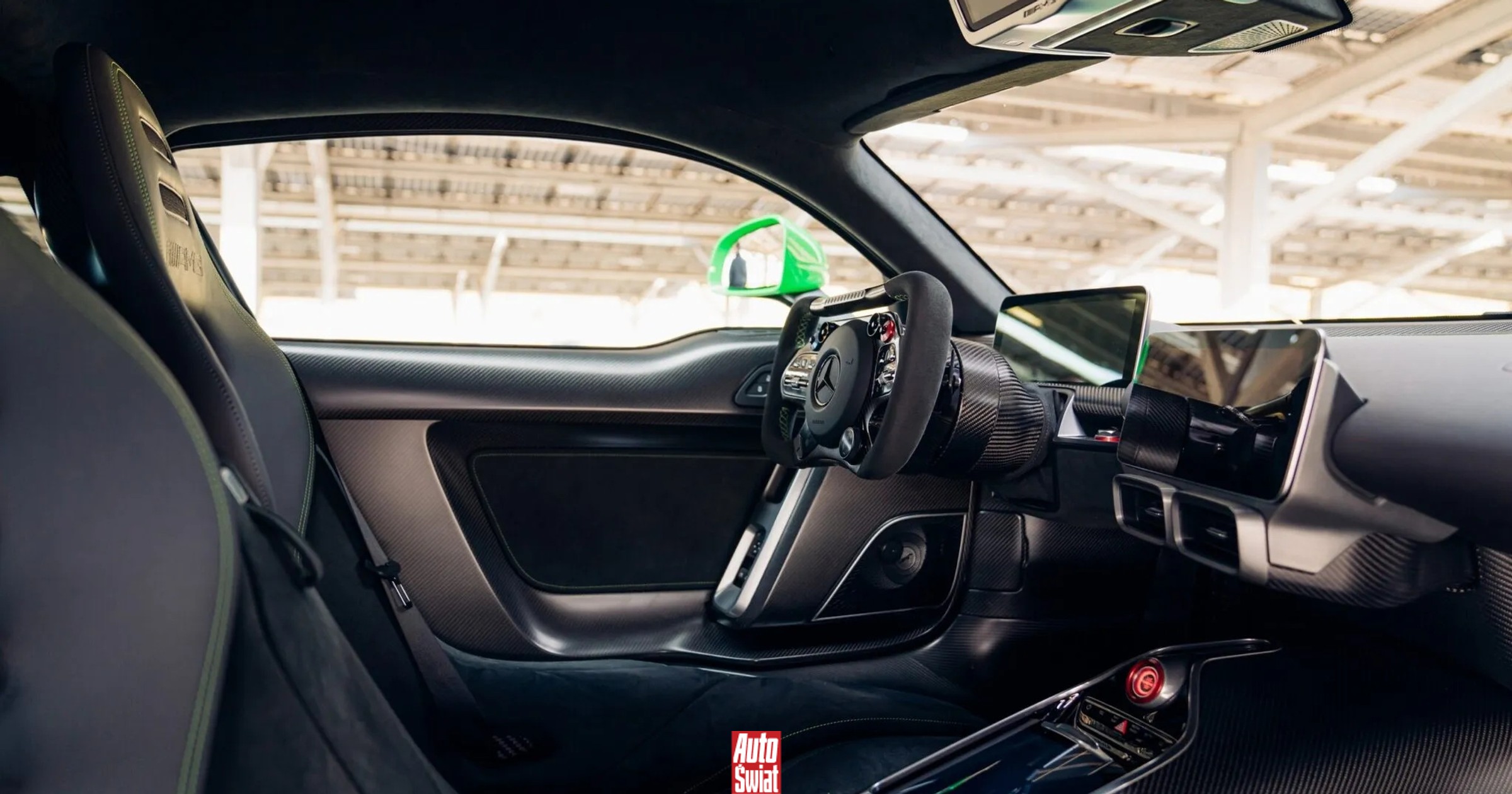
In the rarefied world of hypercars, the initial purchase price is often viewed as the primary hurdle. For the elite few who secure a vehicle like the Mercedes-AMG One, a multi-million dollar investment is simply the entry fee. However, a recent auction listing has pulled back the curtain on a different, more recurring financial reality: the staggering cost of maintaining a street-legal Formula 1 engine.
The Mercedes-AMG One is not merely a luxury vehicle. it is a feat of extreme engineering that bridges the gap between the racetrack and the public road. While most owners of high-end exotics are accustomed to five-figure service bills, the revelation of a first service costing tens of thousands of euros highlights the unique operational burdens associated with “halo” cars that utilize active racing technology.
For the global business community and automotive investors, these figures serve as a critical reminder that the total cost of ownership (TCO) for ultra-rare assets can be as volatile as the markets themselves. When a single routine check-up rivals the price of a brand-new mid-range luxury sedan, the line between a passion project and a financial liability begins to blur.
The €37,610 Service Bill: A New Benchmark in Maintenance
The scale of the Mercedes-AMG One’s upkeep came into sharp focus when a striking, bright green example of the hypercar was listed for auction by RM Sotheby’s. Among the meticulously documented records provided for prospective buyers was the invoice for the vehicle’s first scheduled service, which totaled 37,610 euros. This figure, which converts to approximately $40,000 depending on exchange rates, represents a level of maintenance expenditure rarely seen outside of professional motorsport teams.

While a standard luxury car service might involve oil changes and brake inspections, the “first service” for an AMG One is an exhaustive technical audit. Because the car utilizes a powertrain derived directly from Mercedes-AMG’s dominant Formula 1 era, the precision required for maintenance is absolute. Every component is tuned to tolerances that would be impractical for any other road-going vehicle, necessitating specialized tools and technician expertise that are only available at a handful of certified centers worldwide.
From a business perspective, this expenditure is often categorized by collectors not as a loss, but as “preservation capital.” In the hypercar market, a complete and official service history is paramount to maintaining the asset’s valuation. A missed service or a third-party repair could potentially slash hundreds of thousands of dollars off the vehicle’s eventual resale price, making the €37,610 bill a necessary investment in the car’s provenance.
Engineering the Impossible: Why the Cost is So High
To understand why a first service costs as much as a new car, one must examine the heart of the Mercedes-AMG One. The vehicle is powered by a 1.6-liter V6 turbocharged hybrid engine—essentially a street-legal version of the power unit used in the F1 World Championship. This engine is paired with four additional electric motors, creating a complex hybrid system that manages power distribution with millisecond precision.
The complexity of this powertrain drives the maintenance costs in several ways. First, the lubricants and fluids used in an F1-derived engine are not off-the-shelf products; they are high-performance synthetic compounds designed to withstand extreme thermal stress. Second, the labor involved is immense. The engine’s architecture is incredibly dense, meaning that accessing certain components for inspection requires significant disassembly of the vehicle’s carbon-fiber chassis and aerodynamic elements.
the AMG One utilizes an advanced energy recovery system (ERS) and a complex cooling network to keep the hybrid battery and the turbocharger from overheating. These systems require specialized diagnostic software and calibration that must be performed by engineers trained in racing telemetry. The cost of the service, reflects not just the parts and fluids, but the highly specialized intellectual property and labor hours required to ensure the car remains safe and performant.
The Hypercar as an Asset Class: Depreciation vs. Appreciation
The appearance of the Mercedes-AMG One at RM Sotheby’s underscores the transition of these vehicles from mere transportation to alternative investment assets. With production limited to just 275 units, the AMG One was sold out long before the first production model ever hit the road. This scarcity creates a powerful secondary market where demand consistently outstrips supply.
For the ultra-high-net-worth individual, the cost of maintenance is weighed against the potential for capital appreciation. High-performance cars with significant technological milestones—such as being the first to bring a full F1 hybrid powertrain to the street—tend to hold their value better than traditional luxury cars. When a vehicle’s market value can jump by millions of dollars in a few years, a €37,610 service bill becomes a marginal operating expense.
However, this investment strategy carries risks. The “hypercar bubble” is sensitive to economic shifts and changes in automotive regulations. As the world moves toward full electrification, the value of internal combustion engines (ICE)—even hybrid ones—may fluctuate. The AMG One sits in a unique position as a bridge between the peak of combustion engineering and the future of electric performance, which likely protects its value in the eyes of collectors who view it as a historical artifact.
The Hidden Realities of Ultra-Luxury Ownership
The financial narrative of the Mercedes-AMG One reveals a broader trend in the luxury sector: the rise of “extreme ownership.” As manufacturers push the boundaries of what is possible, they are creating products that require a lifestyle of maintenance. Owning an AMG One is less like owning a car and more like managing a small racing team.

Beyond the scheduled services, owners must consider the logistical costs of transporting the vehicle to certified service centers, the cost of specialized insurance, and the potential for “out-of-warranty” repairs. In a car where a single carbon-fiber panel or a specialized sensor can cost thousands of dollars to replace, the financial commitment extends far beyond the initial check written to the manufacturer.
This shift toward high-maintenance, high-reward assets is reflective of a broader trend in the luxury market where “exclusivity” is defined not just by who can afford to buy the product, but by who can afford to keep it in peak condition. The €37,610 service bill is a badge of exclusivity in its own right, signaling that the owner possesses the liquid capital to sustain one of the most complex machines ever sold to the public.
Key Takeaways for Automotive Investors
- Maintenance as Valuation: For hypercars, a documented, official service history is critical for maintaining resale value; skipping services can lead to significant depreciation.
- F1 Technology Costs: The use of Formula 1-derived powertrains introduces motorsport-level maintenance costs to road vehicles, including specialized fluids and elite engineering labor.
- TCO vs. Purchase Price: Total Cost of Ownership for “halo” cars includes significant recurring expenses that can exceed the price of standard luxury vehicles.
- Asset Scarcity: With only 275 units produced, the Mercedes-AMG One remains a high-demand asset, potentially offsetting high operating costs through capital appreciation.
As the automotive industry continues to evolve, the Mercedes-AMG One stands as a testament to the pursuit of absolute performance. While the cost of its first service may seem astronomical to the average observer, it is a precise reflection of the engineering that makes the car possible. For the collector, it is simply the price of perfection.
The next major milestone for the Mercedes-AMG One community will be the continued emergence of these vehicles in the secondary auction market, which will provide a clearer picture of how the market values these “road-going racers” over the long term.
Do you believe the astronomical maintenance costs of hypercars are justified by their investment potential, or is there a point where the cost of ownership outweighs the prestige? Share your thoughts in the comments below.
Related reading