
June 5, 1956: The Day a Federal Court Ruling Shattered Segregation—and Launched a Civil Rights Revolution
Sixty-eight years ago today, a federal district court in Montgomery, Alabama, delivered a verdict that would echo through history: segregation on public buses violated the 14th Amendment’s equal protection clause. The ruling in Browder v. Gayle didn’t just end Jim Crow on Montgomery’s buses—it became the legal foundation for the U.S. Supreme Court’s final decision that November, marking a turning point in America’s struggle for racial justice.
This wasn’t just a legal victory—it was a triumph of nonviolent resistance that transformed Martin Luther King Jr. Into a national leader and proved the power of mass protest. The boycott that followed would last 381 days, reshaping civil rights movements nationwide and setting a precedent that still influences equality battles today. Here’s how that June 5, 1956 ruling changed everything—and why it remains one of the most consequential court decisions in modern American history.
The Case That Challenged a Century of Jim Crow
The Montgomery Bus Boycott began on December 5, 1955, when Rosa Parks—an African American seamstress and NAACP member—refused to give up her seat to a white passenger on a crowded Montgomery bus. Her arrest sparked a citywide protest coordinated by the Montgomery Improvement Association (MIA), with the young Baptist minister Martin Luther King Jr. As its president.
What started as a one-day boycott became a 13-month economic and moral campaign. Black residents walked, carpooled, or rode mules instead of buses, costing the city’s transit system over $400,000 in lost revenue (equivalent to over $4 million today). The MIA’s strategy—nonviolent resistance, church-based organizing, and economic pressure—became a blueprint for future civil rights movements.
But legal victory remained elusive until June 5, 1956. That morning, U.S. District Judge Frank M. Johnson Jr. Issued a sweeping injunction declaring Montgomery’s bus segregation laws unconstitutional. The ruling cited Browder v. Gayle, a consolidated case brought by four Black women—Claudette Colvin, Aurelia Browder, Susie McDonald, and Mary Louise Smith—who had all been arrested for refusing to comply with segregation rules.
“Segregation on the basis of race is a denial of the equal protection of the laws guaranteed by the Fourteenth Amendment.”
Key Details of the Ruling
- Legal Basis: Violated the 14th Amendment’s equal protection clause
- Scope: Applied to all public transportation in Montgomery County
- Immediate Impact: Ordered buses to integrate “with all deliberate speed”
- Next Step: Case appealed to the U.S. Supreme Court (final ruling: November 13, 1956)
How the Ruling Came About: The Legal Battle Behind the Boycott
The road to June 5, 1956 was paved with earlier legal challenges and grassroots organizing. As early as 1946, the Women’s Political Council (WPC), led by Jo Ann Robinson, had been pressing for bus reforms. Their 1954 letter to Mayor W.A. Gayle warned of a potential boycott if changes weren’t made:
/supreme-court-west-entrance-564091971-crop-595477603df78cdc29d6e89e.jpg "Supreme Court")
“There has been talk from twenty-five or more local organizations of planning a city-wide boycott of buses.”
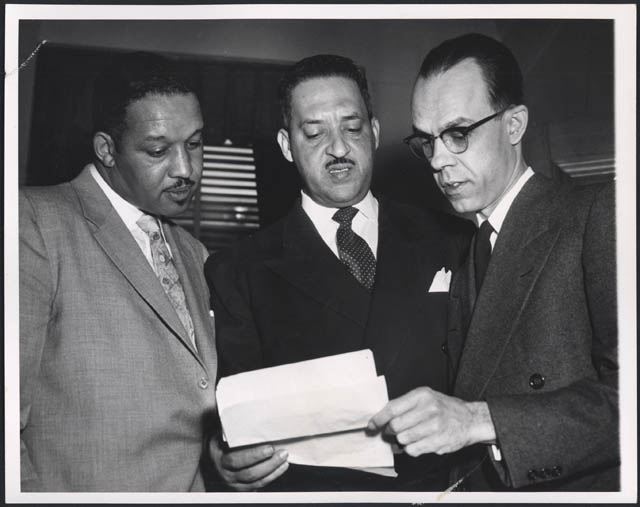
The boycott’s legal team, led by civil rights attorneys Fred Gray and Thurgood Marshall (later a Supreme Court justice), strategically chose to sue under the 14th Amendment rather than the Interstate Commerce Act, which had failed in earlier cases like Morgan v. Virginia (1946). Their argument was simple but powerful: segregated buses denied Black citizens equal protection under the law.
Rosa Parks’ arrest sparks the boycott. Over 40,000 Black Montgomerians refuse to ride buses.
U.S. District Court denies preliminary injunction against boycott, ruling segregation laws are constitutional.
Federal court rules segregation unconstitutional in Browder v. Gayle.
U.S. Supreme Court affirms lower court ruling, ending bus segregation nationwide.
Why This Ruling Was a Turning Point for Civil Rights
The June 5, 1956 decision wasn’t just about buses—it was about dismantling the legal architecture of segregation. Here’s why it mattered:
- Legal Precedent: It became the first federal court ruling to declare segregation on public transportation unconstitutional, directly challenging Plessy v. Ferguson‘s “separate but equal” doctrine.
- Strategic Victory: The boycott’s organizers had planned to take the case to the Supreme Court regardless of the district court’s decision. The June 5 ruling gave them a stronger position.
- National Attention: The boycott received worldwide coverage, making Montgomery a symbol of resistance and King a national figure.
- Economic Impact: The boycott’s success proved that economic pressure could force systemic change—a tactic later used in the Selma voting rights campaign and lunch counter sit-ins.
Perhaps most importantly, the ruling demonstrated that courts could be used as tools for justice—not just symbols of oppression. As King later wrote in his memoir Stride Toward Freedom:
“The real meaning of the Montgomery bus boycott was the power of a growing self-respect to animate the struggle for civil rights.”
The Road to the Supreme Court: What Happened Next
While the June 5 ruling was a major victory, the legal battle wasn’t over. Montgomery’s city officials appealed to the U.S. Supreme Court, arguing that the lower court lacked jurisdiction. The high court agreed to hear the case, setting the stage for its historic November 13, 1956 decision.
The Supreme Court’s unanimous ruling (9-0) affirmed the district court’s decision, declaring that bus segregation was unconstitutional and ordering Montgomery to integrate its transit system “with all deliberate speed.” This phrase became infamous for its ambiguity—but it was a victory nonetheless. As Justice William O. Douglas wrote in the majority opinion:
“We cannot hold that the maintenance of a system which treats persons as justly inferior in their dignity and worth is a state of liberty.”
By December 21, 1956—exactly one year after Rosa Parks’ arrest—the buses of Montgomery were integrated. The boycott had achieved its primary goal, but its legacy extended far beyond Alabama’s borders.
Legacy: How the Montgomery Bus Boycott Changed America
The June 5, 1956 ruling and its aftermath had ripple effects that shaped the civil rights movement for decades:
- King’s Leadership: The boycott catapulted King from a local pastor to a national leader, setting the stage for his role in the 1963 March on Washington.
- Nonviolent Resistance: The boycott’s success inspired similar campaigns across the South, including the Greensboro sit-ins (1960) and Freedom Rides (1961).
- Legal Strategy: The case demonstrated the power of federal courts in enforcing civil rights, paving the way for future litigation like Heart of Atlanta Motel v. U.S. (1964).
- Economic Empowerment: The boycott encouraged Black-owned businesses to flourish, creating economic independence from white-controlled systems.
Today, the Montgomery Bus Boycott is remembered as a defining moment in the struggle for racial equality. The Montgomery Bus Boycott National Historic Trail preserves key sites, including the Dexter Avenue King Memorial Baptist Church where King organized the movement.
What Happened After the Ruling? The Boycott’s Long Shadow
While the buses were integrated by late 1956, the fight for full equality continued. Here’s how the boycott’s legacy unfolded:
- 1957: The Civil Rights Act of 1957 became the first federal civil rights law since Reconstruction, establishing the U.S. Civil Rights Commission.
- 1960: Four Black students in Greensboro, NC, launched the sit-in movement, inspired by Montgomery’s success.
- 1963: The March on Washington saw 250,000 people demand civil rights, with King delivering his “I Have a Dream” speech.
- 1964: The Civil Rights Act banned segregation in public accommodations, building on the legal foundation laid by Browder v. Gayle.
Even today, the boycott’s principles resonate in modern social justice movements. The economic boycott strategy has been used in campaigns against police brutality, immigration policies, and corporate discrimination.
Key Takeaways: Why This Ruling Still Matters
- The June 5, 1956 ruling was the first federal court decision to declare segregation on public transportation unconstitutional.
- It proved that nonviolent mass protest could achieve legal victories, inspiring future civil rights campaigns.
- The case set the stage for the U.S. Supreme Court’s November 1956 decision that ended bus segregation nationwide.
- Martin Luther King Jr.’s leadership during the boycott established him as a key figure in the civil rights movement.
- The economic impact of the boycott demonstrated the power of collective action in challenging systemic injustice.
Where to Learn More About the Montgomery Bus Boycott
- The King Institute at Stanford University – Primary source documents and King’s writings
- Montgomery Bus Boycott National Historic Trail – Official preservation site
- Library of Congress Digital Collections – Historical photographs and records
- Southern Poverty Law Center – Educational resources
Reflecting on June 5, 1956
The Montgomery Bus Boycott wasn’t just about buses—it was about dignity, resistance, and the power of ordinary people to demand justice. As we mark the 68th anniversary of this pivotal ruling, it’s worth asking: How can the principles of nonviolent resistance and collective action inspire today’s movements for equality?
Share your thoughts in the comments below or join the conversation on social media using #MontgomeryBoycott68.
Related reading