Winston Churchill: The Painter Review – A Statesman’s Brushstrokes of War and Peace
London — Sir Winston Churchill is best remembered for his oratory, his indomitable leadership during World War II, and his towering presence in 20th-century politics. But for the first time in decades, a major exhibition at the Wallace Collection is revealing another side of the man: the painter. Opening May 23 and running through November 29, Winston Churchill: The Painter presents over 50 of his works—many from private collections rarely seen by the public—offering a visual diary of a life spent balancing power and creativity.
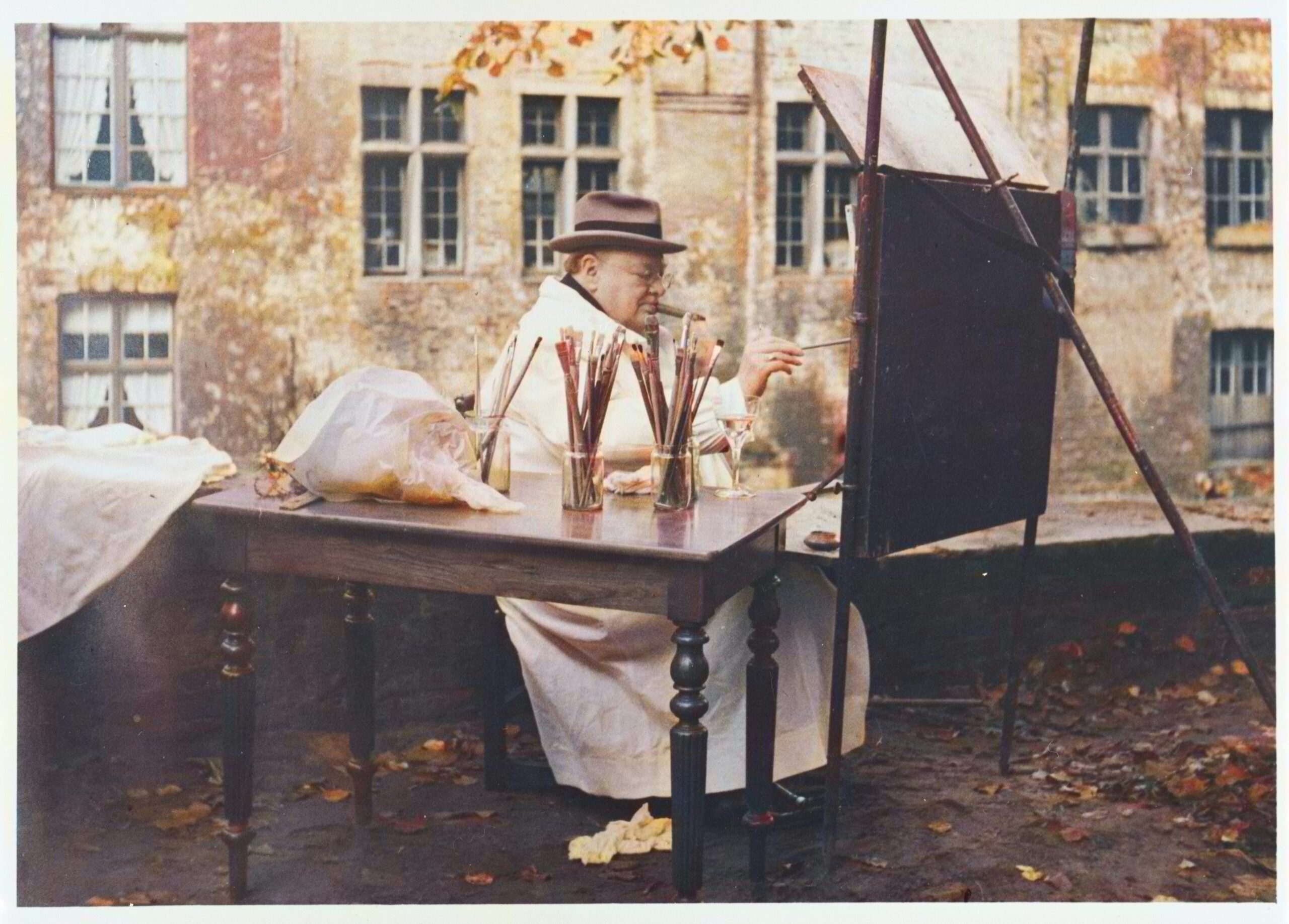
Churchill began painting in 1915, a year marked by personal and national crisis after the Gallipoli disaster. What started as a private refuge evolved into a lifelong discipline, producing more than 500 canvases across five decades. The exhibition traces his artistic journey from tentative beginnings to bold late works, revealing a painter of surprising range. Visitors will encounter sombre wartime scenes, radiant Mediterranean harbours, and luminous Moroccan cityscapes—each a silent testament to where he was, when, and what he saw.
The retrospective arrives at a moment when Churchill’s legacy is being reexamined through new lenses. While historians debate his political complexities, his paintings offer an unfiltered glimpse into the man behind the speeches. As curators Xavier Bray and Lucy Davis note, these works are not masterpieces by traditional standards. Churchill himself dismissed them as “daubs,” but their charm lies in their authenticity—a record of a statesman who found solace in colour and light.
A Painter’s Refuge: How Churchill Found Solace in Brushstrokes
Churchill’s artistic output was never intended for fame. He painted for himself, a private act of rebellion against the pressures of office. During World War II, when the weight of leadership bore down on him, his canvases became a sanctuary. The exhibition includes wartime scenes that capture the gravity of the era—yet even in darkness, there is a quiet joy. A 1943 painting of the Koutoubia Mosque in Marrakech, for instance, glows with the same warmth as his earlier Mediterranean views, suggesting that beauty was a constant even amid chaos.

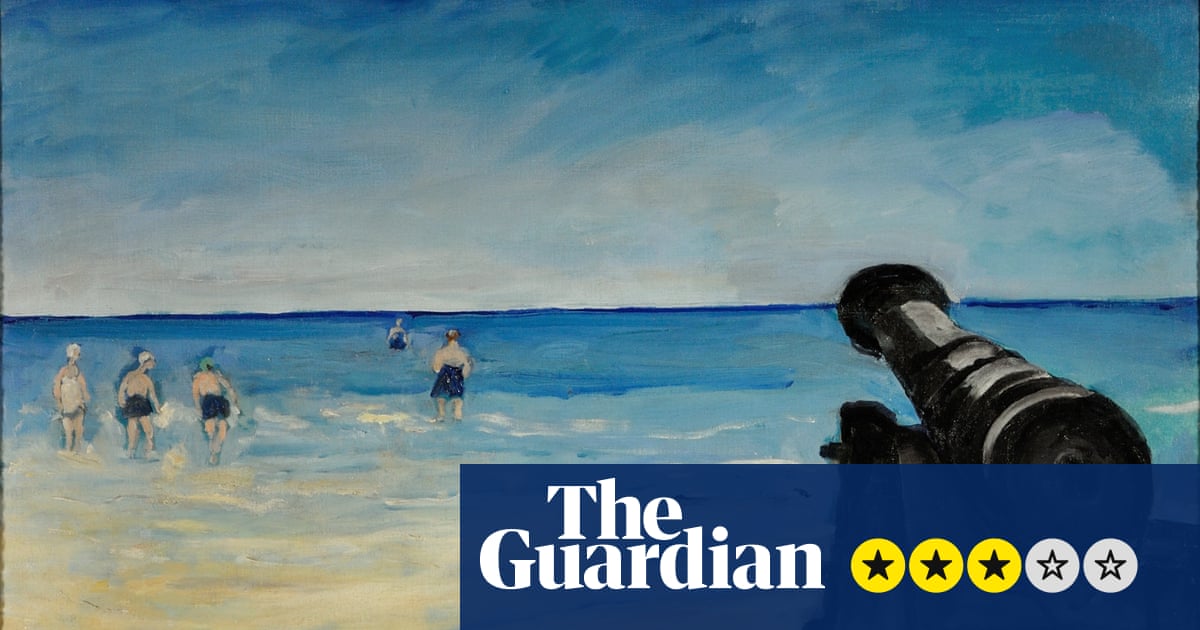
Curators avoid overinterpreting the works as political statements, though subtle connections emerge. A cannon pointing toward the sea in The Beach at Walmer (c. 1938), a favourite bathing spot of the Churchill family, might evoke his contemporaneous warnings about Nazi Germany. But the exhibition’s strength lies in letting the paintings speak for themselves—as historical documents, not allegories.
Churchill’s artistic influences are also on display. Works by his mentors, including Sir John Lavery and Sir William Nicholson, contextualize his development. His style—impressionist-leaning but unpolished—reflects a man who painted for pleasure, not perfection. As he once wrote, “The simplest objects have their beauty.”
From Private Pleasure to Diplomatic Gifts
While many of Churchill’s paintings were personal, some became diplomatic gifts. His luminous Moroccan cityscapes, for example, were presented to foreign leaders as tokens of friendship. The exhibition highlights how art served as a form of “soft power,” a quiet extension of his political influence.
Churchill’s subjects range from stately mansions (Blenheim Palace, his ancestral home) to bottles of his favourite tipples, still lifes of Chartwell’s garden, and views from his travels—Jerusalem in 1921, the French Riviera, and the Scottish Highlands. Each work is a postcard from history, offering a rare intimate perspective on a man who spent much of his life in the public eye.
What makes the exhibition so compelling is its balance: it neither mythologizes nor dismisses Churchill’s art. Instead, it presents it as what it was—a lifelong pursuit that brought him joy, a way to process the world, and a legacy beyond politics.
Why This Exhibition Matters
In an era where leaders are often judged solely by their policies, Winston Churchill: The Painter reminds us that even the most formidable figures have private lives—and private passions. Churchill’s paintings are not great art by conventional standards, but they are historically significant. They document his travels, his friendships, and his resilience during wartime. More importantly, they humanize him.
For art lovers, the exhibition is a discovery. For history buffs, it’s a fresh lens on Churchill’s life. And for anyone who has ever turned to creativity as a way to cope, it’s a celebration of art as a universal refuge.
As the exhibition’s subtitle suggests, Churchill’s paintings are not just visuals—they are a record of a man who, in his own words, “never painted a picture that did not make me happy.” In that happiness, we find a side of history we rarely see.
Key Takeaways
- First major UK retrospective: The Wallace Collection’s exhibition is the first substantial showcase of Churchill’s paintings since his death in 1965.
- Over 50 works: More than half are from private collections, including rare pieces never before exhibited.
- Art as therapy: Churchill began painting in 1915 as a way to process personal and national crises, continuing for five decades.
- Diplomatic gifts: Some paintings were presented to foreign leaders, serving as cultural ambassadors alongside his political role.
- No masterpieces, but historical value: The works are valued not for technical skill but for their authenticity as a visual diary of Churchill’s life.
What’s Next?
The exhibition runs through November 29, 2026, with members enjoying free admission and priority access on Friday, May 22. The Wallace Collection is also hosting talks, tours, and creative workshops exploring Churchill’s artistic practice and its historical context.
For those unable to visit London, the exhibition’s accompanying catalogue and digital resources will offer deeper insights into Churchill’s creative process.
Have you seen Churchill’s paintings before? Share your thoughts in the comments—or tag us on social media with your favourite works from the exhibition. And if you’re planning a visit, don’t miss the chance to see these private glimpses into history.
Related reading