Five Years of Total Exclusion
An estimated 2.4 million Afghan girls remain barred from secondary education. As Afghanistan marks five years since the Taliban seized power, a United Nations agency confirms the country stands alone globally with a formal ban on secondary and higher education for women and girls.
UNESCO highlighted the grim milestone on Tuesday. The protracted educational ban has effectively erased nearly an entire secondary school cycle for a generation.
The agency warned that this systematic exclusion carries severe consequences for Afghanistan’s economic and social development. Half the population already lives below the poverty line.
The Fall of Kabul and the Return of Edicts
The Taliban took control on August 15, 2021. The takeover followed the withdrawal of U.S. and NATO forces after two decades of war.
Authorities barred girls from secondary schools shortly after seizing power. They later extended the prohibition to higher education, employment, and other sectors.
The United Nations, humanitarian groups, human-rights advocates, and various Islamic nations have issued repeated appeals. Yet the de facto authorities maintain the edicts, insisting the matter falls under domestic policy.
Undoing Two Decades of Progress
The sweeping restrictions dismantled two decades of progress achieved since 2001.
UNESCO figures show primary school enrollment for girls rose from virtually zero in 2001 to over 80 percent by 2021. Female literacy rates nearly doubled from 17 percent to almost 30 percent across all age groups.
Nearly 1 million girls were enrolled in secondary education by 2021.
Hoda Jaberian, UNESCO’s program coordinator for education in emergencies, noted during a video news conference reported by ABC News that the ongoing bans have fundamentally reversed these hard-won gains. Jaberian stated that the five-year exclusion is not a temporary interruption in a child’s education, reiterating that the right to education is non-negotiable and has no substitute.
Silencing Professional Life
The crackdown reached far beyond classrooms. More than 80 percent of women working in media have lost their jobs since 2021, according to UNESCO data.

A decree introduced in the summer of 2024—the Law on the Promotion of Virtue and Prevention of Vice—further restricts the representation of human figures. It also prevents women from speaking on the radio.
Grassroots Resistance and Alternative Classrooms
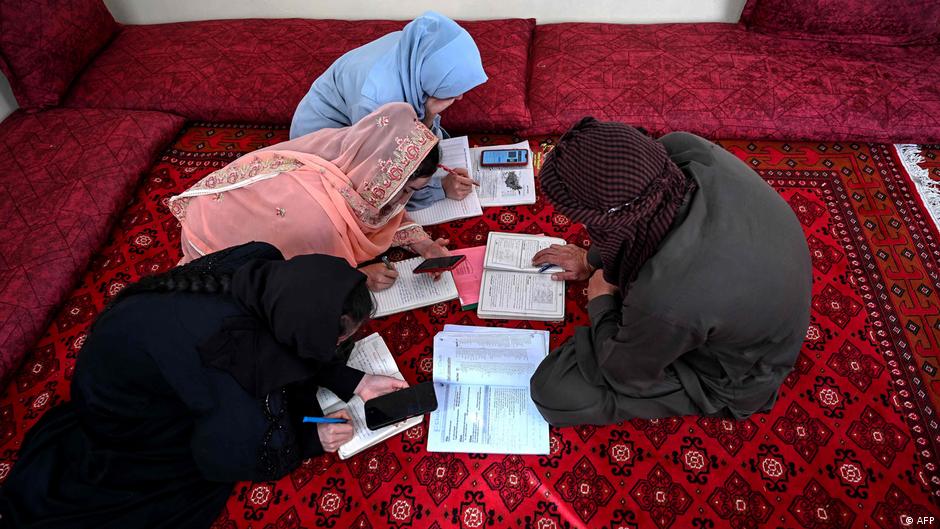
UNESCO has mobilized support for alternative learning methods. It trained over 1,000 community-based facilitators across more than 2,600 villages to provide literacy courses to 57,000 young people, the vast majority of whom are girls.
These literacy classes take place in community spaces, often inside the homes of the literacy facilitators, with the knowledge of the authorities, according to the agency.
Digital and broadcast initiatives have stepped into the breach. The SOLAx WhatsApp-based online academy and educational programming produced in partnership with organizations like the Begum Organization for Women have reached an estimated audience of 17 million Afghans through radio and cable platforms.
UNESCO continues to press the international community to maintain diplomatic pressure on the de facto authorities. It demands the immediate and unconditional reopening of schools and universities for women and girls.
Officials stress that while alternative programs offer support, they cannot replace classroom education.
Related reading