Healthcare organizations face a cooling market for digital infrastructure support as consultant resource constraints and high staff turnover drive a decline in overall client satisfaction for ERP implementation services. According to the 2026 KLAS ERP Implementation Services Report, firms must now navigate a landscape where health systems demand greater strategic guidance and continuity to justify the substantial investment in enterprise resource planning technology. The data, published by KLAS Research, highlights a growing performance gap between firms that provide deep domain expertise and those struggling with variable staffing quality.
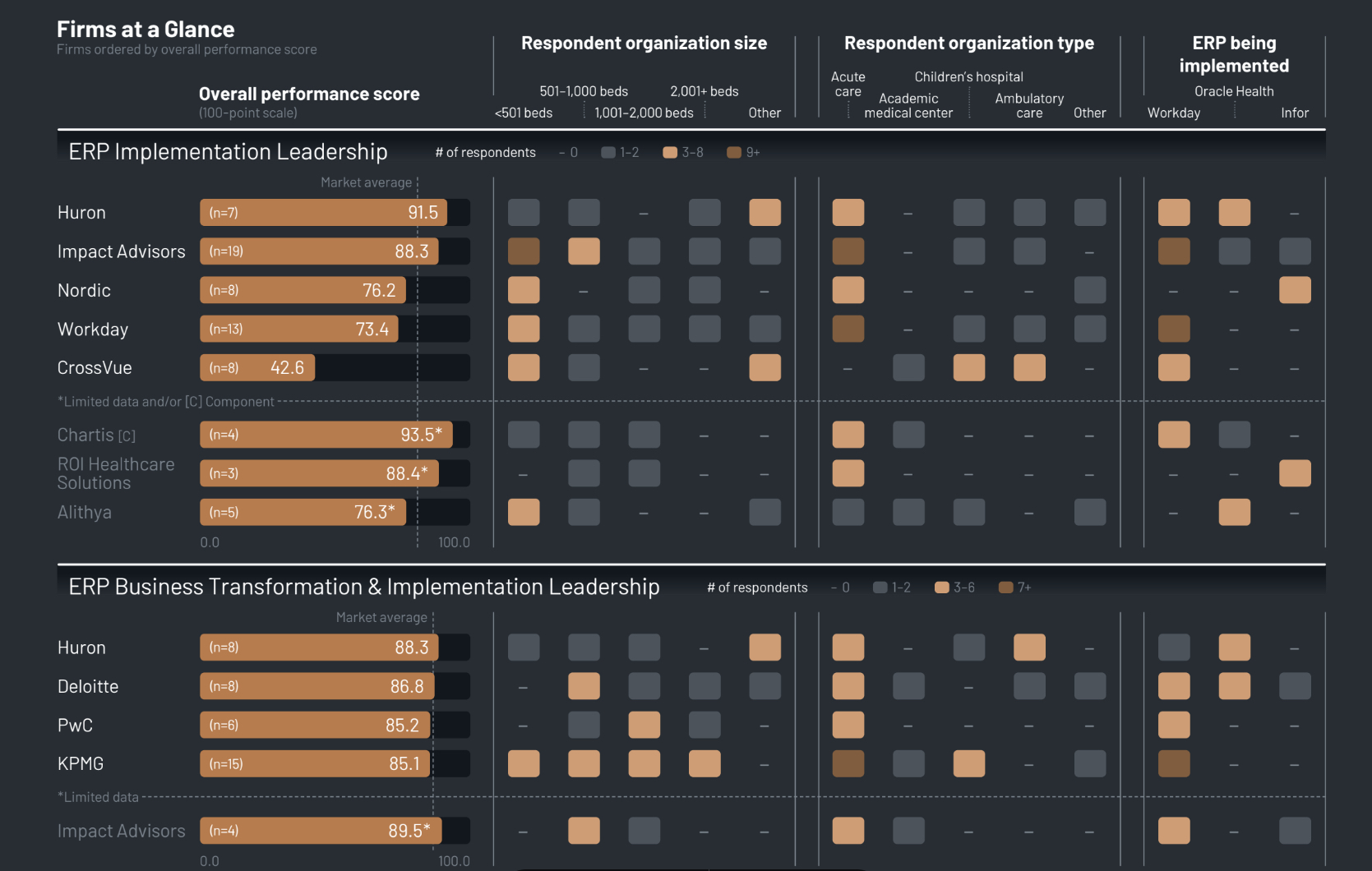
The report evaluates service providers across two primary tracks: ERP Implementation Leadership, which focuses on technical deployment and system integration, and ERP Business Transformation & Implementation Leadership, which encompasses broader financial and operational redesign. In the implementation track, Huron secured the 2026 Best in KLAS award with an overall score of 91.5. Conversely, the business transformation segment saw KPMG take the top honor with a score of 85.1, reflecting its position as a major provider of Workday-validated engagements in the healthcare sector.
Implementation Leadership: Domain Expertise as a Differentiator
Health systems require more than just technical configuration; they require partners who understand the nuances of the clinical workforce. Huron’s leadership in the implementation category is attributed to its ability to anticipate operational friction, such as union regulations, nursing shift patterns, and the complexities of traveler staffing. Impact Advisors, which followed with a score of 88.3, earned recognition for its transparent communication and structured project management, particularly within Workday environments.
Performance across the segment remains inconsistent, however. While some firms maintain high standards, others have faced challenges. Nordic recorded a score of 76.2, with clients noting a need for more proactive strategic guidance. Workday Professional Services, scoring 73.4, received feedback regarding gaps in healthcare-specific domain knowledge, particularly in areas like supply chain management and grants administration. CrossVue, which recorded a score of 42.6, struggled with high consultant turnover, a factor that directly impacted team continuity and the ability to meet project timelines.
Business Transformation: Navigating Large-Scale Change
The business transformation segment, which involves deeper strategic integration, has seen a broader contraction in satisfaction. Overall scores in this category fell from 89.5 to 85.4 over the past year, as reported by KLAS Research. This decline is largely attributed to resource constraints and inconsistent strategic advice provided during complex, multi-year transformations.
KPMG, the 2026 Best in KLAS award recipient for transformation, is noted for its executive presence and ability to manage large-scale health system deployments. Other firms demonstrating strong capabilities include:
- Huron (88.3): Praised for fostering collaborative relationships that function as an extension of the internal health system team.
- Deloitte (86.8): Valued by large health systems for its cross-industry scale and ability to maintain budget discipline.
- PwC (85.2): Recognized for a logical, objective approach to strategy and scope management within Workday environments.
In a specialized role, Chartis achieved a score of 93.5. Rather than serving as a prime implementer, Chartis functions in a Component role, providing high-level executive leadership to manage strategy and oversee third-party firms, a model that has proven effective for health systems seeking supplementary governance.
Strategic Principles for ERP Success
To mitigate the risks associated with the current market volatility, KLAS identifies six core execution principles that health system leaders should enforce to protect project ROI. These recommendations are designed to prevent the common pitfalls of post-go-live burnout and budget overruns.
First, organizations must prioritize change management and training as a fundamental component of the project rather than an afterthought. Second, leaders should demand “healthy pushback” from consulting partners; high-performing firms are those willing to challenge legacy, un-optimized workflows. Third, health systems must establish clear contractual expectations regarding consultant continuity, specifically addressing onboarding lead times and resource quality.
Fourth, measurable outcomes—such as AP automation rates or payroll cycle reductions—should be defined as specific Key Performance Indicators (KPIs) before scoping begins. Fifth, clinical and operational teams should be encouraged to adopt standardized vendor best practices to avoid the costs of over-engineering custom modifications. Finally, organizations are cautioned against rushing go-live dates. According to the research, projects that force aggressive, condensed timelines consistently report lower satisfaction and higher costs associated with post-implementation rework.
As healthcare organizations continue to modernize their digital backbones, the selection of a consulting partner remains one of the most significant decisions in the ERP lifecycle. Future updates from KLAS Research will continue to monitor how these service firms adapt to resource availability and evolving health system requirements. Readers are encouraged to monitor upcoming performance benchmarks as these firms adjust their staffing models to meet industry demand.