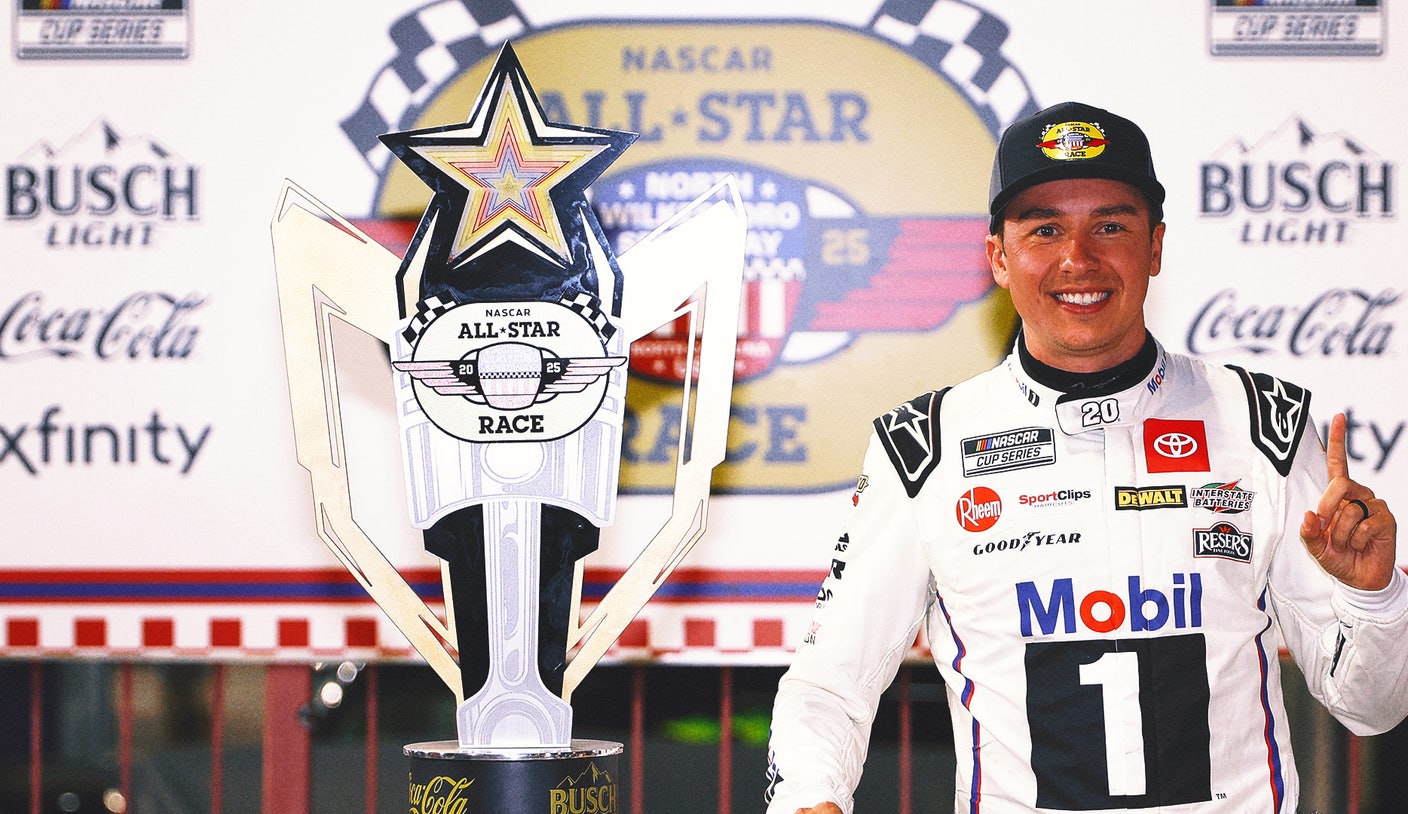
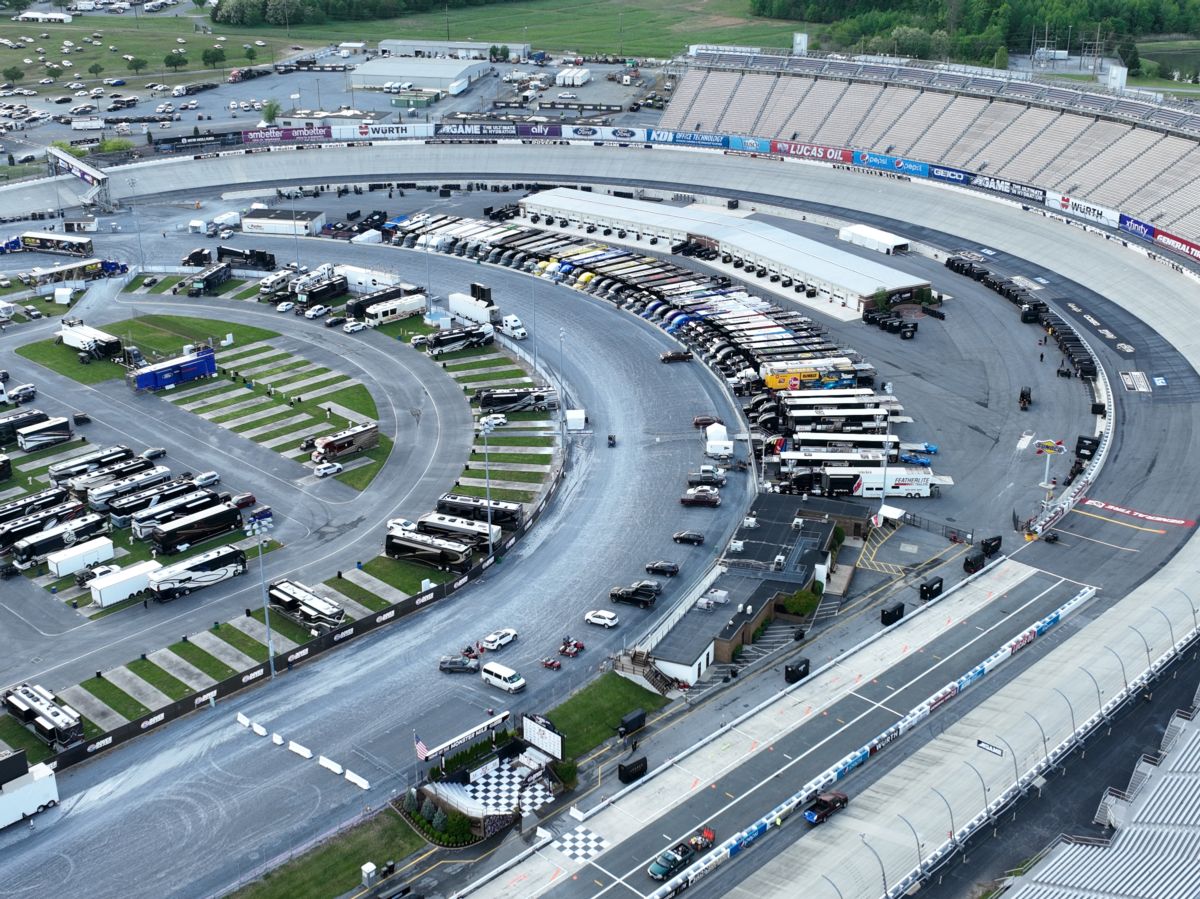
NASCAR is shaking up one of its most prestigious exhibition events by moving the 2026 NASCAR All-Star Race to a venue known for its punishing concrete and high-intensity action. The event shifts to the one-mile concrete oval at Dover Motor Speedway, bringing a high-stakes atmosphere to “The Monster Mile” with a massive $1 million prize on the line for the winner.
Designed to mirror the endurance and tension of a standard 400-lap points race, the 2026 format departs from shorter exhibition sprints. By introducing a 350-lap main event broken into strategic segments, officials aim to provide fans with a more comprehensive competitive narrative while maintaining the “all-star” prestige. The race is scheduled to go green on Sunday, May 17, at 1:05 p.m. ET, with live coverage provided by FS1.
For global racing enthusiasts and seasoned followers alike, the transition to Dover represents more than just a change in scenery. The concrete surface offers a different grip and wear profile compared to traditional asphalt, which, combined with the new multi-segment structure, will test both driver versatility and pit crew precision. With a total purse of $3,093,000, the event remains a financial centerpiece of the early-season calendar NASCAR Official Site.
A New Blueprint: The Three-Segment Format
The 2026 All-Star Race is structured as a 350-lap marathon divided into three distinct segments. This layout is specifically intended to challenge drivers’ stamina and strategic planning over a longer distance than previous All-Star iterations.
The first two segments consist of 75 laps each, featuring a 36-car field. Following the conclusion of the first 75-lap segment, the top 26 drivers will be inverted for the start of the second segment, forcing the leaders to fight through traffic and adding a layer of unpredictability to the mid-race action. The event culminates in a final 200-lap segment, where the field is trimmed to only 26 cars. To ensure the field remains competitive and tight, a competition caution is scheduled to occur around Lap 75 of this final stage.
One of the most critical technical aspects of this format is the “lap reset.” If a driver finds themselves a lap down after any of the segments, they will be returned to the lead lap at the start of the next segment. This prevents early-race misfortunes from eliminating a top contender’s chance at the million-dollar prize.
The Field: Locked-In Stars and the Fight for the Final Seven
Entry into the final 200-lap segment is not guaranteed for everyone. The field is split between those who have already secured their spot through performance and those who must race their way in.
Nineteen drivers are currently locked into the final segment. This group includes 17 race winners from the 2025-26 seasons: Christopher Bell, Josh Berry, Ryan Blaney, Chase Briscoe, William Byron, Ross Chastain, Austin Cindric, Austin Dillon, Chase Elliott, Ty Gibbs, Denny Hamlin, Carson Hocevar, Kyle Larson, Joey Logano, Tyler Reddick, Shane van Gisbergen, and Bubba Wallace. Joining them are two former Cup champions, Kyle Busch and Brad Keselowski.
The remaining 17 drivers must compete for the final seven spots in the closing segment. This group includes AJ Allmendinger, Alex Bowman, Chris Buescher, Cole Custer, Ty Dillon, Todd Gilliland, Noah Gragson, Riley Herbst, Erik Jones, Michael McDowell, John Hunter Nemechek, Ryan Preece, Zane Smith, Ricky Stenhouse Jr., Daniel Suarez, Cody Ware, and Connor Zilisch.
The determination of these final seven spots is based on a combination of performance and popularity. Six drivers will be selected based on their average finish across the first two 75-lap segments. The seventh and final spot will be awarded to the winner of a fan vote from among the remaining drivers. In the event of a tie in average finish, the best single finish will be the tiebreaker; if a tie persists, the finish of Segment 1 will determine the outcome.
Qualifying and the Pit-Stop Challenge
Qualifying for the 2026 NASCAR All-Star Race introduces a unique hybrid of speed and mechanical efficiency. Rather than a simple timed lap, the qualifying process spans three laps and includes a mandatory pit stop.
Drivers will complete two laps at full speed before entering pit road at the regulated pit-road speed for a four-tire pit stop. While the crew will perform a mock fueling process with no actual fuel, the stop must be executed perfectly. After the stop, the driver completes a third and final lap. The total cumulative time for the three-lap run determines the starting order for the opening segment.
The pit stop itself is a competition of its own. The time recorded during the pit-stop portion determines the pit-stop competition champion and the order in which drivers select their pit stalls for the race. The stakes for the crews are high, as the pit-crew challenge winners will earn $100,000 NASCAR Official Site.
Precision is paramount, as penalties are severe. A crew infraction—such as a loose lug nut or crossing the wall too early—results in a 10-second penalty added to both the qualifying time and the pit-stop competition time. Driver penalties, such as speeding on pit road or entering an incorrect stall, result in a 10-second penalty applied only to the qualifying time.
Technical Regulations and Race Management
To maintain the integrity of the competition and ensure the race ends on a high note, NASCAR has implemented several specific rules regarding tires and race conditions.

Tire management will be a pivotal factor in Dover’s concrete heat. Drivers are allotted eight sets of tires for the entire event: six sets of “sticker” (new) tires and two sets of “scuffs” from qualifying. Every segment must begin on sticker tires. For the final 200-lap segment, drivers are limited to four sets of sticker tires.
Regarding race flow, all laps—both green-flag and caution laps—count toward the total. To ensure the event concludes with a sprint to the finish, there is no overtime in the first two segments; these must end under green-flag conditions. NASCAR retains the authority to keep pit road closed during a caution if they believe it is necessary to ensure the segment ends under a green flag.
charter teams are mandated to participate in the event, ensuring a full and competitive field of the sport’s most prominent organizations. Teams will maintain their assigned pit stalls for the duration of the event, regardless of whether the neighboring team is eliminated after the second segment.
Quick Reference: 2026 All-Star Race Essentials
| Category | Detail |
|---|---|
| Venue | Dover Motor Speedway (1-mile concrete oval) |
| Winner’s Prize | $1,000,000 |
| Total Purse | $3,093,000 |
| Date/Time | Sunday, May 17, 1:05 p.m. ET |
| Broadcast | FS1 |
| Total Laps | 350 (75 + 75 + 200) |
As the sport prepares for the May 17 start, the focus shifts to how the drivers will adapt to the concrete of Dover under this grueling new format. The blend of endurance, fan engagement, and pit-crew precision makes this one of the most complex exhibition races in recent history.
The next official checkpoint for fans and teams will be the qualifying sessions leading up to the Sunday main event. Stay tuned for updated starting grids and fan voting windows as the race weekend approaches.
Do you think the new 350-lap format better captures the spirit of NASCAR racing? Let us know your thoughts in the comments below and share this guide with your fellow racing fans.
Worth a look