
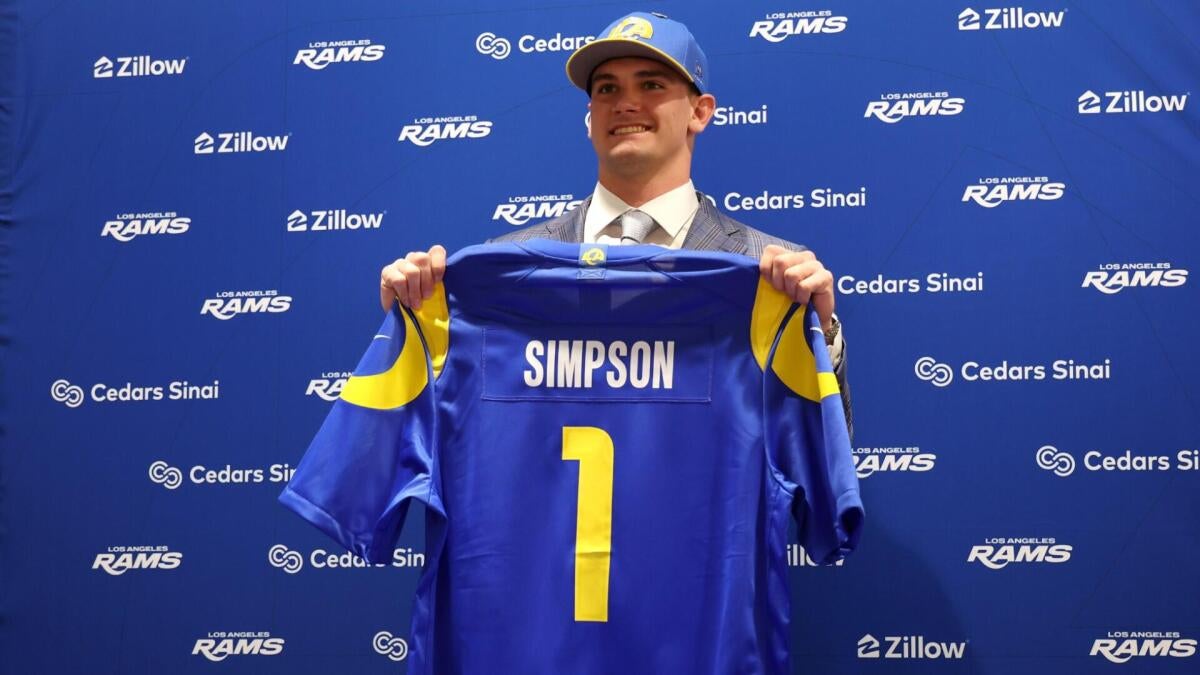
Five Biggest NFL Draft Surprises: Ty Simpson’s Rise and Garrett Nussmeier’s Fall Shake Up QB Rankings
The 2026 NFL Draft delivered its share of surprises, but few were as dramatic as the quarterback carousel that unfolded on draft night. Alabama’s Ty Simpson, once projected as a mid-to-late first-round pick, leaped into the top half of Round 1 when the Los Angeles Rams selected him at No. 13. Meanwhile, LSU’s Garrett Nussmeier, a quarterback many analysts pegged as a potential first-round talent, slid all the way to the 230th overall pick in Round 7, where the Dallas Cowboys ultimately claimed him. These seismic shifts in quarterback valuations have left fans, analysts, and front offices alike questioning the pre-draft hype—and rethinking their strategies for the 2027 class.
For the Rams, the decision to draft Simpson was a bold gamble. Heading into the draft, most mock drafts had the team targeting a wide receiver or offensive lineman to bolster their Super Bowl-contending roster. Instead, head coach Sean McVay and general manager Les Snead opted to invest in a high-upside quarterback, signaling either a long-term succession plan for 38-year-old Matthew Stafford or a willingness to trade the veteran signal-caller in the near future. Simpson’s selection at No. 13 marked the highest a non-Power Five quarterback had been drafted since Trey Lance in 2021, underscoring the Rams’ belief in his potential.
Nussmeier’s fall, was nothing short of stunning. Entering the draft, the LSU product was widely regarded as a Day 2 pick, with some analysts projecting him as high as the second round. His slide to the seventh round—where he was the 10th quarterback selected—raised eyebrows across the league. While Nussmeier’s arm talent and college production were never in question, concerns about his decision-making under pressure and his ability to adapt to the NFL’s speed appear to have scared off teams. The Cowboys, known for their quarterback development, saw enough potential in Nussmeier to take a flier on him late, but his draft position serves as a cautionary tale about the volatility of quarterback evaluations.
The Five Biggest Draft Misses of 2026
The 2026 NFL Draft will be remembered for its unpredictability, particularly at the quarterback position. Below, we break down the five biggest surprises—or “misses”—from draft night, based on pre-draft projections and expert consensus.
1. Ty Simpson’s Jump to No. 13 (Los Angeles Rams)
Few analysts predicted Simpson would hear his name called in the top 15, let alone at No. 13. The Alabama quarterback entered the draft with a reputation for accuracy and poise but was often criticized for his lack of elite arm strength and his struggles in high-pressure situations. However, Simpson’s pro day performance, where he threw the ball with improved velocity and touch, appears to have swayed the Rams’ front office. His selection also reflects a broader trend in the NFL: teams are increasingly willing to bet on developmental quarterbacks with high ceilings, even if they lack the polish of more “pro-ready” prospects.
Simpson’s fit with the Rams is intriguing. Los Angeles already boasts one of the league’s most creative offensive minds in Sean McVay, who has a track record of maximizing quarterback talent (witness: Jared Goff and Matthew Stafford). If Simpson can develop quickly, he could either push Stafford for the starting job or develop into a valuable trade chip for the Rams, who have prioritized accumulating draft capital in recent years. For now, though, Simpson’s selection stands as the biggest shock of the first round.
2. Garrett Nussmeier’s Slide to Round 7 (Dallas Cowboys)
Nussmeier’s fall from potential Day 2 pick to the 230th overall selection was the most dramatic drop of any quarterback in the 2026 draft. The LSU signal-caller entered the pre-draft process with a strong résumé, including a stellar 2025 season where he threw for over 3,800 yards and 30 touchdowns. However, concerns about his pocket presence, footwork, and tendency to force throws into tight windows appear to have spooked NFL decision-makers.
The Dallas Cowboys, who selected Nussmeier with the final pick of Round 7, have a history of developing late-round quarterbacks (see: Dak Prescott). Nussmeier will likely compete for a backup role behind Prescott, with an eye toward earning a spot on the practice squad. His draft position is a stark reminder that even highly productive college quarterbacks can fall out of favor quickly if teams question their NFL readiness.
3. Michael Penix Jr.’s Fall to Round 3 (Atlanta Falcons)
Washington’s Michael Penix Jr. Was another quarterback whose draft stock fluctuated wildly. After leading the Huskies to a College Football Playoff appearance in 2025, Penix was widely viewed as a first-round talent. However, concerns about his injury history—he has suffered multiple ACL tears—and his age (he turned 25 in December 2025) caused him to slip to the third round, where the Atlanta Falcons selected him at No. 79.
Penix’s selection by the Falcons is particularly noteworthy given Atlanta’s recent quarterback struggles. The team has cycled through multiple starters since Matt Ryan’s departure, and Penix could be given an opportunity to compete for the starting job as early as 2027. His arm talent and experience in a pro-style offense make him an intriguing developmental prospect, but his injury history will be a major hurdle to overcome.
4. J.J. McCarthy’s Slide to Round 2 (New York Giants)
Michigan’s J.J. McCarthy was once considered a lock for the top 10, with some analysts projecting him as high as No. 3 overall. However, a lackluster pre-draft process, including questions about his arm strength and decision-making, caused him to fall to the second round, where the New York Giants selected him at No. 47. McCarthy’s slide was one of the most surprising developments of the draft, given his success at Michigan, where he led the Wolverines to a national championship in 2023.
The Giants, who have struggled to find a long-term answer at quarterback since Eli Manning’s retirement, are hoping McCarthy can develop into a franchise signal-caller. His selection at No. 47 suggests the team views him as a high-upside project, but his lack of elite physical tools could limit his ceiling. McCarthy’s draft position serves as a cautionary tale about the volatility of quarterback evaluations, even for players with impressive college résumés.
5. Drake Maye’s Fall to No. 12 (Las Vegas Raiders)
North Carolina’s Drake Maye entered the draft as the consensus top quarterback prospect, with many analysts projecting him as the No. 1 overall pick. However, concerns about his accuracy and decision-making under pressure caused him to slip to No. 12, where the Las Vegas Raiders selected him. Maye’s fall was the most surprising of any first-round pick, given his status as the top-ranked quarterback in most pre-draft rankings.
The Raiders, who have cycled through quarterbacks in recent years, are hoping Maye can stabilize their offense. His selection at No. 12 suggests the team views him as a franchise quarterback, but his struggles in college—particularly in high-leverage situations—raise questions about his readiness to start immediately. Maye’s draft position is a reminder that even the most highly touted prospects can fall if teams have doubts about their ability to perform at the next level.
What These Draft Surprises Mean for the NFL
The 2026 NFL Draft’s quarterback carousel has sent shockwaves through the league, forcing teams and analysts to rethink their approach to evaluating signal-callers. Below, we explore the broader implications of these draft-day surprises.
The Rams’ Gamble on Simpson
The Rams’ decision to select Simpson at No. 13 is a high-risk, high-reward move that could define the franchise’s future. If Simpson develops into a franchise quarterback, the Rams will have secured their long-term answer at the position without having to trade multiple first-round picks, as teams like the Chicago Bears and Washington Commanders did in recent years to acquire Caleb Williams and Jayden Daniels, respectively. However, if Simpson struggles, the Rams could find themselves in quarterback purgatory, with an aging Matthew Stafford and an unproven rookie under center.
Simpson’s selection also reflects a broader trend in the NFL: teams are increasingly willing to take chances on developmental quarterbacks with high ceilings, even if they lack the polish of more “pro-ready” prospects. This shift is partly due to the success of quarterbacks like Josh Allen and Justin Herbert, who were drafted early despite questions about their readiness to start immediately. For Simpson, the key will be his ability to adapt to the NFL’s speed and complexity. His accuracy and poise are strengths, but he will need to improve his arm strength and decision-making under pressure to justify the Rams’ investment.
Nussmeier’s Fall and the Volatility of QB Evaluations
Nussmeier’s slide to the seventh round is a stark reminder of how quickly quarterback fortunes can change. Entering the draft, he was widely viewed as a Day 2 pick, with some analysts projecting him as high as the second round. However, concerns about his pocket presence, footwork, and tendency to force throws into tight windows caused him to fall out of favor with NFL decision-makers.
Nussmeier’s draft position also highlights the growing divide between college and NFL quarterback play. While Nussmeier was highly productive at LSU, his struggles in high-pressure situations raised red flags for NFL teams. His selection by the Cowboys, a team with a strong track record of developing quarterbacks, suggests that some franchises still see value in late-round signal-callers. However, Nussmeier’s draft position serves as a cautionary tale about the volatility of quarterback evaluations, even for players with impressive college résumés.
The Impact on the 2027 Draft Class
The surprises of the 2026 NFL Draft could have a ripple effect on the 2027 class, particularly at the quarterback position. With teams like the Rams, Falcons, and Giants investing in young signal-callers, the demand for quarterbacks in next year’s draft could be lower than expected. This could lead to a more balanced draft class, with teams prioritizing other positions of need.
However, the 2026 draft’s unpredictability could also lead to more teams taking chances on quarterbacks in the early rounds, particularly if they believe they can develop them into franchise players. This could result in a more competitive market for top quarterback prospects in 2027, with teams willing to trade up to secure their preferred signal-caller.
Key Takeaways from the 2026 NFL Draft
- Ty Simpson’s rise to No. 13 was the biggest surprise of the first round. The Alabama quarterback’s selection by the Rams defied pre-draft expectations and signaled the team’s long-term commitment to finding a successor for Matthew Stafford.
- Garrett Nussmeier’s fall to Round 7 was the most dramatic slide of any quarterback. The LSU product’s draft position serves as a cautionary tale about the volatility of quarterback evaluations, even for highly productive college players.
- Michael Penix Jr. And J.J. McCarthy also saw their draft stocks fluctuate wildly. Penix’s injury history and McCarthy’s lackluster pre-draft process caused them to fall further than expected, highlighting the risks of investing in developmental quarterbacks.
- Drake Maye’s fall to No. 12 was the most surprising of any first-round pick. The North Carolina quarterback’s slide reflects the growing divide between college and NFL quarterback play, as teams prioritize “pro-ready” prospects over high-ceiling projects.
- The 2026 draft’s surprises could have a ripple effect on the 2027 class. With teams like the Rams, Falcons, and Giants investing in young signal-callers, the demand for quarterbacks in next year’s draft could be lower than expected, leading to a more balanced class.
What’s Next for the 2026 Draft Class?
The 2026 NFL Draft may be over, but the real work is just beginning for the rookies. Training camps will open in late July, giving teams their first opportunity to evaluate their new quarterbacks in a competitive setting. For players like Simpson and Maye, the pressure will be immense, as they will be expected to compete for starting jobs immediately. Others, like Nussmeier and McCarthy, will likely spend their rookie seasons on the practice squad or in backup roles, with an eye toward earning more playing time in 2027.
The next major checkpoint for these rookies will be the NFL Scouting Combine in February 2027, where they will have an opportunity to showcase their progress and improve their draft stock for next year’s class. Until then, fans and analysts will be watching closely to see how these quarterbacks adapt to the NFL’s speed and complexity.
What do you suppose about the 2026 NFL Draft’s biggest surprises? Did the Rams make the right call by selecting Ty Simpson at No. 13, or should they have waited for Garrett Nussmeier? Share your thoughts in the comments below and join the conversation on social media.