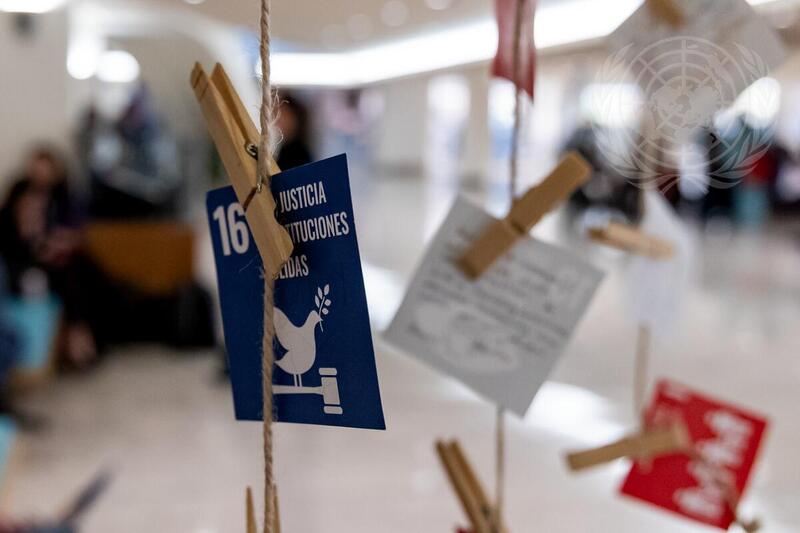
The United Nations has issued a stark warning that the world is significantly off-track to meet its 2030 Sustainable Development Goals (SDGs), citing a convergence of global conflict, economic instability, and the accelerating effects of climate change. According to the 2024 Sustainable Development Goals Report, the international community faces critical hurdles that threaten to undo decades of progress in poverty reduction, health, and education.
As the world enters the final years before the 2030 deadline for achieving the Sustainable Development Goals, the report highlights that current geopolitical tensions and humanitarian crises are actively impeding development efforts. Leaders and analysts are now calling for a fundamental shift in priorities, urging an immediate end to ongoing wars and a more robust, sustained investment in human capital to prevent a decade of lost progress.
Geopolitical Conflict as a Development Barrier
The primary driver of the current stagnation is a sharp rise in violent conflict. The United Nations notes that the number of people living in conflict-affected countries has reached its highest level since the adoption of the 2030 Agenda for Sustainable Development. These conflicts do not merely cause immediate loss of life; they destroy infrastructure, displace populations, and shatter the economic foundations necessary for long-term growth.
According to data from the World Bank, countries grappling with fragility and violence are significantly more likely to miss the majority of the SDG targets. The diversion of national budgets toward military spending during times of war represents a direct opportunity cost for essential services like primary education, healthcare, and clean water infrastructure. The UN report emphasizes that peace is a fundamental prerequisite for any meaningful advancement toward the 17 global goals.
The Economic and Climate Nexus
Economic uncertainty remains a persistent drag on development, particularly in low-income nations. High debt levels, coupled with volatile global commodity prices, have left many governments without the fiscal space needed to invest in their citizens. The International Monetary Fund has repeatedly warned that slow global growth exacerbates the gap between wealthy and developing nations, making the 2030 targets increasingly difficult to reach without significant international financial reform.
Simultaneously, the climate crisis is acting as a “threat multiplier.” Extreme weather events—ranging from prolonged droughts in East Africa to catastrophic flooding in South Asia—are disproportionately affecting the most vulnerable populations. These events destroy agricultural yields and force internal migration, creating new cycles of poverty that are difficult to break. The UN report stresses that without aggressive climate mitigation and adaptation financing, the progress made in food security and disaster resilience will continue to be reversed by environmental shocks.
What Must Be Done: A Shift in Global Strategy
To recover momentum, the United Nations advocates for a “rescue plan” for the SDGs. This strategy hinges on three pillars: ending active conflicts, reforming the international financial architecture, and prioritizing social spending. The call to action is directed at both donor nations and domestic governments, emphasizing that the costs of inaction—manifesting as mass migration, famine, and systemic instability—far outweigh the costs of proactive investment.
The report underscores that while the challenges are immense, they are not insurmountable if there is the political will to prioritize human welfare over geopolitical competition. This includes:
- Increased concessional financing for developing nations to manage debt burdens.
- Enhanced cooperation on climate finance to support the transition to renewable energy in the Global South.
- Diplomatic efforts to de-escalate regional conflicts that disrupt global supply chains and humanitarian aid access.
Progress and Future Checkpoints
Despite the grim assessment, the UN report points to pockets of success, particularly in renewable energy adoption and digital connectivity, which demonstrate that progress is possible when resources are targeted effectively. The next major opportunity for world leaders to realign on these goals will be during the upcoming Summit of the Future, scheduled for September 2024 in New York. This event is expected to serve as a critical checkpoint for member states to commit to a revitalized multilateral framework.

As the international community prepares for these high-level discussions, the message remains clear: the path to 2030 is narrow but achievable through decisive, collective action. Readers interested in tracking specific progress in their own regions can consult the SDG Tracker, which provides real-time data on indicators ranging from maternal mortality to carbon emissions.
What are your thoughts on the path forward for the 2030 agenda? Share your perspective in the comments section below and join the conversation on how global policy can better serve the most vulnerable populations.
Related reading