
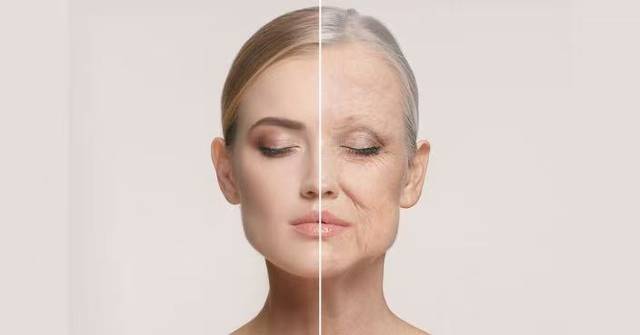
For many women, the transition into menopause is marked by a well-documented suite of systemic changes—hot flashes, sleep disturbances, and mood fluctuations. Though, there is a more visible transformation that often occurs simultaneously, one that many describe as a sudden shift in their reflection. For years, the medical community viewed facial aging as a slow, linear decline, a steady erosion of elasticity and volume that progressed predictably with each passing birthday.
New research utilizing advanced 3D facial imaging is overturning this narrative. By analyzing the precise contours and volumes of thousands of faces, scientists have discovered that aging does not move in a straight line. Instead, it occurs in distinct “bursts” of acceleration. For women, the most dramatic of these accelerations occurs during and immediately following the menopausal transition, creating a visible “jump” in the aging trajectory that differs significantly from the more gradual progression seen in men.
As a physician and journalist, I have spent over a decade discussing these changes with patients. The psychological impact of this rapid shift can be profound, often leaving women feeling as though they have “aged overnight.” This 3D analysis provides the empirical evidence for what millions of women have experienced subjectively: the menopausal transition is not just a reproductive milestone, but a pivotal morphological event for the human face.
The Science of 3D Facial Mapping
Traditional dermatological assessments often rely on 2D photography or subjective grading scales, which can miss subtle changes in volume and depth. The recent shift toward 3D facial analysis allows researchers to create highly accurate digital “topographies” of the face. By measuring the precise distance between landmarks and calculating the volume of soft tissue in specific regions—such as the cheeks, jawline, and periorbital areas—researchers can track how the face physically shifts over time.
This methodology enables the identification of non-linear aging. Rather than assuming a constant rate of change, 3D mapping allows scientists to plot “trajectories.” When these trajectories are mapped across a large population, the data reveals that the rate of change is not constant. Instead, the slope of the aging curve steepens sharply at specific biological milestones. While men exhibit a relatively steady decline in facial volume and skin tension, women indicate a marked inflection point that correlates with the decline of ovarian function.
The Menopausal Pivot: Why Acceleration Occurs
The primary driver behind this accelerated facial aging is the precipitous drop in estrogen levels during perimenopause and menopause. Estrogen is not merely a reproductive hormone; it plays a critical role in maintaining the structural integrity of the skin. Estrogen receptors are prevalent in the dermis, where they stimulate the production of collagen and hyaluronic acid—the proteins and sugars responsible for skin firmness, elasticity, and hydration.
When estrogen levels plummet, the skin undergoes a rapid structural collapse. According to research published via the National Center for Biotechnology Information (NCBI), women can experience a significant decrease in collagen content during the first few years of menopause, leading to a visible loss of dermal thickness and an increase in skin fragility.
This biological shift manifests in several specific ways on the 3D map:
- Volume Loss: The fat pads in the mid-face, particularly in the cheeks, tend to atrophy or shift downward, leading to a hollowed appearance.
- Skin Laxity: The reduction in collagen and elastin causes the skin to sag, most noticeably along the jawline (jowling) and in the nasolabial folds.
- Surface Texture: A decrease in sebum production and hyaluronic acid leads to increased dryness and the deepening of fine lines.
Comparing Gender Trajectories
One of the most striking findings of 3D trajectory research is the divergence between male and female aging patterns. Men typically do not experience a sudden hormonal “crash” equivalent to menopause. While testosterone levels decline gradually with age, the impact on skin structure is more incremental.
the 3D data shows that men’s facial aging is more linear. They may develop deeper wrinkles or lose volume, but they rarely experience the “burst” of rapid change that women face in their late 40s or early 50s. This suggests that the “accelerated aging” phenomenon is specifically tied to the endocrine shift of the menopausal transition rather than the general process of senescence.
Clinical and Psychological Implications
Understanding that facial aging is non-linear has significant implications for both dermatology and mental health. For many women, the sudden change in appearance can trigger a crisis of identity or a decrease in self-esteem, especially when the change happens more quickly than they anticipated.
From a clinical perspective, this research suggests that preventative skincare and dermatological interventions may require to be adjusted based on a woman’s hormonal stage. Rather than a one-size-fits-all “anti-aging” routine, treatments may be more effective if they are intensified during the perimenopausal window to mitigate the impact of collagen loss.
Medical professionals are increasingly looking at systemic supports—such as Hormone Replacement Therapy (HRT)—not only for the relief of vasomotor symptoms but for the preservation of tissue health. While HRT is a complex decision that requires a careful risk-benefit analysis for each patient, its role in maintaining skin thickness and hydration is well-documented in endocrine literature.
Key Takeaways for Women Navigating This Transition
| Factor | Pre-Menopause | Post-Menopause | Impact on Appearance |
|---|---|---|---|
| Estrogen Levels | Stable/High | Rapid Decline | Loss of skin “plumpness” |
| Collagen Production | Steady Decline | Accelerated Loss | Increased sagging and wrinkles |
| Skin Hydration | Maintained | Decreased | Dryness and fine lines |
| Facial Volume | Gradual Shift | Rapid Atrophy | Hollowing of cheeks/temples |
What So for the Future of Aging Research
The move toward 3D analysis marks a turning point in how we study the human body. By treating the face as a dynamic, three-dimensional landscape rather than a static image, researchers can better correlate physical changes with internal biological markers.

Future studies are expected to examine whether other “bursts” of aging occur at different life stages, such as during periods of extreme stress or other major hormonal shifts. There is similarly growing interest in how lifestyle factors—such as UV exposure, diet, and sleep—interact with the menopausal “jump.” It remains to be seen if these external factors can flatten the curve of acceleration or if the hormonal trigger is the primary determinant of the trajectory.
For the global community of women, this research provides a necessary validation. The feeling that the mirror has changed “too fast” is not an illusion or a failure of skincare; This proves a documented biological event. By recognizing the non-linear nature of aging, we can move toward a more compassionate and scientifically accurate understanding of the menopausal experience.
The next major milestone in this field will be the integration of 3D mapping with longitudinal genomic data to determine if certain women are genetically predisposed to a more severe “aging burst” than others. Such findings could lead to personalized dermatological protocols tailored to an individual’s specific hormonal trajectory.
Do you feel your skin changed rapidly during the menopausal transition, or has your experience been more gradual? Share your thoughts and experiences in the comments below.