Maintaining everyday mobility and stability after the age of 60 often comes down to a joint that many people overlook until a misstep happens: the ankle. Far from being a simple hinge at the bottom of the leg, the ankle serves as the front line of the human balance system. According to Terry Tateossian, founder, certified lifestyle medicine coach, trainer, and nutritionist for women 40+ at THOR – The House of Rose, the small and rapid micro-adjustments executed by the foot and lower leg catch physical imbalances long before larger hip muscles have to activate. When ankle stability diminishes, side-to-side mobility fails, foot clearance drops, and gait shortens, which significantly raises the risk of falls on stairs and flat surfaces alike.
Addressing these specific vulnerabilities does not require heavy equipment or an expensive gym membership. Instead, experts emphasize targeted daily movements designed to strengthen posterior stability, build shin strength, enhance proprioception, and maintain a full range of motion. Below are four straightforward exercises that can be integrated into a daily routine to restore ankle strength and protect overall mobility.
Heel Raises With Counter Touch
Heel raises serve as a direct movement for building calf strength and posterior ankle stability. Tateossian notes that the calf muscles are the fastest in the body to atrophy after the age of 60, making targeted engagement essential for maintaining a steady stride.
To perform this movement, stand tall facing a kitchen counter or stable surface, resting your hands lightly there for support while keeping your feet hip-width apart. Slowly rise onto the balls of your feet, hold the elevated position for one second, and then lower yourself back down in a controlled manner. A recommended routine involves three sets of 15 to 20 repetitions, utilizing a slow tempo with a 60-second rest period between sets.
Toe Raises
While calf exercises focus on the back of the lower leg, toe raises target the tibialis anterior muscle located along the front side of the shin, which is heavily engaged during normal walking. As this muscle weakens with age, the foot can begin to drop slightly, causing toes to catch on curbs or carpets and creating avoidable tripping hazards.
To execute toe raises, stand with your back a few inches from a wall while keeping your heels firmly planted on the floor. Lift your toes and the balls of your feet off the ground as high as possible before slowly lowering them back down. Performing three sets of 15 to 20 repetitions daily helps fortify the shin muscles and improves foot clearance during daily movement.
Single-Leg Balance Hold
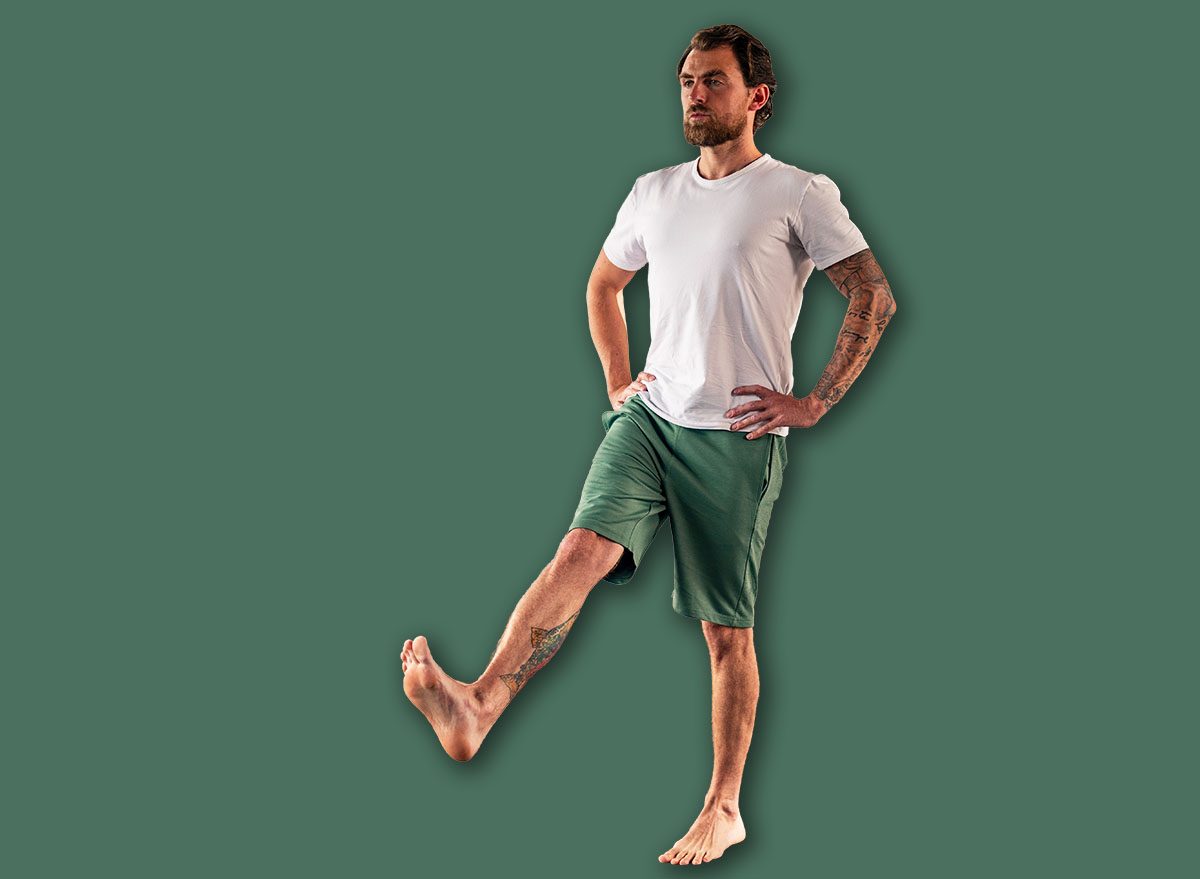
Proprioception—the body’s innate awareness of its position in space—is trained by this exercise. Because falls are the number one injury for people over 60, training this neuromuscular feedback loop is critical for independent living.
This exercise is performed by standing near a sturdy countertop for safety, lifting one foot slightly off the floor, and maintaining balance on the standing leg for 15 to 30 seconds. Practitioners typically complete three sets per side, focusing on steady posture and minimal reliance on the supporting surface.
Ankle Alphabets
Protecting against sideways ankle rolls—which are the most serious cause of ankle injuries in adults over 60—requires moving the joint through its complete range of motion in every possible direction. Ankle alphabets offer a simple way to achieve this mobility while sitting down.
To begin, sit tall in a chair and lift one foot off the ground. Using your big toe as a pointer, slowly trace the letters of the alphabet in the air before switching to the opposite foot. This unweighted movement lubricates the joint and engages the stabilizing muscles that prevent lateral sprains.
Incorporating these four movements into a daily regimen provides an accessible, low-barrier approach to maintaining lifelong balance and lower-leg strength.
Worth a look