Bedtime stiffness for adults over 60 often lingers from evening until the following morning, prompting many to seek relief through monthly professional massages. While a therapeutic massage provides short-term release by working into soft tissues and breaking down daily adhesions, the physical relief frequently fades by the next day as muscles return to their habitual resting shapes. Medical and fitness professionals emphasize that consistent nightly movement habits offer a more sustainable alternative for long-term mobility and comfort.
Establishing a brief, consistent bedtime stretching sequence addresses the root causes of muscular compression without requiring travel, appointments, or ongoing expense. By devoting eight to ten minutes each evening right before sleep, older adults can systematically lengthen tight tissue groups, signal the nervous system to promote restorative rest, and gradually transform how their bodies hold tension over time.
Where Muscular Tension Hides After 60
Persistent tightness in older adults typically concentrates in three main areas shaped by daily postures and prolonged sitting. Lower back discomfort is frequently misunderstood; while individuals often assume back muscles are the primary source of tightness, the underlying issue usually stems from shortened hip flexors at the front of the pelvis pulling against the lower spine. Directly targeting the lower back can sometimes exacerbate the discomfort, whereas lengthening the hip flexors allows the lumbar region to release naturally.
The hips and gluteal muscles also accumulate deep tension from prolonged periods of sitting throughout the day, compressing against chairs and losing their natural capacity to lengthen. This habitual compression contributes significantly to late-day walking discomfort and stiffness. Furthermore, chronic upper body tension develops as chest muscles shorten and shoulders round forward from desk work, driving, and looking down at books or electronic devices, creating a persistent background load around the neck and upper back.
Four Nightly Bedtime Stretches
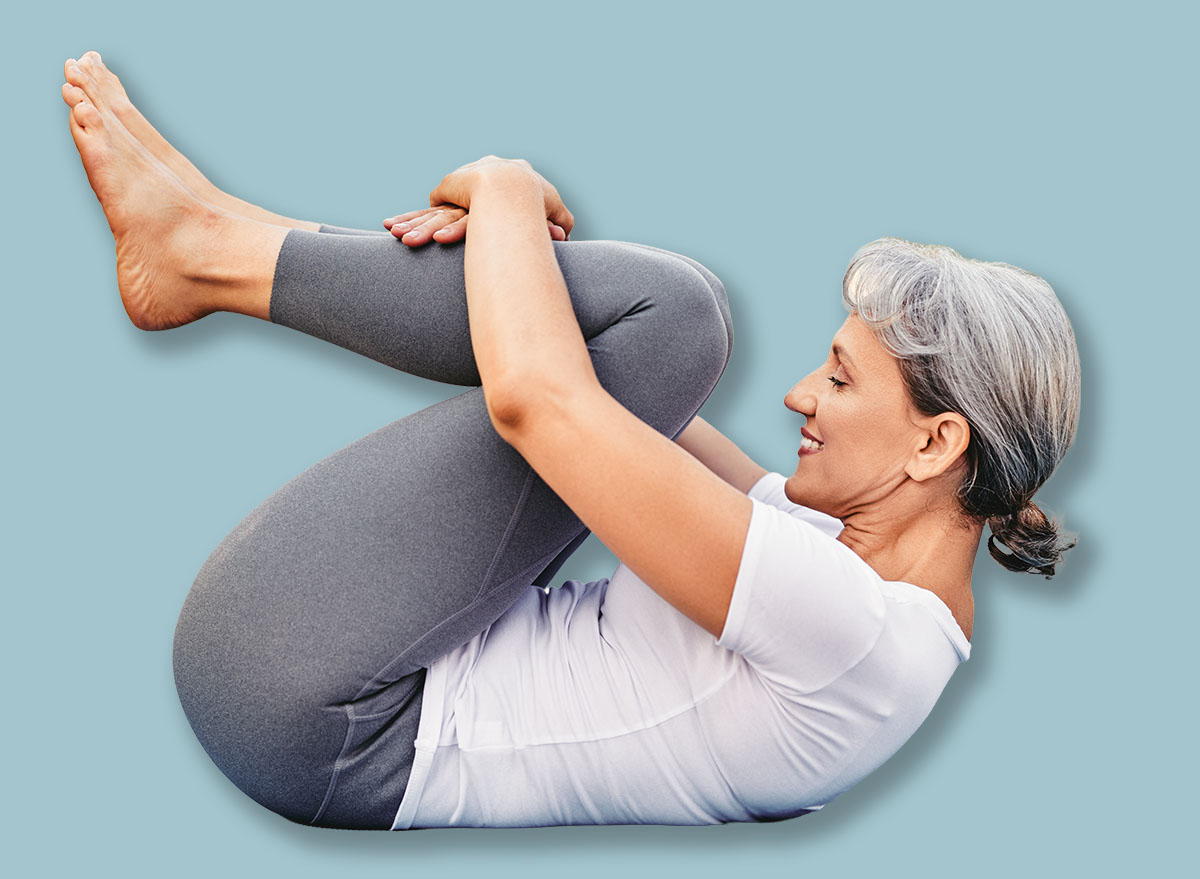
Executing a deliberate, four-step routine directly in bed allows gravity to assist the body rather than forcing resistance. The sequence begins with the knees-to-chest hug, which releases the lower back and gluteal muscles. By lying flat on the back with legs straight, an individual gently draws one knee toward the chest, wrapping both hands around the shin or knee without aggressive pulling, holding for 30 seconds before repeating on the opposite side and finishing with both knees drawn together.
The second movement is the reclining Figure-4, which targets the piriformis and deep hip muscles responsible for outer hip aches after long periods of activity. Lying with knees bent and feet flat, the practitioner crosses the right ankle over the left thigh, reaches through to clasp behind the left thigh, and gently draws the leg inward for 30 seconds before switching sides. This can be modified with a towel looped around the thigh if reaching proves difficult.
Next, the supine spinal twist introduces much-needed rotational mobility to the spine from the neck to the tailbone. Lying on the back with arms extended at shoulder height, the individual lowers both bent knees to one side while keeping both shoulders flat on the bed, holding for 30 seconds before switching directions. Finally, the towel chest opener counteracts forward-rounded posture by placing a rolled hand towel or slender pillow lengthwise along the spine from the skull base to the tailbone, allowing the arms to rest out to the sides for two to three minutes under the gentle pull of gravity.
What Results to Expect From Consistent Practice
Performing this sequence seven nights a week shifts the nervous system into a parasympathetic state, the branch responsible for recovery and rest. Within the first week, practitioners frequently report improvements in sleep quality and overnight recovery. By weeks two and three, morning stiffness begins to ease, making the transition out of bed smoother and less restrictive.
Over a span of four to six weeks, measurable changes in muscle length occur, resulting in improved posture, more comfortable walking strides, and less cramping during extended travel. By the three-month mark, the cumulative effect allows the body to maintain a looser resting state, making monthly professional bodywork an optional preference rather than a physical necessity.
Related reading