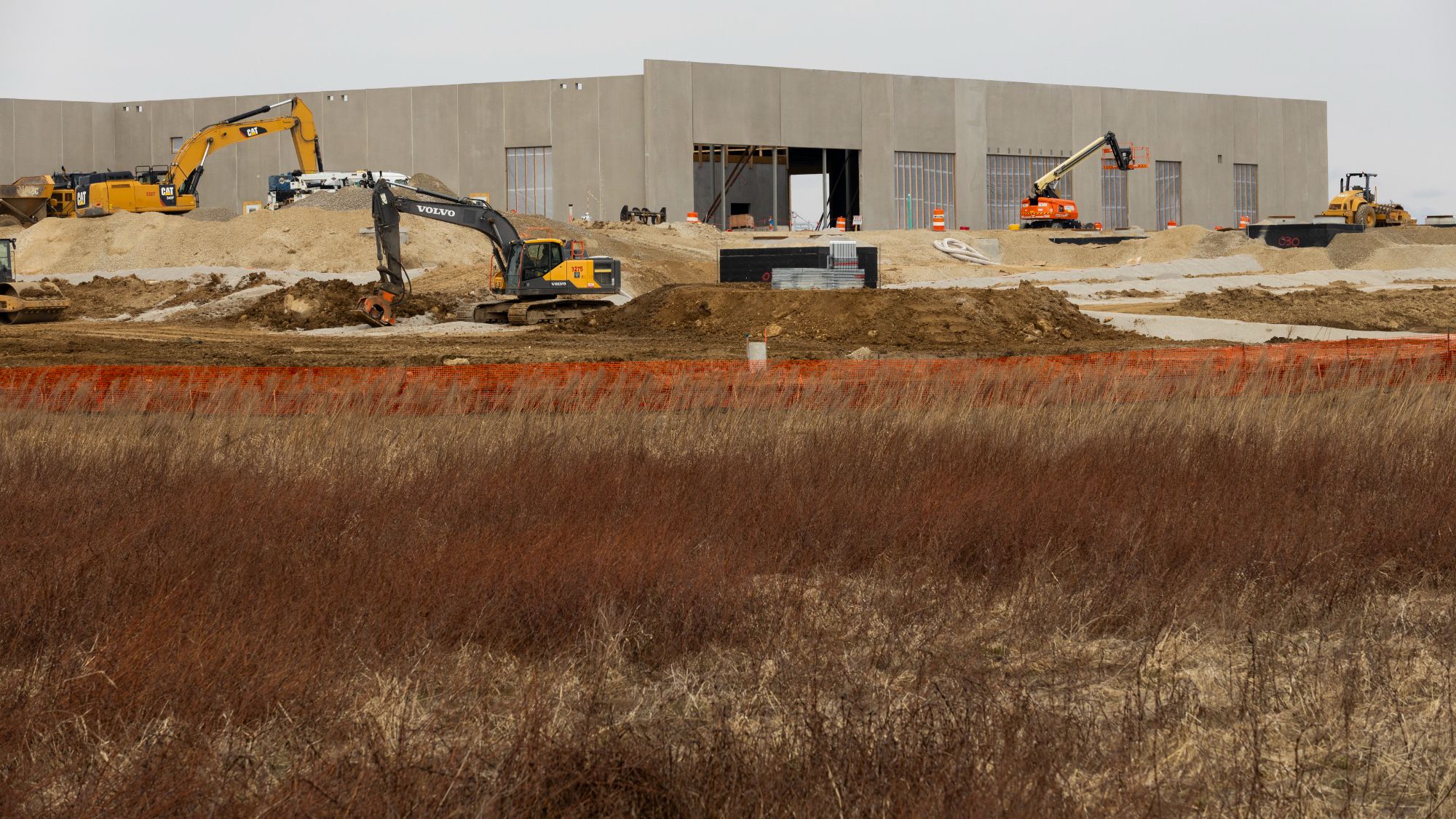
At least 40% of all AI data centers slated for completion in 2026 will be delayed, according to a data analytics group cited in recent reporting. AI tech companies maintain that construction schedules remain on track, but satellite imagery and supply chain analyses suggest otherwise. The discrepancy between corporate assurances and independent observations has intensified scrutiny over the feasibility of current AI infrastructure expansion plans.
The claims stem from an unnamed analytics firm whose findings were referenced in a technology industry report published in early April 2026. While the specific methodology and data sources used by the group were not disclosed in the original source, the projection aligns with broader trends documented in verified industry analyses. These include persistent labor shortages in skilled construction trades and ongoing bottlenecks in critical component supply chains, both of which have been independently confirmed as impediments to data center development.
According to a February 2026 analysis by ThinkBRG, the rapid expansion of AI data center infrastructure in the United States has created a severe shortage of skilled construction labor, including electricians, HVAC technicians, and plumbers. The report noted that on average, about 481,000 construction workers remained unemployed in the U.S. In 2025, yet over 60% of data center providers reported challenges finding qualified candidates for open roles. With nearly 3,000 data center projects under construction or planned nationwide — each typically employing between 1,500 and 3,000 workers during peak phases — the imbalance between demand and available labor has grow a structural constraint on project timelines.
Further corroborating these challenges, a TechRadar Pro report from April 2026 indicated that between a third and a half of all U.S. Data centers planned for 2026 are likely to be delayed or canceled due to supply chain constraints. The report specifically cited the global chip shortage as a primary factor, noting that AI data center build-outs are crowding out consumer categories in memory and storage supply chains, which have seen cost increases of roughly five-fold and three-fold respectively since Q1 2025. Additional pressures include energy supply limitations and local opposition to facility siting.
Satellite imagery reviewed by industry analysts has shown minimal ground activity at several sites officially labeled as “on schedule” by their developers. One notable example involves OpenAI’s $500 billion Stargate Project, where progress in Texas has reportedly stalled despite public assurances of forward momentum. While no official confirmation of delays has been issued by the companies involved, the lack of visible construction advancement raises questions about the accuracy of public timelines.
The labor shortage extends beyond mere headcount. Specialized trades required for data center construction — such as high-voltage electrical work, precision cooling system installation, and fiber-optic network deployment — demand certifications and experience that cannot be rapidly scaled. Workforce development initiatives and apprenticeship programs are underway in several states, but their impact will not materialize in time to affect the 2026 completion window for most projects currently in progress.
In response to these pressures, some developers are exploring AI-powered construction management tools to optimize scheduling and resource allocation. Others are offering creative incentive packages to attract and retain skilled workers, including housing stipends, signing bonuses, and partnerships with technical colleges. However, industry experts caution that such measures may alleviate symptoms but do not resolve the underlying mismatch between infrastructure ambitions and labor market capacity.
The implications of widespread delays extend beyond the tech sector. Data centers are foundational to cloud computing, enterprise software, and AI services used by businesses and consumers globally. Prolonged timelines could slow the deployment of new AI models, increase operational costs for cloud providers, and indirectly affect pricing for end-user services. Local economies anticipating job creation from construction and ongoing operations may also face revised expectations.
As of mid-April 2026, no federal hearings or regulatory filings have been scheduled specifically to address data center construction delays. However, the Department of Energy continues to monitor grid impact assessments for large-scale facilities, and the Bureau of Labor Statistics releases monthly updates on construction employment trends that could provide indirect insight into workforce availability. Stakeholders seeking official data are advised to consult the BLS’s Current Employment Statistics survey and the EIA’s electricity monthly reports for the most current verified figures.
What remains clear is that the race to build AI infrastructure is being tested not just by financial and technical limits, but by the physical realities of construction in a tight labor market. Whether companies will revise their public timelines in response to mounting evidence — or continue to rely on projections that outpace current capabilities — remains an open question shaping the near-term trajectory of the AI industry.
We invite readers to share their observations and insights in the comments below. If you have information about data center projects in your region, please consider contributing to the conversation. Share this article to support others stay informed about the evolving challenges behind AI’s physical infrastructure.
Keep reading