
Reports indicate that the Dominican government is seeking to secure two new loans totaling $600 million, a move that comes amid a backdrop of global instability and economic volatility. According to unconfirmed details, a significant portion of this funding—approximately $400 million—is intended for investment in the Punta Cana–Bávaro project, a critical infrastructure initiative in one of the Caribbean’s most vital tourism hubs.
As a financial analyst and economist, I view these reported figures through the lens of strategic capital expenditure. For a nation heavily reliant on foreign direct investment and tourism, the decision to increase public debt for regional infrastructure is often a calculated bet on long-term growth. However, the timing of such loans, particularly when global markets are strained by conflict, necessitates a rigorous examination of the projected return on investment and the sustainability of the resulting debt service.
The Punta Cana and Bávaro regions represent the epicenter of the Dominican Republic’s luxury tourism sector. The scale of existing development in this corridor suggests that any government-led infrastructure project would likely be designed to support an increasingly sophisticated and high-volume visitor base. The region is already defined by massive, high-capacity luxury installations that demand robust supporting infrastructure to maintain operational efficiency and guest satisfaction.
The Economic Scale of the Punta Cana–Bávaro Corridor
To understand why a $400 million investment in the Punta Cana–Bávaro project would be prioritized, one must look at the existing luxury landscape. The region is home to some of the most expansive all-inclusive resorts in the world, which act as primary economic engines for the local economy. For example, the Barceló Bávaro Palace is a five-star luxury hotel located near Playa Bávaro, a beach renowned for its 48 kilometers of white sand and crystal-clear waters.
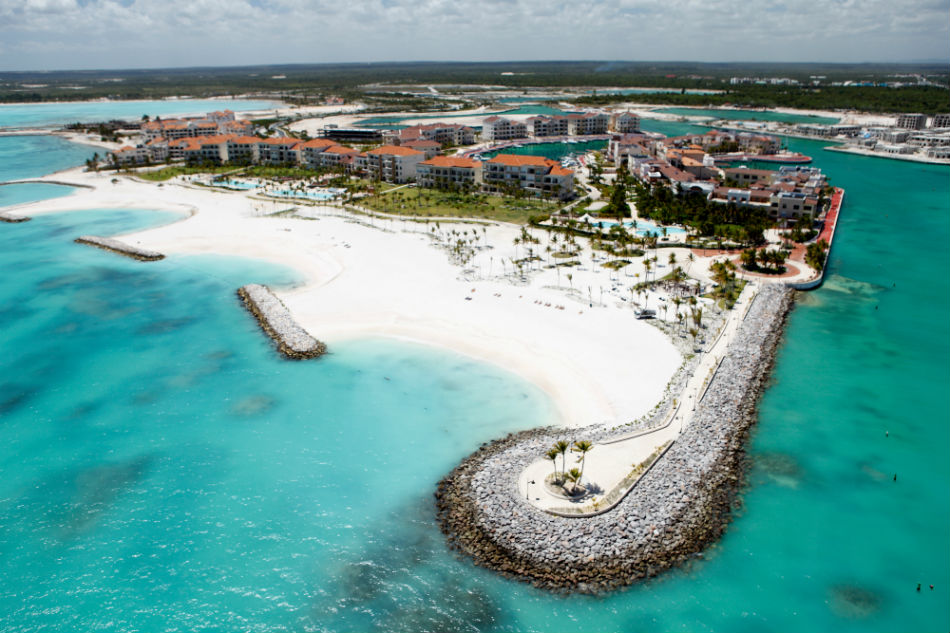
The sheer scale of these establishments underscores the necessity for state-funded infrastructure. The Barceló Bávaro Palace, for instance, operates 11 restaurants and offers a wide array of water sports, including scuba diving, snorkeling, kayaking, and windsurfing. Such high-density tourism requires sophisticated road networks, waste management, and utility grids to function without degrading the natural environment, such as the coral reefs that attract visitors to the area.
Similarly, the Royalton Bavaro demonstrates the level of capital investment already present in the region. This all-inclusive luxury resort and casino features 730 suites, eight restaurants, and nine bars. Its amenities, which include a 1,200-foot lazy river and a FlowRider® surf simulator, illustrate a trend toward “destination-within-a-destination” resorts. When private entities invest at this level, the pressure on public infrastructure—such as airports, highways, and electricity—increases proportionally.
Analyzing Infrastructure Loans in a Volatile Market
From an economic policy perspective, utilizing loans to fund infrastructure in a high-growth zone like Punta Cana is a classic application of the multiplier effect. By improving the accessibility and efficiency of the Bávaro region, the government aims to lower the cost of doing business for private developers and increase the overall attractiveness of the destination for high-net-worth travelers.
However, the report that these loans are being sought “in the midst of war” suggests a challenging macroeconomic environment. Global conflicts typically lead to increased volatility in interest rates and a tightening of credit markets. For the Dominican Republic, the challenge lies in securing these $600 million in loans at rates that do not jeopardize fiscal stability. If the cost of borrowing rises due to global risk premiums, the “break-even” point for the Punta Cana–Bávaro project shifts, requiring even higher tourism growth to justify the debt.
The strategic importance of Playa Bávaro cannot be overstated. As one of the top beaches in the world, it serves as the primary anchor for the regional economy. Infrastructure that protects this natural asset while expanding its capacity is not merely a luxury but a necessity for economic resilience. When a region supports resorts with hundreds of suites and dozens of dining venues, the failure of a single bridge or power substation can have immediate and significant impacts on GDP.
Stakeholders and Long-Term Impact
The primary stakeholders in this proposed funding include the Dominican government, international creditors, and the private hospitality sector. For resort operators, such as those managing the Barceló Bávaro Palace and its associated clubs, improved public infrastructure reduces operational bottlenecks and enhances the guest experience from the moment of arrival at the airport to the transit to the hotel.

For the local workforce, these projects typically generate immediate employment in construction and long-term opportunities in maintenance and services. However, the long-term success of the $400 million investment depends on whether the infrastructure is sustainable. In a region characterized by elegant crystal-clear waters and fragile coral reefs, the intersection of heavy infrastructure and environmental preservation is the most critical point of failure.
If the government successfully implements these loans, the expected outcome would be a reinforced tourism corridor capable of sustaining further growth in the luxury segment. By bridging the gap between private luxury (the 5-star resorts) and public utility (the roads and services), the state ensures that the “paradise” marketed to the world remains functional and accessible.
Key Considerations for the Punta Cana–Bávaro Investment
| Factor | Private Sector Impact | Public Sector Goal |
|---|---|---|
| Capacity | Support for 700+ suite resorts | Reducing congestion in Bávaro |
| Economic Driver | Increased ADR (Average Daily Rate) | GDP growth via tourism stability |
| Risk | Operational disruptions | Debt sustainability amid global conflict |
| Environment | Preservation of coral reefs | Sustainable urban planning |
As we await official confirmation and the release of the specific terms of these loans, the business community will be watching the debt-to-GDP ratio of the Dominican Republic closely. The ambition to expand the Punta Cana–Bávaro project is a signal of confidence in the tourism sector, but the execution must be handled with surgical precision to avoid the pitfalls of over-leveraging during a global crisis.
The next confirmed checkpoint for this story will be the official government submission of the loan requests to the legislative body for approval. Once the terms, interest rates, and specific project milestones are made public, a more detailed fiscal analysis will be possible.
Do you believe infrastructure loans are the right move for tourism-dependent economies during global instability? Share your thoughts in the comments below or share this analysis with your network.
Related reading