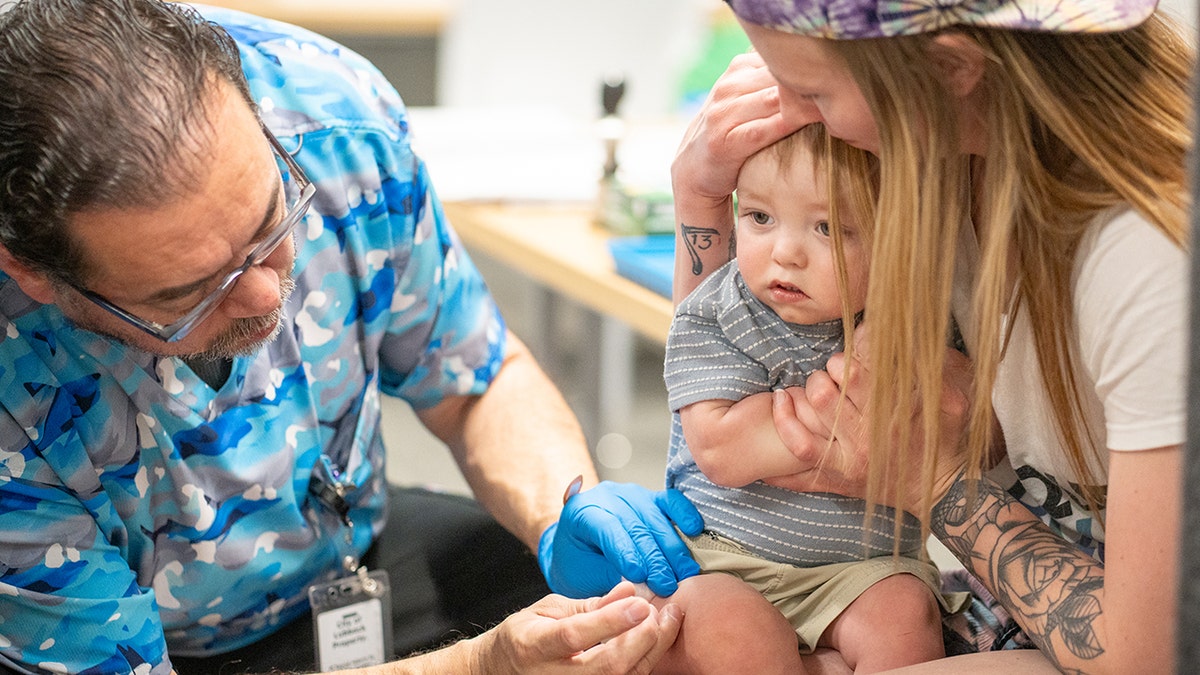
San Francisco public health officials confirmed on April 14, 2026, that an unvaccinated infant under one year of age contracted measles following international travel, marking the city’s first case in seven years. The child, who had not received the measles, mumps, and rubella (MMR) vaccine due to age, developed symptoms shortly after returning from abroad and was diagnosed through laboratory testing at a local healthcare facility. Health authorities immediately initiated contact tracing to identify individuals who may have been exposed during the infant’s infectious period, which began four days before the rash appeared and lasted until four days after its onset.
The case underscores ongoing concerns about measles transmission in communities with suboptimal vaccination coverage, particularly among infants too young to be vaccinated. According to the U.S. Centers for Disease Control and Prevention (CDC), the first dose of the MMR vaccine is routinely administered between 12 and 15 months of age, leaving younger infants reliant on herd immunity for protection. In this instance, the infant’s lack of vaccination was not due to parental refusal but rather adherence to the standard immunization schedule, which does not recommend the first dose before 12 months except during outbreaks or for international travel to high-risk areas.
Measles is a highly contagious viral illness spread through respiratory droplets when an infected person coughs or sneezes. The virus can remain airborne for up to two hours after an infected person leaves a space, making transmission possible in settings such as airports, clinics, and public transportation. Early symptoms include high fever, cough, runny nose, and red, watery eyes, followed by a characteristic red rash that typically begins on the face and spreads downward. Complications can include pneumonia, encephalitis, and, in rare cases, death, particularly in children under five and adults over 20.
In response to the case, the San Francisco Department of Public Health issued a health advisory urging residents to ensure their measles vaccinations are up to date, especially before international travel. The advisory emphasized that two doses of the MMR vaccine are approximately 97% effective at preventing measles and recommended that infants aged 6 to 11 months receive an early dose if traveling abroad, a measure supported by the American Academy of Pediatrics. This early dose does not count toward the routine two-dose series but provides temporary protection during periods of heightened exposure risk.
Statewide, California has experienced a resurgence in measles cases in recent months, with public health data showing the highest number of reported infections since 2019. As of April 2026, the California Department of Public Health confirmed over 30 measles cases across multiple counties, many linked to international travel and pockets of under-vaccinated communities. Officials noted that even as the state’s overall MMR vaccination rate remains above 95% for kindergarten entrants, localized disparities in coverage increase vulnerability to outbreaks, particularly in settings like schools, daycare centers, and religious congregations where exemptions are more prevalent.
Health experts reiterated that measles is preventable through vaccination and that maintaining high community immunity is critical to protecting those who cannot be vaccinated, including young infants, immunocompromised individuals, and pregnant women. The World Health Organization states that achieving and sustaining at least 95% coverage with two doses of measles-containing vaccine is necessary to prevent endemic transmission. In the United States, measles was declared eliminated in 2000 due to widespread vaccination, but imported cases continue to pose a risk when they reach under-vaccinated populations.
For individuals uncertain about their vaccination status, health officials recommend consulting medical records or undergoing a blood test to check for measles immunity. Those born before 1957 are generally considered immune due to likely exposure during childhood, while others may require one or two doses of the MMR vaccine depending on age, health status, and risk factors. The vaccine is safe for most people, with common side effects including soreness at the injection site, mild fever, and temporary rash; serious adverse events are extremely rare.
The San Francisco Department of Public Health continues to monitor the situation and has not identified any additional cases linked to this infant as of April 16, 2026. Officials advised anyone who visited specific locations in the city during the infant’s infectious window—including a pediatric clinic in the Mission District on April 8 and a family gathering in Daly City on April 10—to watch for symptoms and contact their healthcare provider if fever or rash develops. Updated exposure locations and guidance are available through the department’s official website and social media channels.
As global measles activity fluctuates, public health agencies stress the importance of vigilance, timely vaccination, and rapid response to imported cases. Travelers are encouraged to review their immunization status before departing the United States, particularly when visiting countries experiencing measles outbreaks. The CDC maintains a travel health notice system that provides real-time updates on disease risks by destination, including recommendations for early MMR vaccination in infants aged 6 to 11 months.
Stay informed about measles prevention and public health advisories by consulting trusted sources such as your local health department, the CDC, or the World Health Organization. Share accurate information to support protect your community and support efforts to maintain measles elimination in the United States.
Keep reading