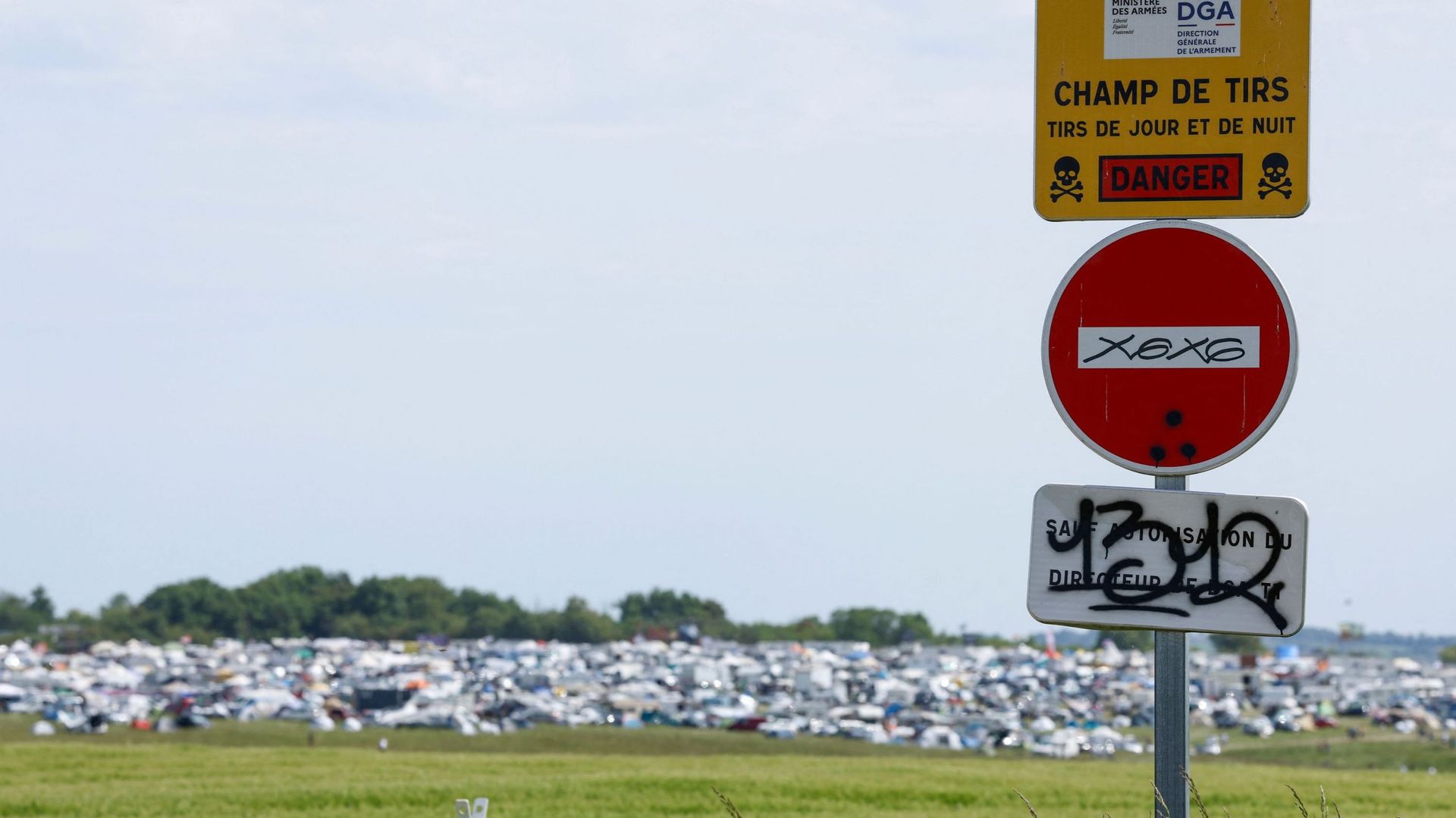
A massive illegal rave party in central France has escalated into a public safety crisis after bomb disposal experts were forced to intervene to remove a live shell discovered within the event’s perimeter. The unauthorized gathering, known as a free party
, drew an estimated 35,000 to 40,000 attendees to a military firing range near the town of Bourges by the evening of Saturday, May 2, 2026.
The event, which began on Friday, took place on a vast 10,000-hectare site owned by France’s Directorate General of Armaments. Despite explicit warnings from local officials regarding the presence of unexploded ordnance, thousands of revelers established a makeshift city of tents and vans across the grassy fields, defying the site’s prohibited status. The discovery of the shell near a road passing through the party site underscored the precarious nature of the location, which officials describe as extremely dangerous
.
Local authorities reported that emergency services treated 12 people for minor injuries on Saturday morning. According to the prefecture, these injuries included one individual who was struck by a vehicle and several others who suffered cuts after handling sharp shrapnel found on the ground at the Bourges site.
A High-Stakes Confrontation Over ‘Free Party’ Culture
The scale of the gathering shifted rapidly over the weekend. While authorities initially estimated attendance at 20,000 on Saturday morning, the Tekno Anti Rep support network told Agence France-Presse (AFP) that the crowd grew to between 35,000 and 40,000 by the evening. This surge in participants has created a logistical nightmare for the 600 police officers and 45 firefighters deployed to manage the site.
For the participants, the event is more than a music festival. it is a calculated act of civil disobedience. The rave comes at a time when the French parliament is seeking to tighten legislation against unauthorized parties, proposing stricter penalties including prison sentences for organizers and significant fines for attendees. A member of the Tekno Anti Rep collective told AFP that the gathering is a way of showing that participants will maintain coming, whatever happens, and will continue to challenge these laws
.
The tension between the state and the rave community is rooted in the nature of the free party
movement. These events are typically anti-establishment, held without permission in remote locations, and operate on a donation-based or free-entry model, intentionally bypassing the commercial and regulatory frameworks of the traditional music industry.
The Danger of Legacy Ordnance
The primary concern for the prefecture is not modern military equipment, but the legacy of a century and a half of military use. Philippe Le Moing Surzur, the local prefect, warned that the site is hazardous due to the potential for unexploded ordnance dating back to World War II.
“Here’s a site that has been in use for 150 years, and we know there are potentially aged artillery shells there,” Philippe Le Moing Surzur, Local Prefect
The danger is exacerbated by the fact that even the Directorate General of Armaments does not possess a precise map of all the risks embedded in the soil. Bomb disposal experts reportedly discover shells on the range regularly, making the presence of thousands of people—some of whom may be digging or lighting fires—a critical risk. Organizers have urged attendees to refrain from these activities, though the sheer volume of the crowd makes enforcement nearly impossible.
Impact on Local Communities and Environment
Beyond the immediate physical danger to partygoers, the event has caused significant friction with the surrounding rural community. Local farmers have reported widespread degradations of their property and crops. The prefecture has encouraged affected landowners to file formal complaints as the event continues to strain local infrastructure and peace.
The environmental footprint of 40,000 people on a non-commercial site is substantial. With food trucks, sound systems, and thousands of vehicles occupying a firing range that is usually closed during tests and open to the public at other times, the site has been transformed into an unplanned urban center, leaving a trail of waste and property damage in its wake.
Legal Implications and Future Outlook
The French government finds itself in a paradoxical position: attempting to dismantle the event while simultaneously mobilizing resources to ensure the safety of those who are illegally occupying the land. The prefecture stated that despite the illegal nature of the rave, the government is focused on limiting disturbances and preventing a mass-casualty event triggered by an explosion.

The outcome of this weekend’s events in the Cher department is likely to accelerate the legislative push for harsher rave-curbing laws. By demonstrating the scale of mobilization—and the willingness of participants to risk their lives on a dangerous military site—the organizers have highlighted the depth of the divide between the youth-led techno culture and the French state’s regulatory apparatus.
The next critical checkpoint will be the eventual evacuation of the site and the subsequent legal proceedings against the organizers, who may face the new, more stringent penalties currently under debate in parliament.
World Today Journal encourages readers to share their perspectives on the balance between freedom of expression and public safety in the comments below.