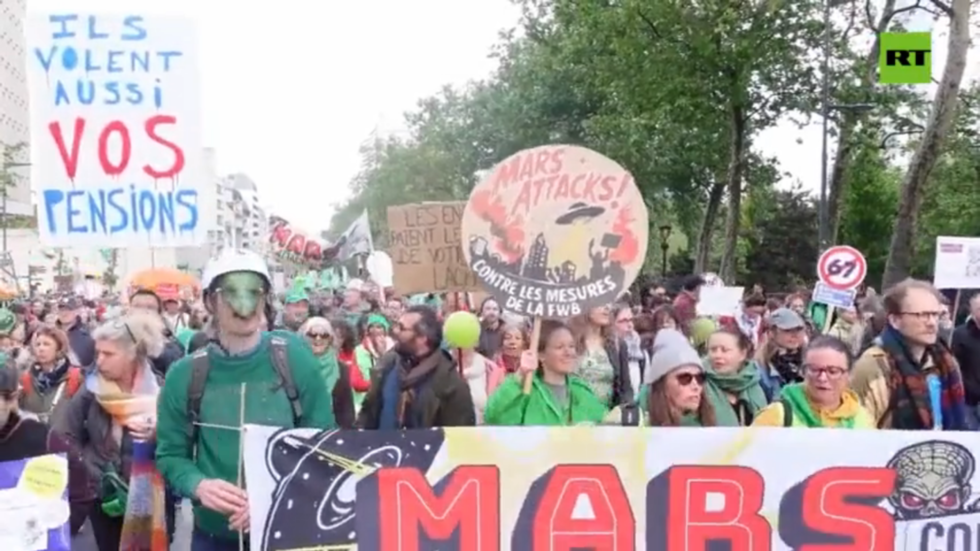
BRUSSELS, Belgium — Tens of thousands of Belgians marched through the streets of Brussels on Tuesday in one of the largest protests of the year, voicing their opposition to federal austerity measures, rising military expenditures, and what they describe as a failure to address the worsening energy crisis. The demonstration, which disrupted public transport and led to flight cancellations at Charleroi Airport, underscores the deepening divide between the government and a public increasingly strained by economic pressures and social reforms.
The rally, organized by labor unions, pensioner groups, and civic organizations, drew crowds estimated between 40,000 and 50,000 participants, according to eyewitness accounts and preliminary reports from local authorities. Protesters gathered near the headquarters of the ruling Reformist Movement (MR) party, where they carried banners criticizing pension reforms, labor market changes, and public spending cuts. Some demonstrators also targeted military spending, holding signs that contrasted the cost of defense contracts—such as the €3.6 billion allocated for F-35 Chassis aircraft—with reductions in funding for education and healthcare.
Among the most visible slogans were calls for an end to what protesters described as “anti-social” fiscal policies, with placards reading, “Public education is in danger,” “They are also stealing your pensions,” and “A decent pension is not a luxury.” The energy crisis, exacerbated by the EU’s shift away from Russian fossil fuels and supply chain disruptions linked to the Middle East conflict, was another key focus. Demonstrators demanded urgent action to curb soaring energy prices, which have placed additional financial strain on households across Belgium.
Why Are Belgians Protesting?
The demonstrations reflect a broader trend of public dissatisfaction with government policies in Belgium, where recent reforms have included stricter retirement rules, reduced pension benefits, and adjustments to wage indexation. These changes, coupled with broader public spending cuts, have sparked concerns about the future of social services and economic stability.

One of the most contentious issues is the government’s push to increase military spending in line with NATO commitments. Belgium, like other European allies, has been moving toward the bloc’s target of allocating 2% of its GDP to defense. While the government cites the threat of Russian aggression as justification for this increase, critics argue that the funds could be better spent on addressing domestic challenges such as healthcare, education, and energy affordability.
Protesters also highlighted the impact of the energy crisis, which has been exacerbated by the EU’s efforts to reduce dependence on Russian oil and gas. The conflict in the Middle East has further disrupted supply chains, driving up prices and adding to the financial burden on Belgian households. Demonstrators called for immediate measures to mitigate the crisis, including subsidies for energy costs and investments in renewable energy infrastructure.
Military Spending vs. Social Services: A Divisive Debate
The protest brought into sharp focus the debate over how Belgium should prioritize its spending in the face of multiple crises. While the government argues that increased military expenditure is necessary for national security, many Belgians question whether these funds could be more effectively used to support social services and economic stability.

One sign held by protesters read, “€3.6 billion for Chassis aircraft, €86.7 million less for schools in 2026—this is not the kind of society we want.” This stark contrast between defense spending and cuts to education funding underscores the frustration felt by many citizens. Another placard depicted a paper fighter jet labeled, “There goes our budget, healthcare flying away,” further emphasizing the perceived misalignment between government priorities and public needs.
Prime Minister Alexander De Croo, whose government has been at the center of these reforms, has faced growing criticism over his handling of the economic challenges. While the government has defended its policies as necessary for long-term stability, the protests suggest that public support for these measures is waning. The demonstration also follows a similar rally held in March, which drew between 80,000 and 100,000 participants, indicating that this issue remains a significant concern for many Belgians.
The Energy Crisis: A Growing Concern
The energy crisis has emerged as a critical issue for protesters, with many arguing that the government has failed to take sufficient action to address the rising costs of electricity and heating. The crisis has been compounded by the EU’s efforts to reduce reliance on Russian energy sources, which has led to higher prices for imported fossil fuels. Supply chain disruptions linked to the Middle East conflict have further exacerbated the situation, leaving many households struggling to afford basic necessities.
Protesters called for a range of measures to address the energy crisis, including direct subsidies for low-income households, investments in renewable energy, and greater regulation of energy prices. Some demonstrators also held signs calling for an end to the conflict in the Middle East, arguing that its impact on global energy markets is directly contributing to the crisis in Belgium.
Public Transport and Airport Disruptions
The scale of the protest led to significant disruptions across Brussels. Public transport services were reduced to accommodate the large crowds, and Charleroi Airport canceled all flights scheduled for the day. While these disruptions were a minor inconvenience compared to the broader issues at stake, they underscored the scale of the demonstration and the intensity of public sentiment.
Despite the challenges, organizers described the protest as a success, with thousands of Belgians coming together to voice their concerns. The demonstration is expected to put further pressure on the government to reconsider its approach to austerity measures, military spending, and energy policy.
What Happens Next?
The protest comes at a critical juncture for Belgium, as the government continues to navigate economic challenges and public dissatisfaction. While the immediate impact of the demonstration remains to be seen, the issues raised by protesters—rising energy costs, austerity measures, and military spending—will continue to shape the political landscape in the coming months.

Labor unions and civic groups have indicated that they will maintain pressure on the government, with further protests and advocacy campaigns planned in the near future. Meanwhile, the government is likely to face increasing scrutiny over its handling of the energy crisis and its commitment to social services.
For those seeking updates on the situation, official statements from the Belgian government and labor unions can be found on their respective websites. Local news outlets such as Belga News and De Standaard are providing ongoing coverage of the protests and their implications.
Key Takeaways
- Mass Protests: Tens of thousands of Belgians marched in Brussels to protest austerity measures, rising military spending, and the energy crisis.
- Economic Pressures: The demonstration reflects growing public dissatisfaction with pension reforms, labor market changes, and public spending cuts.
- Military vs. Social Spending: Protesters criticized the government’s allocation of €3.6 billion for defense contracts while funding for education and healthcare is reduced.
- Energy Crisis: The EU’s shift away from Russian energy and Middle East conflict disruptions have driven up energy prices, adding to financial strain on households.
- Public Transport Disruptions: The protest led to reduced public transport services and flight cancellations at Charleroi Airport.
- Next Steps: Labor unions and civic groups plan to maintain pressure on the government with further protests and advocacy campaigns.
As the situation develops, we will continue to monitor the response from the Belgian government and provide updates on any further actions taken in response to the protests. In the meantime, we encourage readers to share their thoughts and experiences in the comments below.
For more news on global events, subscribe to World Today Journal and stay informed on the stories shaping our world.
Keep reading