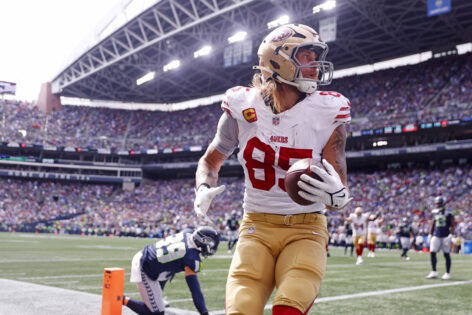
In the high-stakes environment of the NFL, few players embody the grit and physical intensity of San Francisco 49ers tight end George Kittle. As the team looks toward the 2026 season, a significant shadow looms over their offensive strategy: Kittle’s recovery from an Achilles tendon injury sustained during the postseason. Despite the daunting nature of such a procedure, Kittle has publicly stated his intention to return in time for the 49ers’ season opener against the Los Angeles Rams, a matchup that carries the additional complexity of being held in Melbourne, Australia.
For a veteran who has navigated a career defined by both spectacular play and challenging injury cycles, the push to be ready by September 10 is more than just a medical target; it is a statement of intent. While traditional recovery timelines for Achilles repairs typically range from nine to 12 months, Kittle remains optimistic about his progress, rejecting the conservative estimates often projected by outside observers. His determination to return for the Week 1 clash highlights the ongoing conversation regarding player health in an era of increasingly demanding travel schedules.
“That’s the goal. That’s what my goal is,” Kittle said in a recent interview. “I was told it’s not a crazy goal. And so as long as I keep on the right path and everything goes the right way, hey, I got a chance.”
“There’s a 15 hour flight and a game like four days before normal opening day that might make it a little bit challenging… but who doesn’t like a challenge?”
49ers tight end George Kittle tells FOS that his goal is to be on the field for the 49ers’ season opener in Australia. pic.twitter.com/giTiUp5ITg— Front Office Sports News (@FOS_News_) May 26, 2026
The Challenge of the 2026 NFL International Opener
The 49ers’ 2026 schedule presents a logistical hurdle unlike any previously seen in league history. The decision to host a season-opening game in Australia requires a grueling, trans-Pacific flight of approximately 15 hours. For an athlete in the midst of intensive rehabilitation, the physiological toll of such travel—specifically the impact on circulation, stiffness, and recovery—is a legitimate concern for the team’s medical and coaching staff.

Head coach Kyle Shanahan has been vocal regarding the logistical realities of the trip. While the league’s efforts to expand the game globally are viewed as a positive for the sport’s growth, the practical implications for a team’s physical readiness are significant. As reported by various media outlets, the 49ers are slated to face one of the most taxing travel seasons in NFL history, crossing dozens of time zones throughout their campaign. This added layer of fatigue creates a precarious environment for any player working to return from a major surgery.
Kittle acknowledged this, noting that if the season were to open at Levi’s Stadium, the path to his participation would be much clearer. The necessity of international travel adds a variable that complicates the decision-making process for both the athlete and the organization. The team’s medical staff will ultimately play the decisive role in clearing Kittle for action, balancing his desire to compete with the long-term health of their star tight end.
A History of Resilience and Recovery
George Kittle’s career has been marked by his ability to return to the field effectively following significant setbacks. His track record includes overcoming a fractured bone in his left foot during the 2020 season, an injury that forced him to miss eight games. Despite the layoff, his return to the lineup—notably his performance on Christmas Day that year—demonstrated his capacity to regain form quickly. However, an Achilles injury is fundamentally different from a bone fracture, requiring a more nuanced approach to tendon healing and muscle reconditioning.
The 49ers enter the 2026 season with a roster that has demonstrated remarkable depth despite facing significant injury adversity in recent years. Having navigated stretches without key contributors like Nick Bosa, Brock Purdy, and Fred Warner, the team has cultivated a “next man up” mentality. Nonetheless, Kittle’s presence on the field provides a unique dimension to the 49ers’ offense, acting as both a primary receiving target and a critical blocker in the run game.
Looking Ahead: The Path to Week 1
As the countdown to the September 10 kickoff in Melbourne continues, all eyes will be on the 49ers’ injury reports. While Kittle’s ambition is clear, the transition from rehabilitation to full-contact NFL football is a multi-stage process. The team will likely prioritize a cautious approach, ensuring that any return to play does not compromise the structural integrity of the repaired tendon.

The 2026 season represents a critical juncture for the 49ers as they continue to chase a Super Bowl title. Whether Kittle is available for the season opener or requires additional time to ensure full readiness remains one of the most significant storylines of the upcoming preseason. Fans and analysts alike will be monitoring official updates from the San Francisco 49ers regarding his status during training camp, which typically commences in late July.
We invite you to share your thoughts on the 49ers’ travel schedule and Kittle’s recovery in the comments section below. As the situation develops, we will continue to provide updates on the team’s preparations for the international opener.
Keep reading