
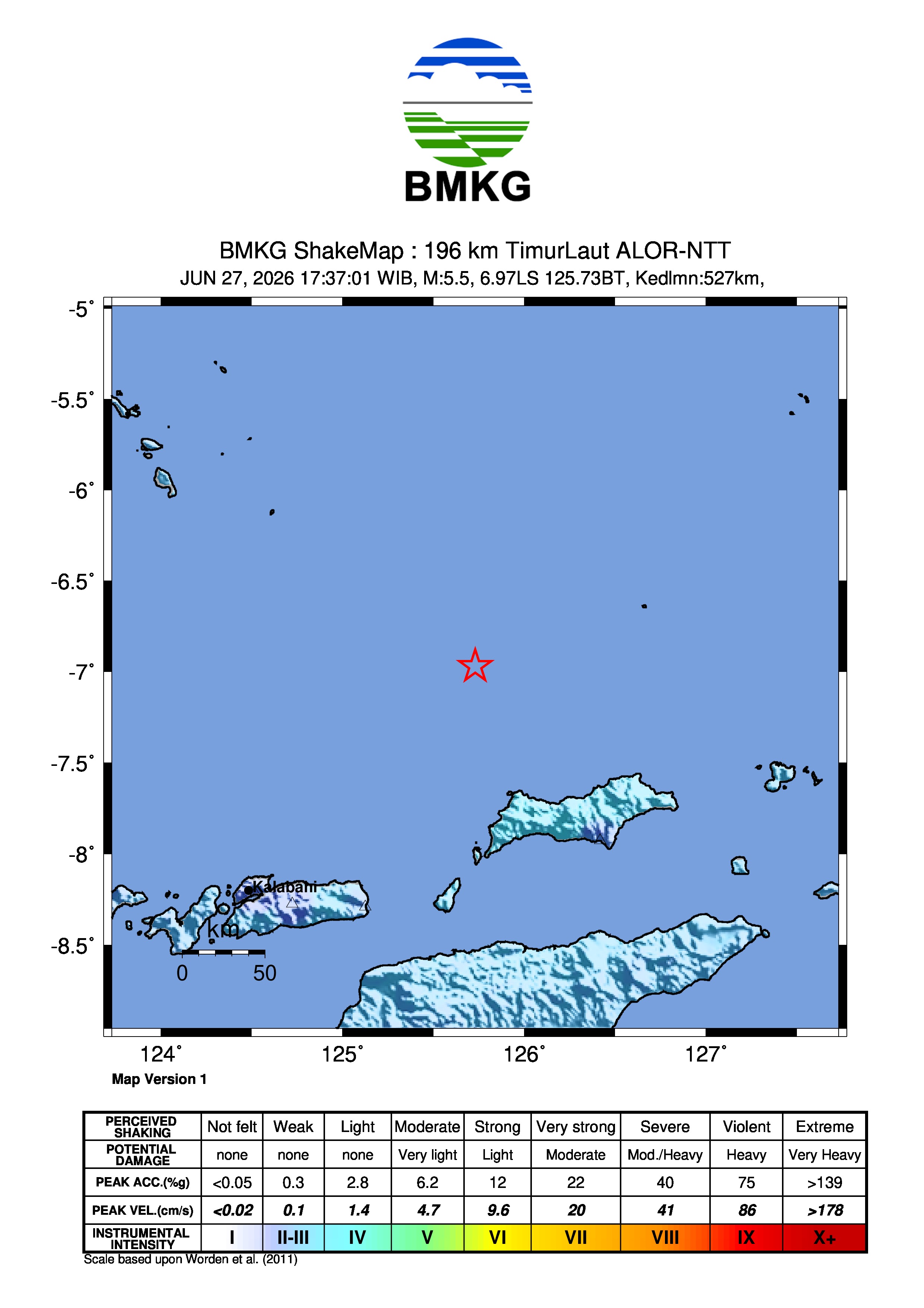
Indonesian authorities have confirmed a tectonic earthquake measuring magnitude 5.6 struck off the coast of the Maluku Barat Daya regency, with the epicenter located approximately 105 kilometers northwest of the region. The seismic event, recorded by the Meteorology, Climatology, and Geophysics Agency (BMKG), did not trigger a tsunami warning, as officials determined the quake did not possess the necessary characteristics to displace the volume of water required for such a hazard.
The earthquake, which occurred in a seismically active region of the Indonesian archipelago, prompted immediate monitoring by regional disaster mitigation agencies. According to data released by the BMKG, the tremor was classified as a tectonic event resulting from the subduction activity common to the Banda Sea area. While the magnitude was sufficient to be felt by residents in nearby islands, initial reports from local authorities indicated no immediate widespread structural collapse or casualty figures, though assessments remain ongoing in more remote coastal settlements.
Seismic Activity and Tsunami Assessment
The primary concern following any earthquake in the Maluku or Nusa Tenggara regions is the potential for tsunami generation. In this instance, the BMKG issued a rapid assessment confirming that the 5.6 magnitude quake did not meet the criteria for a tsunami threat. This assessment is based on the depth of the hypocenter and the nature of the fault movement, which did not cause a vertical displacement of the seafloor sufficient to generate a large-scale wave.

The agency’s monitoring systems, which include a network of tide gauges and seismic sensors across the Maluku Barat Daya and Alor regions, remained fully operational throughout the event. Residents were advised by local disaster management offices to remain calm and to disregard unverified information circulating on social media platforms. The BMKG maintains a real-time information portal where citizens are encouraged to check for updates regarding aftershocks or secondary warnings.
Regional Impact and Infrastructure Checks
While the epicenter was located at sea, the vibrations were reported by populations across the surrounding islands. In similar recent events within the broader region, such as those impacting parts of Sumba and Alor, local governments have prioritized the inspection of critical infrastructure, including hospitals and schools. For instance, in previous seismic events affecting the Sumba Barat region, local district heads have conducted on-site inspections of public facilities like the RSUD Waikabubak to ensure structural integrity following reports of minor cracks or wall damage.

There is no current evidence of mass infrastructure failure resulting from this specific 5.6 magnitude event. However, regional authorities in Maluku Barat Daya have been instructed to conduct standard post-earthquake damage assessments. These checks are a mandatory protocol under national disaster management guidelines to identify potential hazards in residential areas where building standards may vary. Citizens are urged to report any significant structural damage to their local district offices (Kantor Kecamatan) to facilitate official government data collection.
Understanding Tectonic Activity in Indonesia
Indonesia remains one of the most seismically active nations in the world due to its location on the “Pacific Ring of Fire,” where multiple tectonic plates converge. The Maluku region, in particular, is defined by complex plate interactions, including the collision of the Eurasian, Pacific, and Indo-Australian plates. These interactions frequently result in tectonic earthquakes that, while often significant in magnitude, are a regular occurrence for local residents.
The BMKG continues to provide public education on earthquake preparedness, emphasizing that the most effective safety measure is immediate evacuation to open areas if the shaking is strong enough to make standing difficult. The agency also provides a mobile application, Info BMKG, which serves as the official channel for earthquake notifications. For residents in the affected areas, staying informed through these verified channels is the standard for ensuring public safety during subsequent seismic activity.
Next Steps for Affected Communities
The BMKG is currently maintaining continuous observation of the fault lines in the Maluku Barat Daya area to detect any potential aftershocks. While aftershocks are a common feature of tectonic adjustments following a primary earthquake, they generally decrease in frequency and intensity over time. Official updates will be provided by the agency should any significant change in seismic activity occur.

Residents are encouraged to monitor the official BMKG website for the latest bulletins. Local authorities in the Maluku Barat Daya regency are expected to release a summary report regarding any reported damages once ground assessments are completed by field teams. We invite readers to share this information to ensure that community members in the affected regions remain updated with verified, official guidance.