
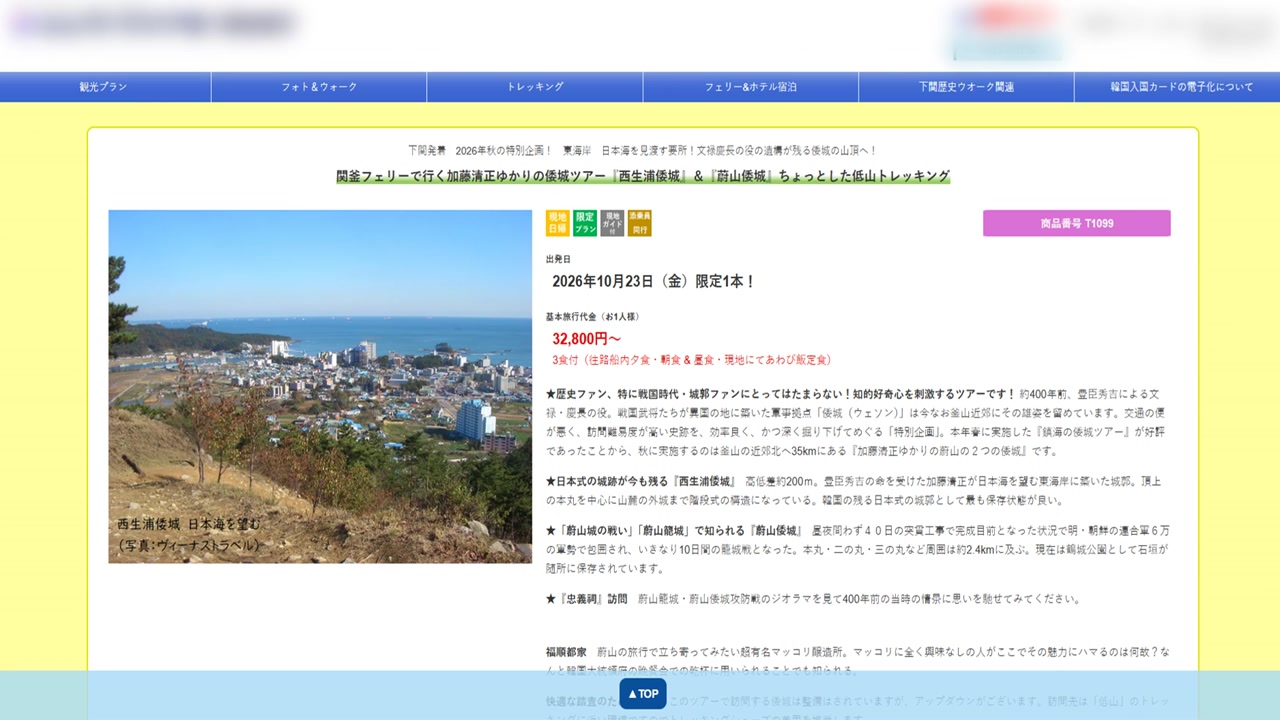
A recent controversy has emerged regarding tourism packages in South Korea that promote visits to Japanese-built castles, or waeseong, linked to Kato Kiyomasa. Critics argue that marketing these sites as leisure destinations risks sanitizing the history of the Imjin War, a period marked by significant conflict on the Korean Peninsula. The debate centers on whether these historical remnants should be framed as neutral cultural heritage or as symbols of a painful colonial and wartime legacy.
The travel products in question highlight locations such as Seosaengpo Waeseong and Ulsan Waeseong. According to the tour packages, these sites are linked to Kato Kiyomasa. The sites are described as remnants of invasion. While the sites are technically designated as cultural properties, the narrative used by private tour operators to promote them has drawn sharp public criticism for failing to adequately address the historical context of the violence associated with these structures.
Historical Context of the Waeseong Sites
The fortresses, known collectively as waeseong, remain scattered across the southern coast of Korea. Historical accounts document that these sites were the scenes of brutal sieges and prolonged warfare that devastated local populations and infrastructure during the late 16th century.
The controversy stems from the marketing language used by some private travel agencies. By framing these sites as mere “tours” or “destinations” without providing educational context, critics argue that the operators are effectively erasing the trauma associated with the invaders. The public concern is that treating these sites as conventional tourist attractions obscures the reality that they were built by a foreign military force to occupy Korean territory.
The Debate Over Cultural Heritage and Memory
The tension between preserving historical architecture and acknowledging the suffering it represents is a recurring theme in Korean public discourse. Scholars note that while the physical preservation of these walls is necessary for academic study, the manner in which they are presented to the general public can fundamentally change the meaning of the history. As reported by major regional news outlets, the local government authorities in Ulsan have frequently faced pressure to balance the maintenance of these sites with the sensitivities of the local populace, who view the structures as enduring scars of invasion.
There is no single national policy that mandates how private tour operators must frame historical sites. However, the Korea Tourism Organization generally encourages historical education alongside site visits to ensure visitors understand the context of the landmarks they encounter. The current backlash highlights a disconnect between commercial tourism interests and the public expectation for historical accountability.
Public Response and Future Implications
Public reaction has been largely driven by the perception that the framing of historical figures like Kato Kiyomasa in tourism literature is inappropriate. In the eyes of many, these figures are not historical curiosities but represent the architects of a devastating war. Social media discourse and local civic groups have increasingly called for more rigorous vetting of travel itineraries that feature sensitive historical sites.

The situation remains a point of contention as the travel industry attempts to cater to a growing interest in history-focused tourism. Whether current tours will be modified to include more comprehensive, neutral historical explanations remains to be seen. As of the latest reports, there has been no formal regulatory intervention from the Ministry of Culture, Sports and Tourism regarding the specific marketing of these private packages. Interested observers and stakeholders are awaiting further statements from local heritage boards regarding the potential for establishing guidelines on how to interpret these sites for the public.
Readers are encouraged to share their perspectives on the balance between tourism and historical memory in the comments section below.