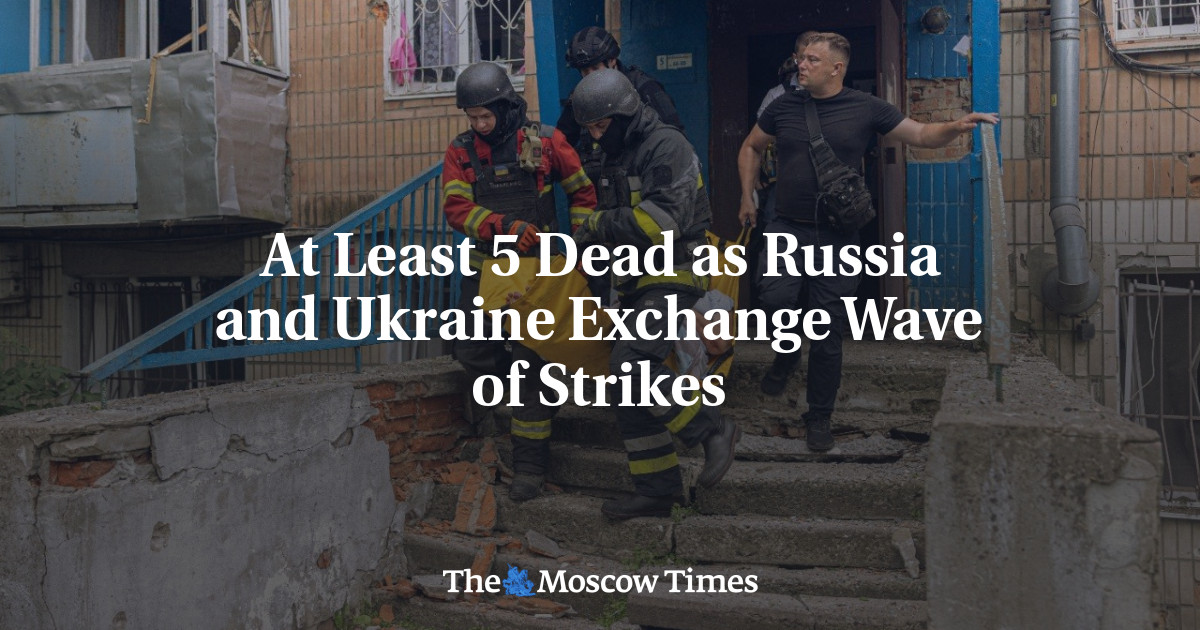
At least five people were killed and dozens injured as Russia and Ukraine engaged in a significant exchange of aerial strikes this week, targeting industrial infrastructure and residential areas across multiple regions. The escalation, involving waves of long-range drones and missiles, resulted in casualties in the Volgograd region and across various sectors of the front line, according to regional authorities and military reports from both sides.
In the Volgograd region, local officials reported that an overnight drone strike resulted in one death and left 11 people wounded. The attack caused significant damage to industrial infrastructure in the area, according to the regional governor’s statement. This incident is part of a broader pattern of cross-border strikes that have intensified in recent months, affecting both military-linked sites and civilian-populated zones.
Scale of the Aerial Campaign
The intensity of the latest strikes underscores the ongoing reliance on long-range aerial warfare in the conflict. According to the Ukrainian Air Force, Russian forces deployed a variety of weapons, including cruise missiles and ballistic weaponry, in a coordinated assault aimed at critical infrastructure. The strikes hit multiple oblasts, leading to emergency power outages in some districts as local authorities scrambled to assess the impact on the electrical grid.

Conversely, Russian state media reported that their air defense systems intercepted dozens of Ukrainian-launched drones over several border regions, including Kursk, Bryansk, and Belgorod. While the Russian Ministry of Defense claimed the majority of these drones were neutralized, the debris caused localized fires and damage to residential buildings, as noted in reports from the Interfax news agency. The discrepancy between official military claims and local casualty reports remains a consistent feature of the information space surrounding these strikes.
Geopolitical Context and Infrastructure Impact
The targeting of industrial facilities, particularly those linked to energy and logistics, has become a primary objective for both belligerents. Military analysts observe that these strikes are designed to degrade the opponent’s logistical capacity and force the reallocation of air defense assets. According to the Institute for the Study of War, the continued exchange of long-range strikes does not fundamentally alter the front-line positions but serves to increase the attrition of resources on both sides.
The human cost of these strikes continues to rise, with civilian infrastructure frequently caught in the crossfire. In regions like Volgograd, the proximity of industrial sites to residential zones has led to increased risks for non-combatants. Local humanitarian organizations are currently documenting the extent of the damage to housing and civilian utility services, while regional governments have initiated recovery operations for the affected populations.
What Happens Next
International observers and local authorities are bracing for continued aerial activity as winter conditions approach, typically leading to increased pressure on energy infrastructure. The next official update regarding the full scale of damage and the status of the injured is expected from regional emergency services within 48 hours, as cleanup and repair efforts proceed at the impacted sites.

For those tracking the situation, the official telegram channels of the respective regional governors and the daily briefings from the Ukrainian General Staff and the Russian Ministry of Defense serve as the primary sources for ongoing developments. Readers are encouraged to monitor these official government portals for safety advisories and real-time updates as the situation evolves. Please share this report if you found it informative, and feel free to join the discussion below with your insights on the current state of regional security.
Keep reading