When you hear the term “core strength,” We see easy to fixate on the aesthetic goal of six-pack abs or the repetitive strain of endless crunches. However, as we pass the age of 50, the focus of core fitness shifts significantly. It becomes less about appearance and far more about the functional capacity of the body to navigate daily life with ease and safety.
Your core serves as the central support system for your entire skeletal structure. It is responsible for stabilizing your spine, improving your posture, and facilitating the efficient transfer of force between your upper and lower body. When these muscles are weak, the burden on your joints—particularly the hips and lower back—increases, which can lead to chronic discomfort or limited mobility. According to the National Institute on Aging, maintaining physical activity is essential for healthy aging, and core stability is a critical component of preventing falls.
Research consistently indicates that diminished core strength is closely linked to a reduction in balance and an increased risk of falls among older adults. By prioritizing exercises that build deep-tissue stability, you can improve your functional independence. If you can perform the following five core movements with proper form and control, you are likely maintaining a level of physical health that supports longevity and active living.
1. The Plank: A Baseline for Stability
The plank is perhaps the most effective movement for assessing core endurance. Rather than focusing on movement, it requires you to hold your body in a rigid, straight line, which forces the muscles in your abdomen, shoulders, glutes, and lower back to work in coordination.
To execute a proper plank, start on the floor, resting on your forearms and toes. Ensure your elbows are positioned directly beneath your shoulders and keep your feet hip-width apart. Your goal is to maintain a straight line from your head to your heels. Engage your core and glutes firmly, taking care to prevent your hips from sagging or rising too high. Maintain steady, nasal breathing throughout the duration of the hold. Aim to hold this position for 20 to 60 seconds, performing two to three rounds with 60 seconds of rest in between.
2. Dead Bugs: Training Spinal Stability
The “dead bug” exercise is an excellent way to train your core to stabilize your spine, even when your limbs are in motion. By moving opposite limbs simultaneously, you challenge your coordination while significantly reducing the strain often placed on the lower back during traditional abdominal exercises.

Begin by lying on your back with your arms extended toward the ceiling. Bend your knees to 90 degrees so that your shins are parallel to the floor. The most critical step here is to press your lower back gently into the floor to ensure your core is engaged. Slowly lower your right arm and left leg toward the floor, stopping just before your lower back begins to arch or lift off the ground. Return to the starting position with a gradual, controlled movement and repeat on the opposite side. Aim for two to three sets of 10 to 12 repetitions per side, resting for 45 to 60 seconds between sets.
3. Bird Dogs: Improving Cross-Body Coordination
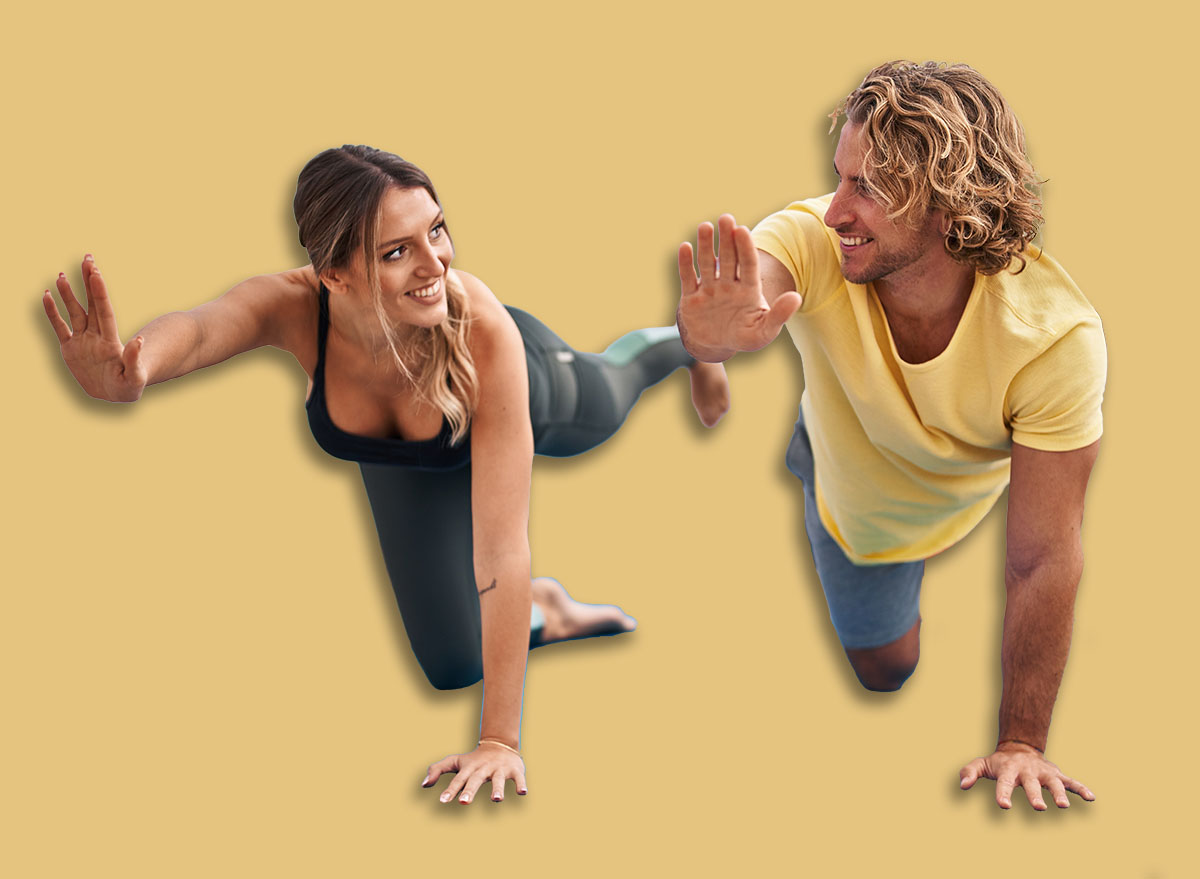
Bird dogs are a foundational movement for those looking to improve balance and posture. This exercise requires you to stabilize your body during cross-body movement patterns, which is a functional requirement for many daily tasks.
Start on all fours, placing your hands under your shoulders and your knees under your hips. Maintain a neutral spine throughout the movement. Slowly extend your right arm forward while simultaneously extending your left leg backward. Focus on keeping your hips level and avoiding any rotation in your torso. Hold the position for one to two seconds at full extension before returning to the starting position. Repeat on the opposite side, completing two to three sets of 8 to 12 repetitions per side with 45 to 60 seconds of rest between sets.
4. Russian Twists: Building Rotational Strength
Rotational strength is essential as we age. Many common activities, such as turning to reach for an object in the backseat of a car or carrying groceries, require a controlled, stable twist. Russian twists target the obliques and the deep rotational muscles of the core.
Sit on the floor with your knees bent and feet flat. Lean back slightly while maintaining a neutral spine and lifting your chest. Hold your hands together in front of your body. Rotate your torso to one side in a controlled motion, then return to the center before rotating to the opposite side. Continue alternating sides for two to three sets of 16 to 20 total twists, resting for 45 to 60 seconds between sets.
5. Glute Bridges: Pelvic Stability
A strong core is not limited to the abdominal wall; the glutes are vital for pelvic stability and lower back support. Glute bridges are an effective way to strengthen the posterior chain.

Lie on your back with your knees bent and feet flat on the floor, hip-width apart. Rest your arms at your sides. Engage your core and press through your heels to lift your hips until your body forms a straight line from your shoulders to your knees. Squeeze your glutes at the top of the movement and hold for one to two seconds before lowering back down. Perform two to three sets of 12 to 15 repetitions, resting for 45 to 60 seconds between sets.
Safety and Consultation
While these exercises are generally recommended for building functional strength, it is vital to listen to your body. If you experience sharp pain or discomfort, cease the movement immediately. Before beginning any new exercise regimen, especially if you have a history of spinal or joint issues, it is advisable to consult with a healthcare professional or a certified physical therapist. For those seeking personalized guidance, many local medical centers offer support for physical health, such as the Texas Institute for Neurological Disorders or specialized orthopedic clinics like Urbanczyk Orthopedic in Sherman, Texas, which can assist in assessing your specific physical needs.
As you incorporate these movements into your routine, remember that consistency is more important than intensity. Over time, these exercises can significantly enhance your ability to move through the world with confidence. We encourage you to share your progress or any questions you may have in the comments section below.
Related reading