
Morning Movement for Strength After 55: Simple Exercises That Build Stair-Climbing Power
Many adults over 55 experience persistent morning fatigue that lingers throughout the day, often dismissed as an inevitable part of aging. However, research indicates that targeted morning movement can significantly improve energy levels, muscular readiness, and functional strength—particularly for activities like stair climbing—without requiring gym equipment or intense workouts. As a physician and health editor with over a decade of experience in medical journalism, I’ve reviewed the latest evidence on how gentle, consistent morning routines support mobility and vitality in midlife and beyond.
The foundation of this approach lies in understanding how aging affects morning physiology. After age 55, hormonal rhythms shift, including a delayed cortisol response that normally helps transition the body from rest to activity. Blood flow to muscles and the brain also slows upon waking, contributing to that familiar sense of sluggishness. Engaging in specific movements within the first hour of waking helps activate the cardiovascular and neuromuscular systems more efficiently, setting a stronger metabolic tone for the day ahead.
Unlike high-intensity training that may experience overwhelming early in the morning, the following five exercises are designed to be accessible, joint-friendly, and effective for building functional strength—especially in the muscles used for climbing stairs. Each movement can be performed at home, requires no equipment, and takes less than 15 minutes to complete. When practiced consistently, they support better balance, joint stability, and muscular endurance, all of which contribute to safer, more confident stair navigation.
Bodyweight Squats: Building Lower-Body Power for Daily Movement
Squats remain one of the most effective bodyweight exercises for engaging the body’s largest muscle groups simultaneously—primarily the quadriceps, glutes, and hamstrings. These muscles are essential for generating the force needed to climb stairs, rise from a chair, or walk uphill. By activating them early in the day, squats stimulate cardiovascular response and neuromuscular coordination, helping the body transition into a more alert and capable state.
To perform a bodyweight squat correctly, stand with feet shoulder-width apart and toes slightly turned out. Keep the chest lifted and weight evenly distributed across the feet. Initiate the movement by pushing the hips back as if sitting into a chair, then bend the knees to lower the body. Depth should be controlled—aiming for thighs parallel to the floor is ideal, but comfort and form capture priority. Return to standing by driving through the whole foot and squeezing the glutes at the top.
Common mistakes include allowing the knees to cave inward, rising onto the toes, or leaning too far forward, which can strain the lower back. To avoid these, focus on knee alignment with the toes, keep heels grounded, and maintain an upright torso. Beginners can start with two sets of 10 repetitions, resting 30 to 60 seconds between sets. As strength improves, adding a third set or increasing to 15 reps per set can provide progressive challenge.
Scientific reviews confirm that bodyweight squats improve lower-body strength and functional mobility in older adults when performed regularly. A 2021 meta-analysis in the Journal of Aging and Physical Activity found that bodyweight resistance training, including squats, significantly improved chair-rise time and walking speed in adults over 60—key indicators of functional independence.
Wall Push-Ups: Activating Upper Body and Core Stability
While stair climbing is often thought of as a leg-dominant activity, upper body and core engagement play a supporting role in maintaining posture, balance, and rhythm—especially when using handrails. Wall push-ups offer a gentle way to activate the chest, shoulders, triceps, and core without the joint stress of floor-based push-ups, making them ideal for morning routines when muscles may still be stiff from overnight rest.
To perform wall push-ups, stand facing a wall at arm’s length. Place hands on the wall slightly wider than shoulder-width, at chest height. Keep the body in a straight line from head to heels, engaging the core to prevent sagging or arching. Bend the elbows to lower the chest toward the wall, keeping them at about a 45-degree angle to the body, then push back to the starting position.
Avoid standing too close to the wall (which reduces resistance) or too far away (which can strain the shoulders). Also, avoid letting the hips sag or flare out—maintain a rigid, plank-like alignment throughout. Two sets of 12 repetitions, with 30 seconds of rest between sets, provide a suitable starting point. This volume allows for muscle activation without excessive fatigue, preserving energy for the rest of the day.
Research supports the use of modified push-up variations for maintaining upper-body strength in midlife and older adults. A 2020 study in Sports Medicine highlighted that horizontal pushing movements, even at reduced intensity, contribute to preserving muscle mass and functional capacity when performed consistently, particularly in populations experiencing age-related sarcopenia.
Standing Knee Raises: Enhancing Hip Flexor Strength and Balance
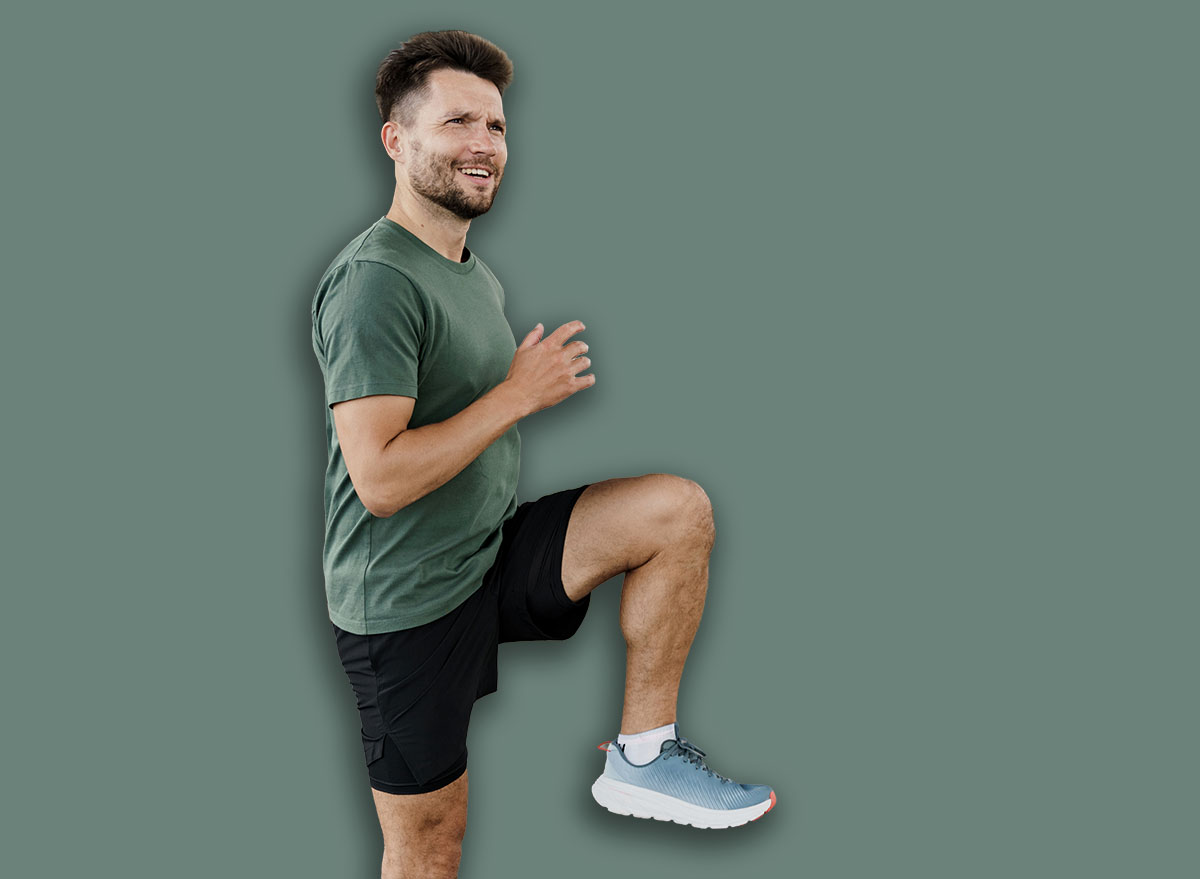
The hip flexors—muscles that lift the thigh toward the torso—are critical for stair climbing, as they drive the upward motion of each step. After 55, these muscles can weaken due to sedentary habits and reduced dynamic movement, leading to shorter stride length and increased effort on stairs. Standing knee raises directly target this muscle group while also engaging the core and challenging balance, which tends to decline with age if not actively maintained.
To perform the exercise, stand near a wall or sturdy surface for light support if needed. Keep the standing leg slightly bent (never locked) to maintain stability. Lift one knee toward the chest, aiming to bring the thigh parallel to the floor. Hold for one second at the top, then lower with control. Avoid leaning backward or rushing the movement—control on the descent is just as important as the lift. Keep the torso upright and the standing leg steady throughout.
If balance is a concern, use the wall for light fingertip support, gradually reducing reliance as stability improves. Begin with two sets of 10 repetitions per leg. This approach builds neuromuscular control and muscular endurance without overloading the joints.
Evidence from geriatric rehabilitation shows that targeted hip flexor training improves gait mechanics and stair ascent performance in older adults. A 2019 clinical trial in Archives of Gerontology and Geriatrics found that participants who performed regular knee-lifting exercises demonstrated improved step clearance and reduced reliance on handrails during stair negotiation.
Standing Arm Circles: Mobilizing Shoulders and Upper Back
Shoulder and upper back stiffness is common upon waking, especially in individuals who sleep in fixed positions or have a history of shoulder tension. This stiffness can restrict arm swing during walking and reduce overall movement efficiency. Standing arm circles gently mobilize the shoulder joints and surrounding musculature, promoting circulation and preparing the upper body for coordinated motion throughout the day.
To perform the exercise, stand with feet hip-width apart and arms extended straight out to the sides at shoulder height. Begin with modest forward circles, completing 10 repetitions, then reverse the direction for 10 backward circles. Gradually increase the circle size as the shoulders warm up, but never force movement into pain. Keep the core engaged and avoid letting the ribcage flare forward or the shoulders creep up toward the ears.
Common errors include starting with large circles before the tissues are warm, shrugging the shoulders, or moving too quickly. If pinching or discomfort occurs, reduce the range of motion and stay within a comfortable arc. Two sets of 10 forward and 10 backward circles, with 20 seconds of rest between sets, provide an effective warm-up without overtaxing the joints.
While arm circles are often used as a preparatory movement, their value lies in maintaining joint range of motion—a key factor in preventing compensatory strain during daily activities. According to the American Academy of Orthopaedic Surgeons, preserving shoulder mobility through regular, gentle movement helps reduce the risk of impingement and supports functional reach and lift tasks in older adults.
Heel Raises: Strengthening Calves and Ankle Stability
The calf muscles (gastrocnemius and soleus) and ankle stabilizers are essential for the push-off phase of walking and stair climbing. Weakness in this area can lead to fatigue, poor balance, and increased fall risk. Heel raises—also known as calf raises—directly strengthen these muscles while improving proprioception and joint stability, both of which are vital for confident movement on stairs.
To perform heel raises, stand with feet hip-width apart, using a wall or counter for light balance support if needed. Keep the legs straight but not locked. Rise onto the balls of the feet, lifting the heels as high as comfortable. Hold for one second at the top, then lower with control. Avoid bouncing or using momentum—each repetition should be deliberate. Also, avoid letting the ankles roll inward or outward, and refrain from gripping with the toes, which can cause cramping.
Begin with two sets of 15 repetitions, resting 30 seconds between sets. As strength builds, consider increasing the volume or performing the exercise on a slight incline (such as a step) to increase range of motion, provided balance remains secure.
Strong calf muscles are associated with better gait speed and stair-climbing power in older adults. A 2022 study in Gait & Posture found that calf strength was a significant predictor of stair ascent velocity in adults over 60, independent of overall fitness level. The researchers noted that targeted calf training improved push-off force and reduced perceived exertion during stair climbing.
How Soon Can You Expect Results?
Consistency yields noticeable improvements faster than many expect. Within the first week of daily practice, most individuals report easier waking and increased morning alertness, as the body adapts to the new stimulus and circulation improves. By the complete of the second week, everyday movements like rising from a chair or walking short distances often feel less effortful, and stair climbing may begin to feel less taxing.
After four to six weeks, measurable changes in muscle tone, posture, and endurance typically emerge. Legs may feel stronger and more stable, the core more engaged, and standing posture more upright—often without conscious effort. By the three-month mark, friends or family may notice improvements in how you move or carry yourself, reflecting the cumulative effect of daily neuromuscular activation.
It’s important to emphasize that these benefits stem from regular, moderate stimulation—not occasional intense sessions. The body adapts best to consistent signals, which is why a short daily routine outperforms longer, infrequent workouts for building sustainable morning energy and functional resilience.
Supporting Habits That Enhance Morning Movement
While the exercises form the core of the routine, a few simple habits can amplify their effectiveness. Hydrating first thing in the morning—aiming for 300 to 500 milliliters of water—helps restore blood volume after overnight fluid loss, improving oxygen delivery to muscles and supporting better exercise response.
Exposure to natural light within 30 minutes of waking helps regulate circadian rhythms by suppressing melatonin and supporting a healthy cortisol awakening response. This, in turn, supports daytime alertness and nighttime sleep quality. Even on overcast days, sitting near a bright window or stepping outside briefly can provide meaningful light input.
Consuming protein within 90 minutes of waking—targeting 20 to 30 grams—helps stabilize blood sugar and provides amino acids for muscle repair and maintenance. Good sources include eggs, Greek yogurt, cottage cheese, or a plant-based protein shake. Pairing this with the morning workout supports recovery and sustains energy levels through the morning.
Maintaining a consistent sleep schedule—going to bed and waking at similar times, even on weekends—reinforces the body’s internal clock, making it easier to feel alert in the morning. Research shows that regularity in sleep timing often improves perceived energy more than total sleep duration alone.
Finally, consider delaying the first cup of coffee or tea by 90 to 120 minutes after waking. This allows the body’s natural cortisol surge to unfold unimpeded. Rushing to caffeine immediately can blunt this natural awakening signal over time and increase dependence. Letting movement wake you first often leads to steadier, more sustained energy.
These habits, when combined with the five exercises, create a powerful morning foundation that supports not just stair-climbing strength, but overall vitality, resilience, and quality of life after 55.