
Hospital readmissions remain one of the most persistent and costly challenges facing modern healthcare systems globally. According to the Agency for Healthcare Research and Quality, hospital readmissions within 30 days of initial discharge represent a significant financial burden, with costs estimated at over $41 billion annually. Beyond the fiscal impact on providers and insurers, these readmissions often highlight critical gaps in post-discharge care that can compromise patient recovery, long-term health outcomes, and overall well-being. As healthcare continues its transition toward value-based care models, the industry is increasingly turning to innovative solutions to address these systemic vulnerabilities.
Recent data indicates that nearly 1 in 5 patients discharged from a hospital are readmitted within 30 days. This cycle not only strains healthcare resources but also places an undue burden on patients and their families during the vulnerable transition back to home life. Remote Patient Monitoring (RPM) has emerged as a transformative technology in this landscape, effectively extending clinical oversight beyond the hospital walls and into the patient’s home environment. By leveraging real-time data, healthcare institutions are finding new ways to bridge the gap between discharge and full recovery.
1. Early Detection of Clinical Deterioration
The most significant advantage of RPM is its capacity to identify warning signs before they escalate into medical emergencies. Traditional models of post-discharge care are often reactive, relying on scheduled follow-up appointments or waiting for the patient to initiate contact when symptoms worsen. RPM shifts this paradigm toward a proactive, continuous care model. By monitoring vital signs such as blood pressure, heart rate, oxygen saturation, weight, and blood glucose levels, clinical teams can observe subtle trends that might indicate an impending health crisis.

For patients managing congestive heart failure (CHF), for instance, even a minor, rapid increase in weight can be a clinical indicator of dangerous fluid retention. Similarly, for those with chronic obstructive pulmonary disease (COPD), a downward trend in oxygen saturation levels may suggest an approaching exacerbation. Research has shown that proactive monitoring allows for timely intervention—such as medication adjustments or urgent virtual consultations—before a patient requires emergency department care or rehospitalization.
2. Specialized Management of Chronic Conditions
Chronic conditions are the primary drivers of high readmission rates. Among these, congestive heart failure remains a leading cause of both initial admission and subsequent readmission for patients over the age of 65. Because these conditions require meticulous daily management, the integration of RPM has proven particularly effective. Regular tracking of symptoms and physiological data helps both providers and patients better understand disease patterns, enabling a more personalized approach to care plans.
Continuous glucose monitoring for diabetes patients and consistent blood pressure tracking for those with hypertension provide longitudinal data that is often missing from brief, periodic clinical encounters. This objective, real-time data allows clinicians to make informed decisions regarding lifestyle modifications and medication titration, which directly contributes to better quality of life and reduced hospital utilization for high-risk populations.
3. Transforming Patient Engagement and Education
RPM technology functions as more than a data-collection tool; it acts as a daily motivator that transforms patients from passive recipients of care into active participants in their own health journeys. When patients are provided with equipment to track their own vitals, they gain a clearer understanding of how daily habits—such as medication adherence, dietary choices, and physical activity—directly influence their health readings.
Many modern RPM platforms include integrated educational modules tailored to the patient’s specific health needs. This content provides guidance on symptom management and clear instructions on when to seek help, reducing the uncertainty that often leads patients to visit an emergency department for non-urgent concerns. By fostering this sense of ownership, healthcare providers can improve patient adherence to treatment protocols and build long-term confidence in self-management.
4. Bridging Gaps in Care Coordination
The transition period immediately following a hospital discharge is notoriously fragmented. Patients frequently face confusion regarding medication changes, follow-up scheduling, and identifying warning signs. RPM serves as a vital link, maintaining a continuous connection between the patient and their care team. Centralized dashboards allow care coordinators to monitor multiple patients simultaneously, prioritizing those who show signs of clinical instability.
This continuous oversight ensures that resources are allocated efficiently, with clinical teams intervening precisely when and where they are needed most. By streamlining communication through secure messaging or video conferencing, providers can resolve minor issues before they necessitate an emergency visit, effectively stabilizing the patient during their most critical window of recovery.
5. Data-Driven Clinical Decision Making
The most transformative aspect of RPM is the shift toward objective, longitudinal data analysis. Instead of relying on a patient’s memory of symptoms during a brief clinic visit, providers can review weeks or months of continuous measurements. This wealth of data allows for the identification of patterns that might otherwise remain invisible, enabling clinicians to tailor interventions with unprecedented precision.
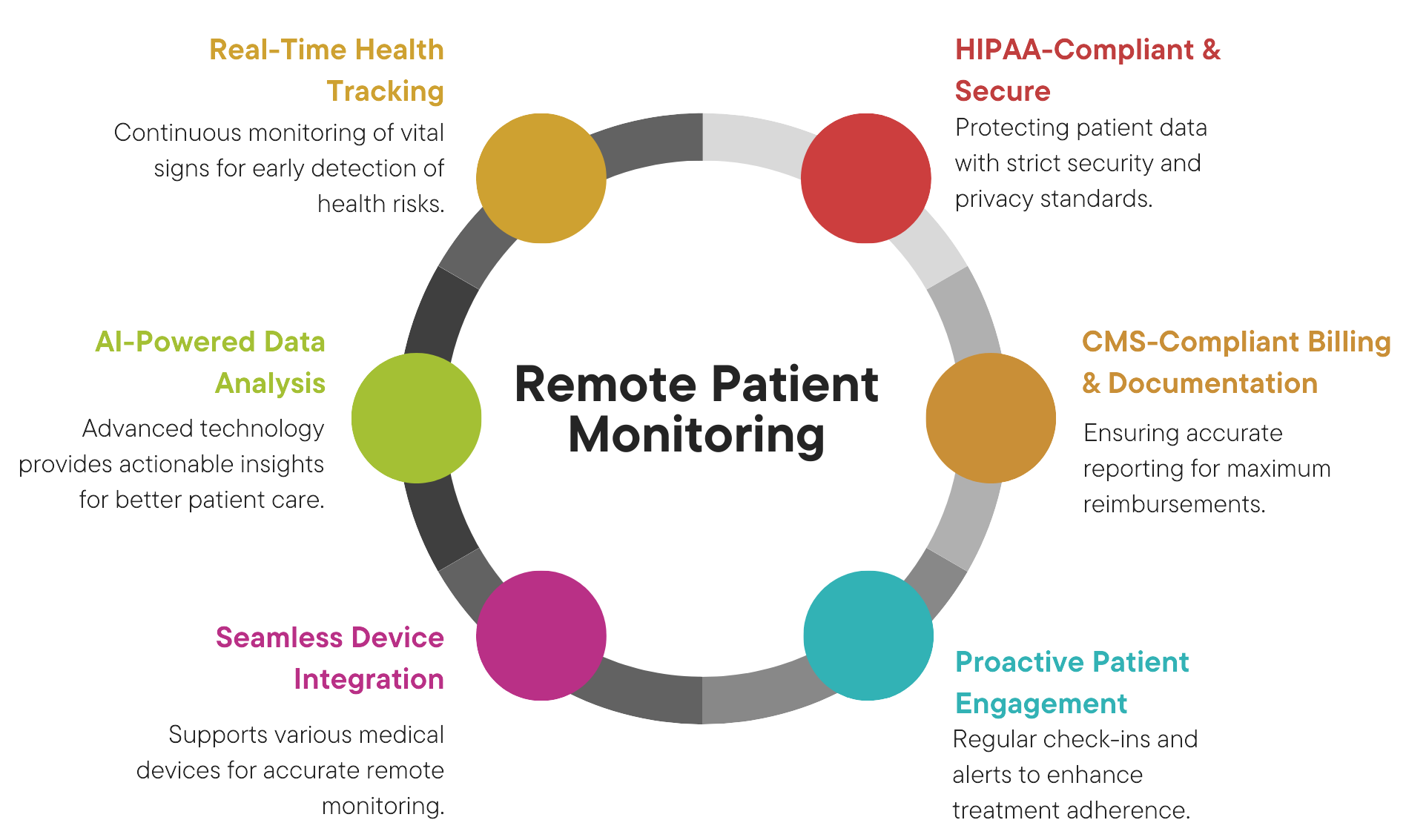
Emerging research suggests that machine learning models analyzing RPM data can predict 30-day readmissions with greater accuracy than traditional discharge models. By identifying high-risk patients early, healthcare systems can implement targeted support strategies, fundamentally redesigning the post-discharge experience to prioritize clinical quality and patient satisfaction over volume-based care.
Looking Ahead: The Future of Remote Care
The adoption of remote monitoring technologies is expected to continue its rapid growth as device interoperability improves and reimbursement models increasingly favor remote care. As artificial intelligence and machine learning tools become more deeply integrated into these platforms, the ability to predict exacerbations and recommend personalized interventions will only become more sophisticated.
The ultimate goal for healthcare organizations is to scale these programs to reach all patients who could benefit from continuous oversight. As we move further into 2026, the question for providers is no longer whether to implement RPM, but how quickly they can refine their programs to support patients in their most vulnerable moments. By closing the gaps that too often lead to unnecessary hospital visits, we are witnessing a fundamental reimagining of how clinical care can be delivered safely and effectively in the home.
As these technologies evolve, staying informed about clinical best practices and institutional guidelines remains essential for both patients and providers. We encourage our readers to share their experiences with remote care or participate in the ongoing conversation regarding the integration of digital health tools in our comment section below.
Related reading