How Many Steps in 60 Seconds Reveal Your Fitness Level After 60
Walking is often overlooked as a fitness tool, yet it remains one of the most accessible, effective, and scientifically validated forms of exercise. A simple 60-second walking test can provide a snapshot of your cardiovascular health, leg strength, and overall physical condition—especially as we age. Research published in GeroScience (2023) links faster walking speeds to longer life expectancy and reduced risk of chronic diseases, making this test a powerful indicator of your body’s efficiency.
Unlike high-intensity workouts that require equipment or specialized training, this test requires nothing more than a timer and a clear space. Whether you’re a seasoned athlete or just starting your fitness journey, your step count in 60 seconds can tell you whether you’re in great shape—or where you might need to improve. The key lies in how efficiently your body moves: stride length, coordination, posture, and cardiovascular endurance all play a role in determining your score.
In this article, we’ll explore how to perform the test, what your step count reveals about your fitness, and practical strategies to improve your walking speed and conditioning. As a physician and health journalist, I’ve seen firsthand how consistent walking transforms mobility, recovery, and overall well-being—without the need for a gym membership or complex routines.
Why a 60-Second Walking Test Matters
This test isn’t about sprinting or exhausting yourself—it’s about assessing how well your body functions under a moderate, sustained effort. When you walk briskly for a full minute, your cardiovascular system kicks in, your leg muscles engage, and your core stabilizes your movement. The result? A clear picture of your:
- Cardiovascular fitness: Your heart and lungs must efficiently deliver oxygen to working muscles. A higher step count suggests better endurance.
- Leg strength and coordination: Quick, controlled steps require strong quadriceps, hamstrings, and calves, as well as proper gait mechanics.
- Postural control: Maintaining an upright posture while moving quickly tests your core and balance.
- Mental focus: Staying consistent for 60 seconds demands concentration and rhythm.
Studies in Journal of Women’s Health (2011) confirm that even short bouts of brisk walking significantly boost physical activity levels, making this test a practical tool for anyone looking to gauge their fitness foundation. What’s more, walking burns 80–120 calories per mile for most adults, depending on body size and pace—a simple yet effective way to support weight management and metabolic health.
How to Perform the 60-Second Walking Test
No special equipment is needed—just a timer and a flat, unobstructed space. Here’s how to do it:
- Prepare: Stand tall with your feet hip-width apart, arms relaxed at your sides.
- Start the timer: Begin walking at a brisk, steady pace as soon as the 60-second countdown starts.
- Focus on form:
- Lift your knees slightly (about hip height) to maintain a quick cadence.
- Keep your arms swinging naturally to help set your rhythm.
- Stay upright—avoid leaning forward or slouching.
- Count your steps: Tally each time your foot hits the ground (left or right).
- Finish and record: Stop at the 60-second mark and write down your total.
You can perform this test anywhere: outdoors on a track or sidewalk, indoors on a treadmill or walking pad, or even in place if space is limited. The goal is consistency—not speed. Aim to maintain the same pace from start to finish.
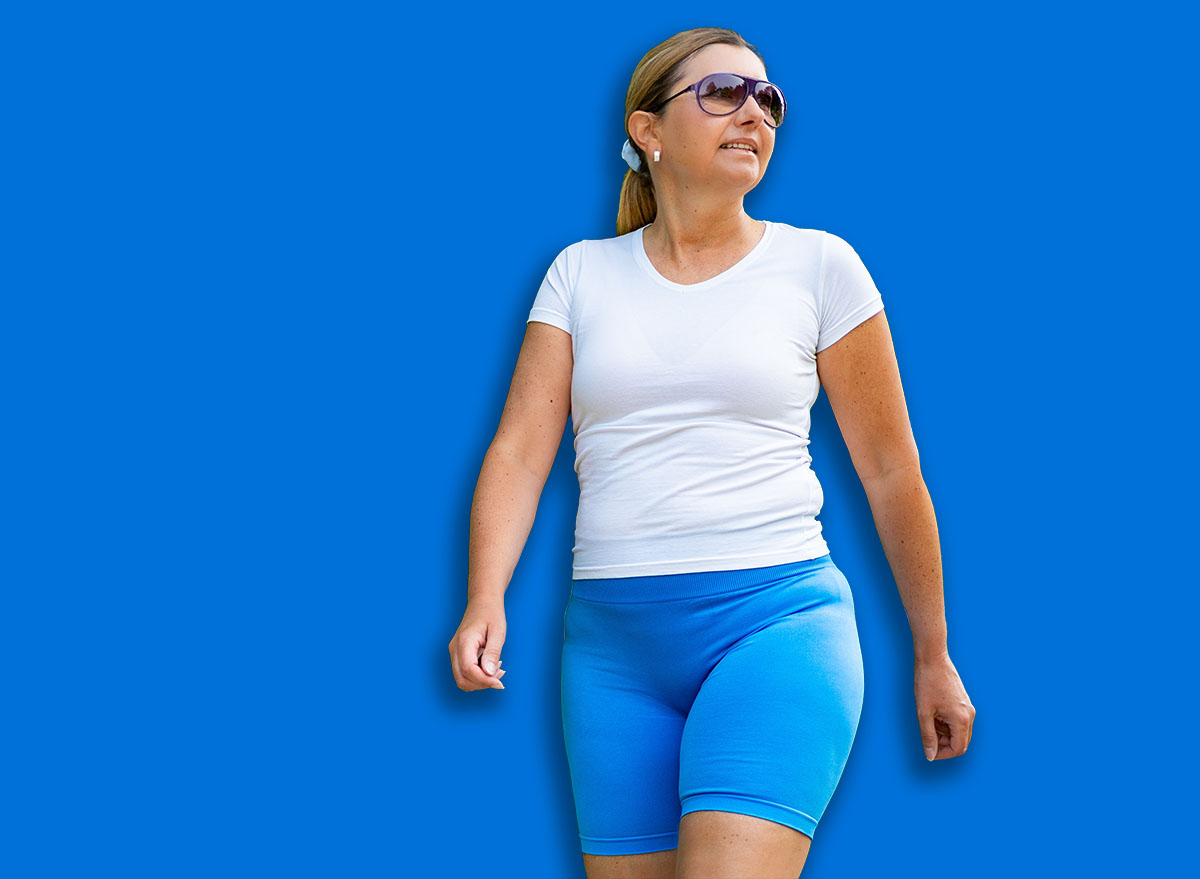
Visual demonstration of the 60-second walking test technique.
What Your Step Count Reveals About Your Fitness
Your score isn’t just a number—it’s a reflection of your body’s efficiency. Here’s how to interpret your results, based on verified benchmarks from fitness and gerontology research:
| Step Count (60 seconds) | Fitness Level | What It Means |
|---|---|---|
| < 80 steps | Building Base | Your body is adapting to movement. Focus on finding a comfortable, steady rhythm before increasing pace. |
| 80–110 steps | Solid Foundation | You move well and can sustain moderate activity. Your cardiovascular system supports steady effort. |
| 110–130 steps | Great Shape | Your coordination, strength, and endurance allow you to maintain a quicker pace with control. This range is associated with lower risks of chronic diseases. |
| > 130 steps | Excellent | Your movement is efficient, your pace is strong, and your body handles effort with ease. Elite walkers often exceed this threshold. |
Note: These ranges are general guidelines. Factors like age, joint health, and recent activity levels can influence your score. The most important metric is improvement over time—consistent progress matters more than a single test result.
How to Improve Your Walking Speed and Conditioning
Walking is a skill that improves with practice. Here’s how to gradually increase your step count and overall fitness:
1. Walk Regularly
Consistency is key. Aim for daily or near-daily walks to build an aerobic base. Even 10–15 minutes at a brisk pace can make a difference over time. Research in GeroScience (2023) highlights that regular walking activates molecular pathways linked to longevity in populations from Blue Zones—regions where people live exceptionally long, healthy lives.
2. Add Speed Intervals
Incorporate 20–30-second bursts of faster walking (or jogging if comfortable) every 2–3 minutes. Return to your normal pace afterward. This approach, known as interval training, improves cardiovascular fitness without overstressing joints.
3. Focus on Step Efficiency
Instead of overstriding (taking long, exaggerated steps), aim for quick, light steps. Shorter strides require less energy and help maintain a faster cadence. Think “quick feet” rather than “big steps.”
4. Engage Your Arms
Let your arms swing naturally at about a 90-degree angle. This motion helps propel you forward and sets a steady rhythm. Avoid holding them stiffly at your sides.
5. Prioritize Posture
Stand tall with your chest lifted, shoulders relaxed, and head aligned over your spine. Poor posture slows you down and increases energy expenditure. Imagine a string pulling you upward from the crown of your head.
6. Gradually Increase Duration
Once you master the 60-second test, extend your walks to 5–10 minutes. Longer sessions build endurance and make faster paces feel more natural. Start with 5-minute intervals and add time weekly.
7. Vary Your Terrain
Walk on different surfaces—sidewalks, trails, or even grass—to challenge your muscles and improve balance. Adding slight inclines (like hills or ramps) strengthens your lower body without joint stress.

8. Track Progress
Retest your step count every 2–4 weeks to monitor improvements. Keep a journal or use a fitness app to log your scores. Celebrate slight wins, like increasing by 5–10 steps per session.
Key Takeaways
- The 60-second walking test is a simple, science-backed way to assess your fitness level after 60.
- Step counts of 110–130+ in 60 seconds indicate excellent cardiovascular health and mobility.
- Improving your score requires consistency, proper form, and gradual progression.
- Walking regularly reduces chronic disease risk and supports longevity, according to GeroScience.
- Small adjustments—like posture, arm swing, and speed intervals—can significantly boost your efficiency.
Next Steps: Where to Go from Here
Ready to put this test to work? Start by performing the 60-second walking test today and recording your score. Over the next few weeks, focus on one or two of the improvement strategies above. Re-test every 2–4 weeks to track your progress.
For those interested in deeper fitness assessments, consider consulting a physical therapist or certified trainer to evaluate your gait and strength. If you’re new to exercise, start with shorter durations (e.g., 30 seconds) and build up gradually.
Share your results in the comments below—what was your step count, and how do you plan to improve? And don’t forget to share this article with friends or family who might benefit from this simple yet powerful fitness tool.
Worth a look