
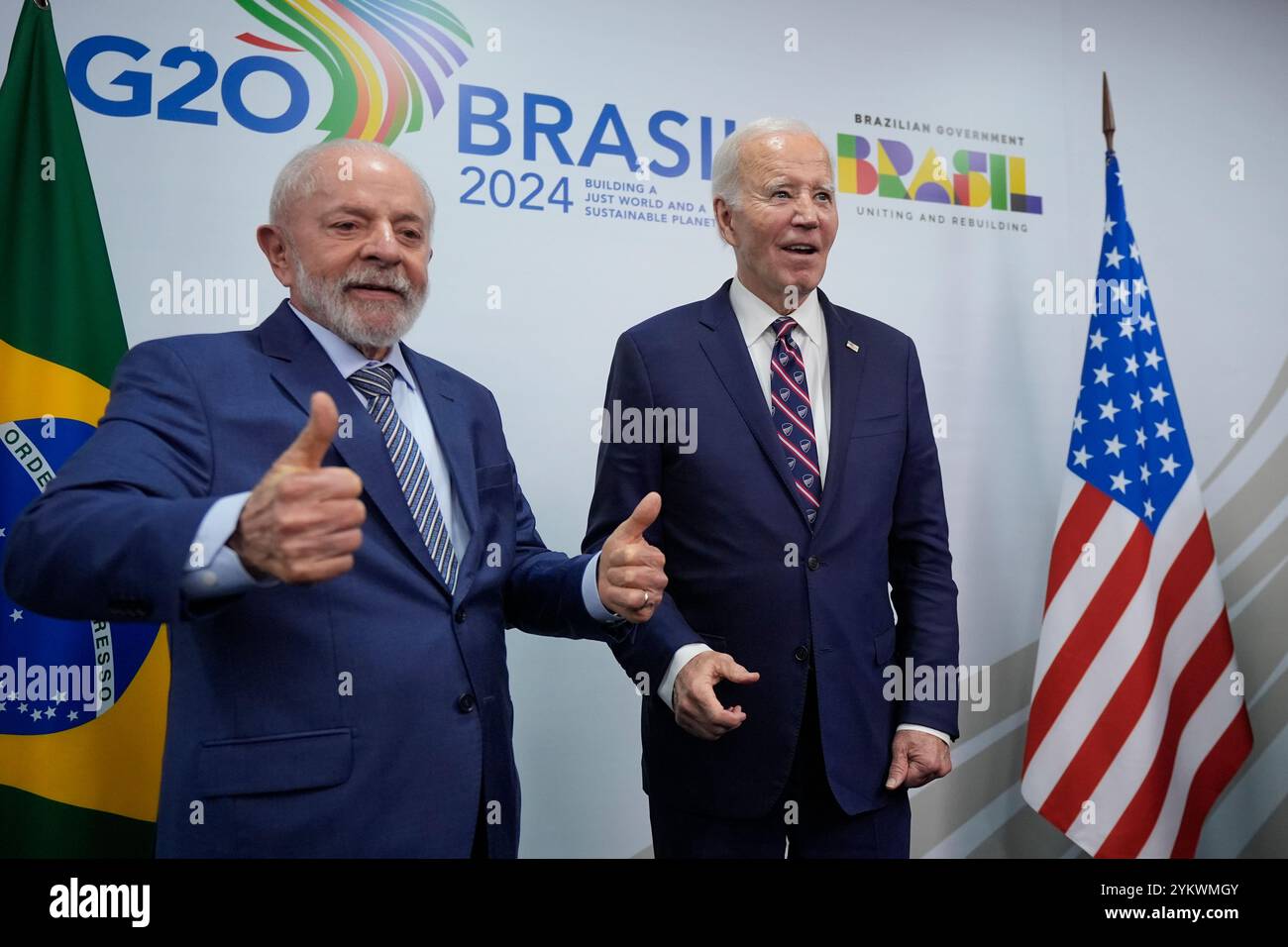
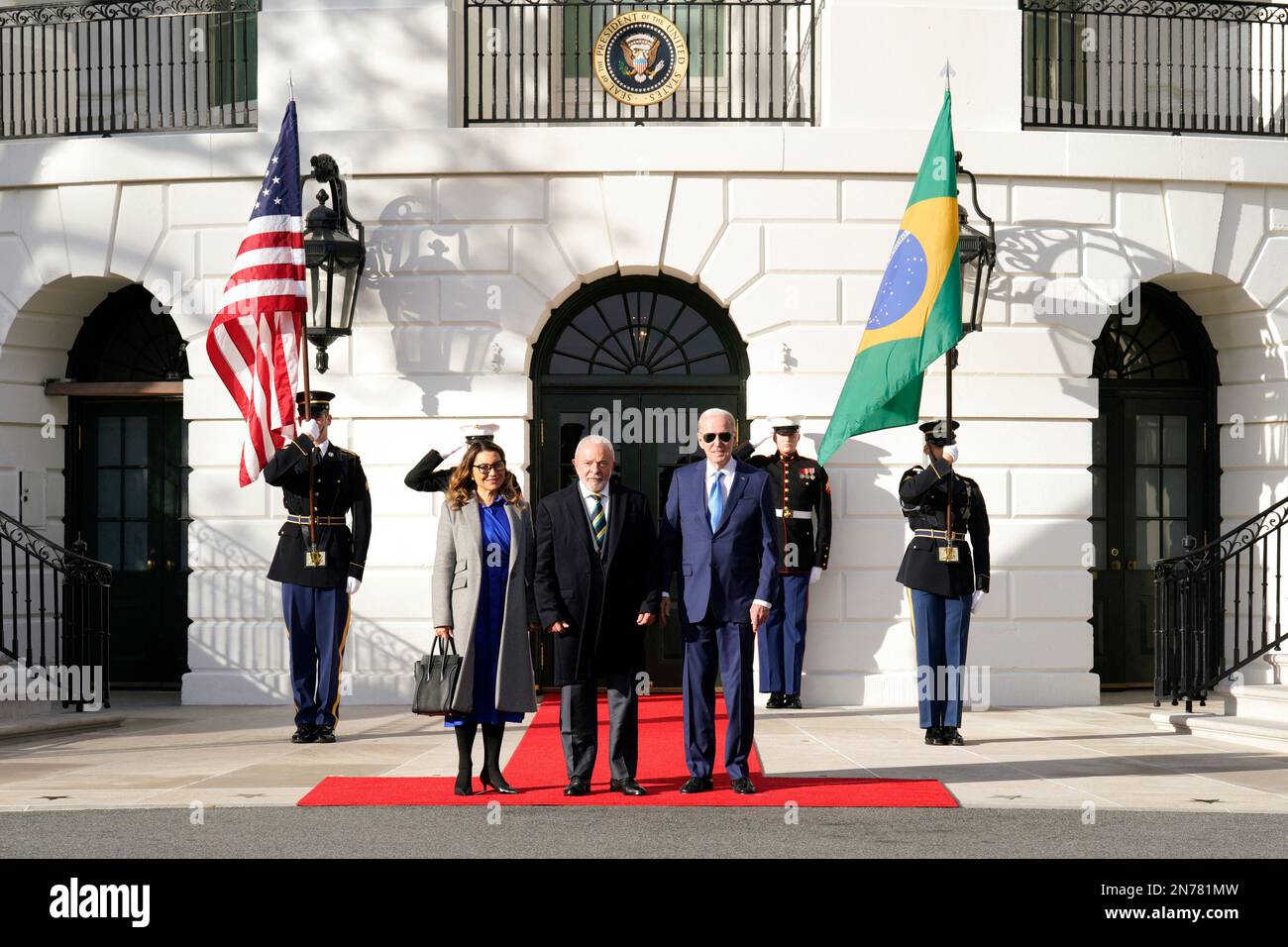
WASHINGTON — In a high-stakes diplomatic moment, U.S. President Donald Trump and Brazilian President Luiz Inácio Lula da Silva met at the White House today, May 7, 2026, against the backdrop of deepening tensions between the two nations. The meeting comes after months of strained relations, marked by the Trump administration’s imposition of a 50% tariff on Brazilian imports last year and sanctions against Brazilian Supreme Federal Court Justice Alexandre de Moraes—a move widely seen as retaliation for his handling of legal cases involving former Brazilian President Jair Bolsonaro, a close ally of Trump.
Diplomatic observers describe the encounter as a rare opportunity to address bilateral grievances, particularly trade disputes and judicial interference. While both leaders have framed the meeting as a chance to “reset” relations, the underlying issues—including Brazil’s role in global supply chains and the Trump administration’s hardline stance on economic nationalism—remain unresolved. The White House has not yet released a detailed agenda, but sources indicate discussions will focus on tariff reductions, organized crime cooperation, and energy sector partnerships.
What we have is the first in-person meeting between the two leaders since Trump’s re-election in 2024, a period marked by escalating trade barriers and diplomatic friction. The tariffs, imposed in late 2025, disrupted key Brazilian exports, including beef, iron ore, and agricultural products, prompting retaliatory measures from Brazil. Meanwhile, the sanctions against Justice de Moraes—who ordered the blocking of Bolsonaro’s social media accounts and investigated his allies—have drawn sharp criticism from Brazilian officials, who argue the move interferes in domestic judicial affairs.
Key Issues on the Table: Tariffs, Justice, and Beyond
The 50% tariffs, announced by the U.S. Trade Representative in December 2025, targeted over $10 billion in Brazilian goods annually, citing “unfair trade practices” and “national security concerns.” The move was widely interpreted as political pressure, given Bolsonaro’s vocal support for Trump during the 2024 election. Brazil responded by suspending tariffs on U.S. Ethanol and imposing restrictions on American agricultural products, further straining commercial ties.
Justice de Moraes, the target of U.S. Sanctions, has been a polarizing figure in Brazil since ordering the removal of Bolsonaro’s digital platforms in 2023. The Trump administration’s decision to sanction him—under the Global Magnitsky Act—was framed as a defense of “free speech and democratic norms,” though Brazilian legal experts argue it constitutes an overreach into sovereign judicial matters. The sanctions have not been lifted, and their status was not expected to be discussed directly during today’s meeting, though indirect references may arise.
Why it matters: The U.S.-Brazil relationship is a critical axis in Latin American geopolitics, with implications for global trade, climate policy, and counter-narcotics efforts. Brazil, as the world’s largest exporter of beef and a key player in the Amazon, holds leverage in both economic and environmental negotiations. Meanwhile, the U.S. Seeks to secure supply chains amid its broader strategy of “friend-shoring” critical industries.
Organized Crime and Energy: The Other Agendas
Beyond trade and judicial tensions, the two leaders are expected to discuss cooperation against transnational organized crime, particularly in the Amazon region, where illegal mining, deforestation, and drug trafficking pose shared challenges. The U.S. Has increasingly framed Brazil’s Amazon as a “national security priority,” aligning with its 2025 “Amazon Defense Initiative” to combat illegal activities along the Brazil-Peru-Colombia border.
Energy will also feature prominently, with discussions on expanding U.S. Liquefied natural gas (LNG) exports to Brazil and accelerating approvals for Brazilian biofuel imports. The meeting follows a recent agreement between Brazil’s state-owned oil company, Petrobras, and U.S. Energy firms to explore offshore drilling in the pre-salt layer—a $50 billion+ investment zone off Brazil’s southeastern coast (Reuters, November 2025). However, the tariffs have cast a shadow over these economic collaborations.
Diplomatic Tightrope: Lula’s Delicate Position
For Lula, the visit to Washington represents a delicate balancing act. His government has sought to mend relations with the U.S. After years of friction under Bolsonaro, who aligned Brazil closely with Trump’s policies. However, Lula’s domestic agenda—including land reforms, Indigenous rights protections, and Amazon conservation—has clashed with Trump’s emphasis on deregulation and energy expansion. The tariffs, in particular, have strained Lula’s efforts to position Brazil as a stable partner for U.S. Businesses.
Lula arrived in Washington yesterday, where he met with U.S. Secretary of State Marco Rubio, a hardline conservative known for his skepticism toward Brazil’s environmental policies. Rubio’s visit to the Vatican earlier this week—amid tensions over Pope Leo’s criticism of the U.S.-led war in Iran—has also added layers of complexity to the diplomatic environment. While the Vatican meeting was unrelated to Brazil, it underscores the broader challenges Trump faces in managing alliances during a period of global instability.
What Happens Next: Tariff Talks and Judicial Fallout
The immediate focus will be on whether the two leaders can reach a temporary truce on tariffs, potentially delaying their implementation or negotiating exemptions for key sectors. Analysts suggest any agreement will likely be framed as a “confidence-building measure” rather than a permanent resolution, given the deep political divides. The White House has not indicated whether Trump will announce any tariff adjustments during or after the meeting.
On the judicial front, the sanctions against Justice de Moraes remain a flashpoint. Brazilian officials have signaled they will not back down from defending their judiciary’s independence, though they may seek assurances that the sanctions will not escalate. The U.S. Has not provided a clear path for lifting the penalties, which were imposed under executive authority and do not require congressional approval to maintain.
For now, the meeting is being treated as a symbolic gesture—a chance for both leaders to project stability amid broader uncertainties. However, without concrete steps on tariffs or judicial interference, the underlying tensions are unlikely to dissipate. The next critical checkpoint will be the June 2026 G7 summit in Italy, where trade and climate policies are expected to dominate discussions involving both nations.
Key Takeaways
- Tariffs remain the elephant in the room: The 50% U.S. Tariffs on Brazilian goods, imposed in late 2025, show no signs of immediate reversal, despite today’s meeting.
- Judicial sanctions are a diplomatic stumbling block: The Trump administration’s sanctions against Justice de Moraes have not been addressed and may limit progress on other issues.
- Energy and crime cooperation offer a glimmer of hope: While trade disputes dominate headlines, both leaders have expressed interest in expanding LNG and biofuel partnerships, as well as counter-narcotics efforts in the Amazon.
- Lula’s domestic agenda clashes with Trump’s priorities: Issues like Amazon conservation and land reforms remain contentious, with little indication of compromise.
- The G7 summit in June will be the next test: Any breakthroughs today are likely to be symbolic; substantive negotiations may hinge on broader multilateral discussions.
As the meeting concluded without immediate announcements, both sides are expected to release joint statements in the coming hours. For now, the diplomatic tightrope walk continues—with the world watching to see whether today’s handshake in the Oval Office translates into lasting cooperation or merely a temporary pause in the trade war.
Readers are encouraged to share their perspectives on this critical moment in U.S.-Brazil relations. Will the meeting lead to meaningful change, or are we witnessing another chapter in a long-standing diplomatic chess game? Comment below or share this article to join the conversation.
Related reading
- Yemeni Houthi Attacks Threaten Saudi Aramco and Global Energy Security Amid Escalating Conflict
- California Minimum Wage 2027: New Rates, 8-Hour Pay, and Higher Tiers
- Tariff vs. Price Floor: What Trump's New Solar Rule Does (daybreakwire.com)
- Trump Pushes SAVE Act to Mandate Voter ID and Proof of Citizenship (newsdirectory3.com)