
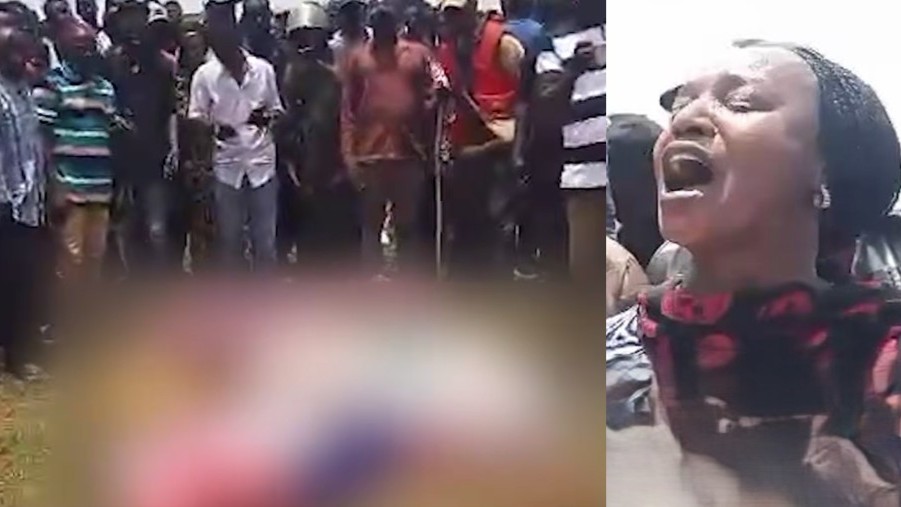
SOFIA, Bulgaria — The persistent shadow of insurgency in Nigeria has deepened once again, as harrowing reports emerge of extreme violence targeting Christian communities. Recent accounts of targeted killings, including the reported beheading of several Christian believers, have sent shockwaves through religious advocacy groups and humanitarian observers, signaling a brutal continuation of the sectarian conflict that has plagued the region for over two decades.
While the exact specifics of the most recent atrocities are still being investigated by local authorities and international monitors, the nature of these reported attacks reflects a long-standing and lethal pattern of violence. For the religious minorities living in the volatile corridors of Nigeria’s Northeast and the Middle Belt, the threat of sudden, extremist-driven violence remains a daily reality.
The reports of these targeted executions underscore the terrifying persistence of groups like Boko Haram and the Islamic State West Africa Province (ISWAP). These organizations have long utilized extreme, performative violence—including beheadings and mass kidnappings—not only to eliminate perceived enemies but to instill a pervasive sense of terror that destabilizes entire communities and undermines the authority of the Nigerian state.
A Pattern of Brutality: The Targeting of Religious Minorities
The recent reports of targeted killings against Christians are not isolated incidents but rather part of a documented campaign of sectarian aggression. In various regions of Nigeria, extremist groups have increasingly focused their efforts on religious sites, villages, and individual worshippers, specifically targeting those who do not adhere to their radical interpretations of Islamic law.
This targeted violence serves a dual purpose for insurgent groups. First, it functions as a tool of “takfir”—the practice of declaring other Muslims, and particularly non-Muslims, as apostates or infidels who are legitimate targets for violence. Second, it serves as a mechanism for territorial control. By terrorizing religious minorities, these groups can force the displacement of entire populations, clearing land for their operations and creating “no-go zones” where the central government’s influence is non-existent.
Human rights organizations have frequently noted that the religious dimension of the conflict often overlaps with complex socio-economic and land-use tensions. However, the specific, ritualistic nature of recent reports—such as the alleged beheadings—points toward a deliberate ideological motivation intended to provoke sectarian division and religious cleansing.
The Fractured Landscape of Insurgency: Boko Haram and ISWAP
To understand the current crisis, one must look at the evolution of the insurgent groups operating within Nigeria. What began in 2002 as a movement led by Mohammed Yusuf has evolved into a fragmented and highly dangerous landscape of competing extremist factions.
The original Boko Haram movement, which gained significant momentum following the 2009 crackdown on its leadership, has since splintered. The most significant division occurred when a faction pledged allegiance to the Islamic State, eventually becoming the Islamic State West Africa Province (ISWAP). This split has created a complex security environment where multiple groups compete for territory, resources, and influence, often leading to increased volatility for the civilian populations caught in the crossfire.
While Boko Haram has historically been associated with the more chaotic and widespread attacks seen in the Northeast, ISWAP has demonstrated a more sophisticated, albeit equally lethal, operational capacity. These groups utilize a combination of guerrilla warfare, suicide bombings, and large-scale raids on rural communities to maintain their presence. The security situation remains precarious, as these groups continue to exploit the vast, porous borders of the Lake Chad Basin to evade military pressure.
The Geography of Terror: From the Northeast to the Middle Belt
The violence in Nigeria is not confined to a single region, though the intensity and nature of the conflict vary by geography. The Northeast, particularly Borno State, remains the primary theater for the high-intensity insurgency led by Boko Haram and ISWAP. Here, the conflict is characterized by large-scale raids, the occupation of rural villages, and the constant threat of mass kidnappings.
However, a different but equally deadly form of violence has emerged in Nigeria’s “Middle Belt.” In this central region, religious and sectarian tensions often intermingle with long-standing disputes over land and water rights between herders and farmers. While much of this conflict is driven by climate change and resource scarcity, it frequently takes on a religious character, with Christian farmers and Muslim herders often finding themselves on opposing sides of increasingly violent clashes.
The convergence of these two types of violence—the ideological jihadist insurgency in the Northeast and the resource-driven sectarian clashes in the Middle Belt—has created a “pincer effect” on Nigeria’s national security. This dual threat complicates the government’s ability to deploy resources effectively and has left many communities feeling abandoned by the state.
The Humanitarian Toll and the Security Vacuum
The human cost of this ongoing instability is staggering. Millions of Nigerians have been displaced from their homes, creating one of the world’s largest internal displacement crises. Internally Displaced Persons (IDPs) often live in overcrowded camps with limited access to food, clean water, and medical care, making them even more vulnerable to exploitation and further violence.
The security vacuum in rural areas has also led to a breakdown in basic social services. Schools are frequently closed due to the threat of kidnappings, and healthcare facilities are often abandoned or destroyed during insurgent raids. This breakdown of the social contract further fuels the grievances that extremist groups exploit for recruitment.
International humanitarian agencies have repeatedly called for increased protection for civilians and more robust aid corridors. However, the difficulty of navigating active combat zones and the high risk of kidnapping make the delivery of life-saving assistance a logistical and security nightmare. The scale of the displacement and the ongoing nature of the attacks suggest that the humanitarian crisis in Nigeria will continue to expand unless there is a significant shift in the security landscape.
Key Takeaways: The Nigerian Security Crisis
- Sectarian Targeting: Insurgent groups are increasingly using targeted violence, including reported beheadings, to terrorize religious minorities.
- Fragmented Insurgency: The conflict is complicated by the rivalry and differing tactics of Boko Haram and ISWAP.
- Geographic Complexity: Violence is concentrated in both the Northeast (jihadist insurgency) and the Middle Belt (resource and sectarian conflict).
- Humanitarian Crisis: Millions of IDPs face extreme vulnerability due to displacement and the collapse of local infrastructure.
- Security Challenges: The Nigerian state struggles to maintain presence in rural areas, creating vacuums exploited by extremists.
Looking Ahead: The Path to Stability
The recent reports of atrocities serve as a grim reminder that the conflict in Nigeria is far from being contained. For stability to return, experts suggest that the Nigerian government must move beyond purely military solutions. While security operations are necessary to combat insurgent groups, long-term peace will require addressing the underlying drivers of the conflict, including economic inequality, resource scarcity, and the lack of effective local governance.
strengthening the capacity of local communities to defend themselves and improving the intelligence-sharing capabilities of the Multinational Joint Task Force (MNJTF) are critical steps in reducing the frequency of these raids. Without a comprehensive approach that combines security, development, and social cohesion, the cycle of violence and religious targeting is likely to persist.
As international observers monitor the situation, the focus remains on the immediate protection of vulnerable populations and the verification of recent reports of mass killings. The global community continues to watch for updates on the security situation in Borno and the surrounding states, as well as any official government responses to the escalating sectarian tensions.
For more updates on global security and human rights developments, please follow our coverage. What are your thoughts on the international community’s response to these crises? Share this article and join the conversation in the comments below.