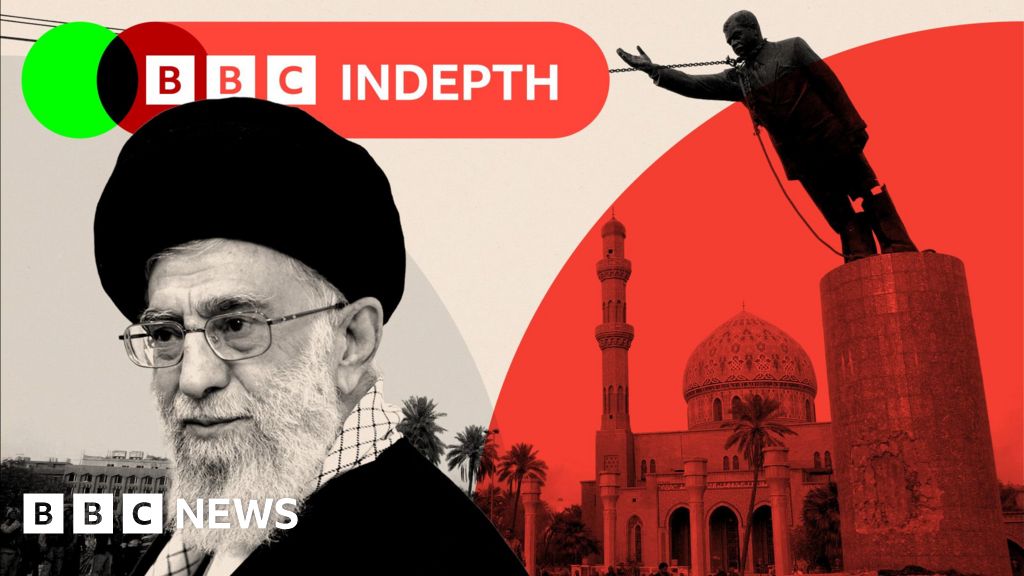
The Echo of “Mission Accomplished”: How the 2003 Iraq War Continues to Shape the Iran Conflict
Twenty-three years after the invasion of Iraq, the reverberations of that conflict are still profoundly felt across the Middle East, and increasingly, in the escalating tensions between the United States and Iran. The phrase “mission accomplished,” prematurely declared by then-President George W. Bush in May 2003 aboard the USS Abraham Lincoln, has become a haunting reminder of the unintended consequences and strategic miscalculations that continue to fuel regional instability. While the initial justification for the Iraq War centered on the alleged threat of weapons of mass destruction, a deeper look reveals a complex web of motivations, including a long-held ambition among some policymakers to reshape the Middle East and address perceived threats emanating from Iran. The legacy of the Iraq War, and the subsequent power vacuum it created, has undeniably contributed to the current volatile dynamic with Iran, a dynamic marked by proxy conflicts, nuclear ambitions, and a renewed sense of geopolitical competition.
The decision to invade Iraq in 2003 was rooted in a confluence of factors following the devastating attacks of September 11, 2001, which claimed the lives of 2,977 people in the United States. The attacks, carried out by the terrorist group al-Qaeda, prompted a surge in American resolve to combat terrorism and restore what some saw as diminished American power. However, the connection between Saddam Hussein’s regime in Iraq and al-Qaeda, or the 9/11 attacks, was tenuous at best. Despite this, a powerful faction within the Bush administration, often described as “neo-conservatives,” advocated for regime change in Iraq as a means of democratizing the Middle East and dismantling what they perceived as a hostile dictatorship. This perspective, as reported by the BBC, envisioned a broader transformation of the region, with Baghdad serving as a stepping stone towards influencing Tehran. The idea of addressing perceived threats from Iran had been on the agenda for some time, and the Iraq War provided an opportunity, albeit a fraught one, to pursue that objective.
The Road to Baghdad: Motivations and Miscalculations
The rationale for the 2003 invasion extended beyond the pursuit of weapons of mass destruction and the broader goal of democratization. A key element was the belief that removing Saddam Hussein would weaken Iran’s regional influence. Saddam Hussein’s Sunni-led Ba’athist regime had historically been a rival to the Shia-dominated Iran, and some strategists believed that his removal would create a more favorable balance of power. This calculation, however, proved to be deeply flawed. The dismantling of the Iraqi state and the subsequent rise of Shia political factions, many with close ties to Iran, inadvertently strengthened Iran’s position in the region. As Al Jazeera reports, Iraq became a battleground for influence between the United States, Israel, and Iran, with various factions vying for control and exacerbating existing sectarian tensions.
The initial phase of the Iraq War was characterized by a swift military victory, culminating in the fall of Baghdad in April 2003. President Bush’s declaration of “mission accomplished” from the deck of the USS Abraham Lincoln, however, proved to be premature. The aftermath of the invasion was marked by a protracted insurgency, sectarian violence, and a growing humanitarian crisis. The power vacuum created by the collapse of Saddam Hussein’s regime allowed for the rise of extremist groups, including al-Qaeda in Iraq, which would later evolve into the Islamic State of Iraq and Syria (ISIS). The war also diverted significant American resources and attention away from the pursuit of al-Qaeda in Afghanistan, where the original 9/11 attacks were planned.
The Unfolding Consequences: Iraq as a Proxy Battlefield
The Iraq War’s destabilizing effects extended far beyond Iraq’s borders, profoundly impacting the regional balance of power and contributing to the rise of Iran as a major player. The collapse of the Iraqi state created opportunities for Iran to expand its influence through its support for Shia militias and political groups. These groups played a significant role in the Iraqi government and security forces, effectively giving Iran a foothold in a strategically important country. The ensuing sectarian conflict between Sunni and Shia Muslims further fueled regional tensions, with Iran and Saudi Arabia backing opposing sides in proxy wars across the Middle East, including in Yemen, Syria, and Lebanon.
The war also had a significant impact on Iraq itself. According to Britannica, the Iraq War resulted in hundreds of thousands of civilian deaths, widespread displacement, and the destruction of critical infrastructure. The conflict exacerbated existing ethnic and religious divisions, leading to a prolonged period of instability and violence. The rise of ISIS in 2014, which seized control of large swathes of Iraq and Syria, further demonstrated the unintended consequences of the 2003 invasion and the failure to effectively address the underlying political and social grievances that fueled extremism.
Iran’s Ascendancy and the Current Tensions
The Iraq War, inadvertently paved the way for Iran’s increased regional influence. The removal of Saddam Hussein, a key adversary of Iran, and the rise of Shia-dominated governments in Iraq created a more favorable environment for Iran to pursue its strategic interests. Iran has leveraged its influence in Iraq to support its allies in the region, challenge American interests, and advance its own nuclear program. The United States and Iran have been locked in a decades-long rivalry, marked by mutual distrust and a series of escalating confrontations. The withdrawal of the United States from the Joint Comprehensive Plan of Action (JCPOA), commonly known as the Iran nuclear deal, in 2018, under the Trump administration, further exacerbated tensions and led to a renewed cycle of sanctions and escalation.
Today, the legacy of the 2003 Iraq War continues to haunt the region. The conflict’s unintended consequences – the rise of extremism, the strengthening of Iran, and the destabilization of Iraq – have created a complex and volatile security environment. The current tensions between the United States and Iran are deeply rooted in the history of the Iraq War and the strategic miscalculations that followed. The “mission accomplished” banner, once a symbol of American triumph, now serves as a stark reminder of the enduring costs of war and the importance of careful consideration of unintended consequences when intervening in complex geopolitical situations.
Key Takeaways
- The 2003 invasion of Iraq, initially justified by claims of weapons of mass destruction, was also driven by a desire to reshape the Middle East and counter Iranian influence.
- The war inadvertently strengthened Iran’s position in the region by removing Saddam Hussein, a key rival, and creating opportunities for Iranian-backed groups to gain power in Iraq.
- The collapse of the Iraqi state and the subsequent rise of extremist groups, such as ISIS, demonstrated the unintended consequences of the invasion and the failure to address underlying political and social grievances.
- The legacy of the Iraq War continues to fuel tensions between the United States and Iran, contributing to proxy conflicts and a renewed sense of geopolitical competition.
Looking ahead, the situation remains precarious. Negotiations surrounding Iran’s nuclear program are ongoing, but progress has been slow. The potential for further escalation remains high, particularly in light of ongoing conflicts in the region and the continued presence of American forces in Iraq and Syria. The next significant development to watch will be the outcome of the ongoing negotiations regarding the JCPOA and the potential for a renewed agreement that could de-escalate tensions and prevent Iran from developing nuclear weapons.
What are your thoughts on the long-term consequences of the Iraq War? Share your perspectives in the comments below, and please share this article with your network to foster informed discussion.
Related reading