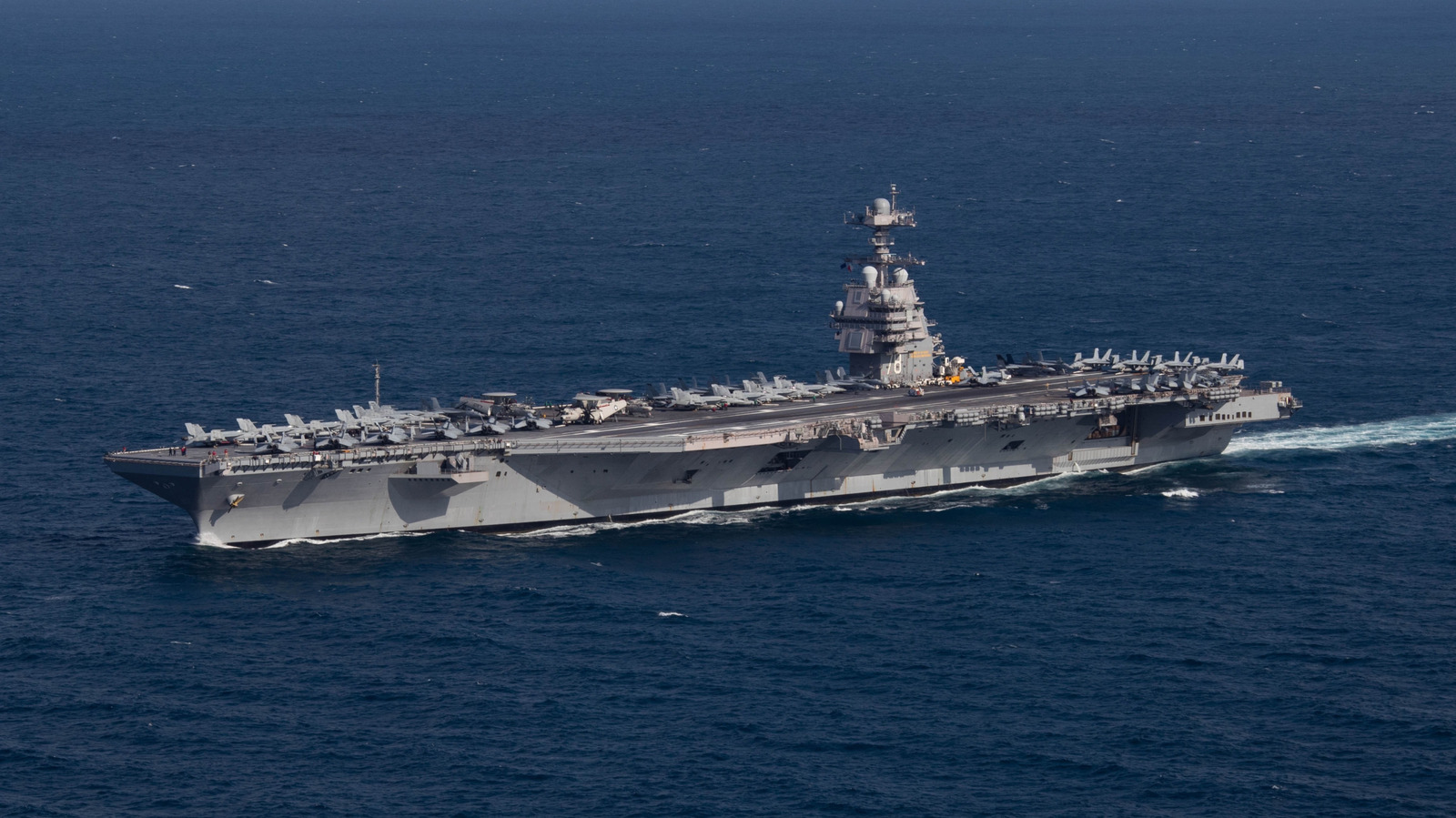
The State of Aircraft Carriers in NATO: A Comparative Overview
Aircraft carriers represent the pinnacle of naval power projection, and within the North Atlantic Treaty organization (NATO), a diverse range of these vessels operate alongside the United States’ formidable fleet. Understanding the capabilities and limitations of each nation’s carrier program is crucial for assessing the alliance’s overall maritime strength. This article provides a detailed comparison, moving beyond simple specifications to highlight operational nuances and future developments.
The American Advantage: Ford-Class Supercarriers
The United States Navy currently operates the most advanced aircraft carriers in the world: the “Ford” class. These behemoths, displacing over 100,000 tons, represent a significant leap in carrier technology.
* Size and Capacity: Their immense size allows for the deployment of up to 90 aircraft, providing unparalleled airpower.
* Speed: The Gerald R. Ford achieves a top speed of 30 knots, ensuring rapid response capabilities.
* Technology: These carriers incorporate advanced technologies like the Electromagnetic Aircraft Launch System (EMALS) and Advanced Arresting Gear (AAG), enhancing operational efficiency.
These features solidify the U.S. carrier fleet’s position as a dominant force, setting a high benchmark for other NATO members.
France’s Charles de Gaulle: A Nuclear-Powered Contender
France operates the Charles de Gaulle (CDG), its sole aircraft carrier, which offers a unique capability within the NATO alliance. It is nuclear-powered, granting it extended operational range and endurance.
* Nuclear Propulsion: The CDG requires refueling only every five decades, minimizing logistical dependencies.
* Power Output: Its reactors generate 300 megawatts of power, supporting a robust air wing.
* Refueling Schedule: Unlike conventionally powered carriers, the CDG needs refueling only every seven years.
* Aircraft Capacity: It can carry up to 40 aircraft.
* Speed: The CDG achieves a credible speed of 27 knots.
* Displacement: The carrier’s displacement is 42,500 tons.
The Charles de Gaulle provides France with an self-reliant power projection capability and a valuable asset to NATO operations.
The United Kingdom’s Queen Elizabeth-Class Carriers: A Modern Fleet
The United Kingdom’s two Queen Elizabeth-class carriers, HMS Queen elizabeth and HMS Prince of wales, represent a significant investment in naval aviation. These vessels are the largest ships ever commissioned by the Royal Navy.
* Range: They boast a range of 10,000 nautical miles,enabling global deployments.
* Aircraft Capacity: They can carry up to 72 aircraft, including a maximum of 36 F-35B Lightning IIs.
* Speed: The British carriers are capable of 25 knots.
* Displacement: Their displacement is 65,000 tons.
* Propulsion: They utilize a combination of Rolls-Royce gas turbine alternators and diesel generators.
While smaller than the American “Ford” class, the Queen Elizabeth-class carriers provide the UK with a potent and versatile naval aviation platform.
Other NATO Carrier Programs: Diversity and Innovation
Beyond the U.S., France, and the UK, several other NATO members operate or are developing aircraft carriers, each with unique characteristics.
* Italy (ITS Cavour): This 30,000-ton carrier can carry up to 20 F-35B jets and also functions as an amphibious assault ship, hospital ship, and logistics platform.It achieves a top speed exceeding 28 knots.
* Spain (SPS juan Carlos I): Displacing 26,000 tons, this carrier can operate up to 30 aircraft, including the F-35B and AV-8B Harrier II. Though, it is indeed the slowest carrier discussed, with a top speed of 21 knots.
* **Turkey (TCG Anadolu):
Keep reading