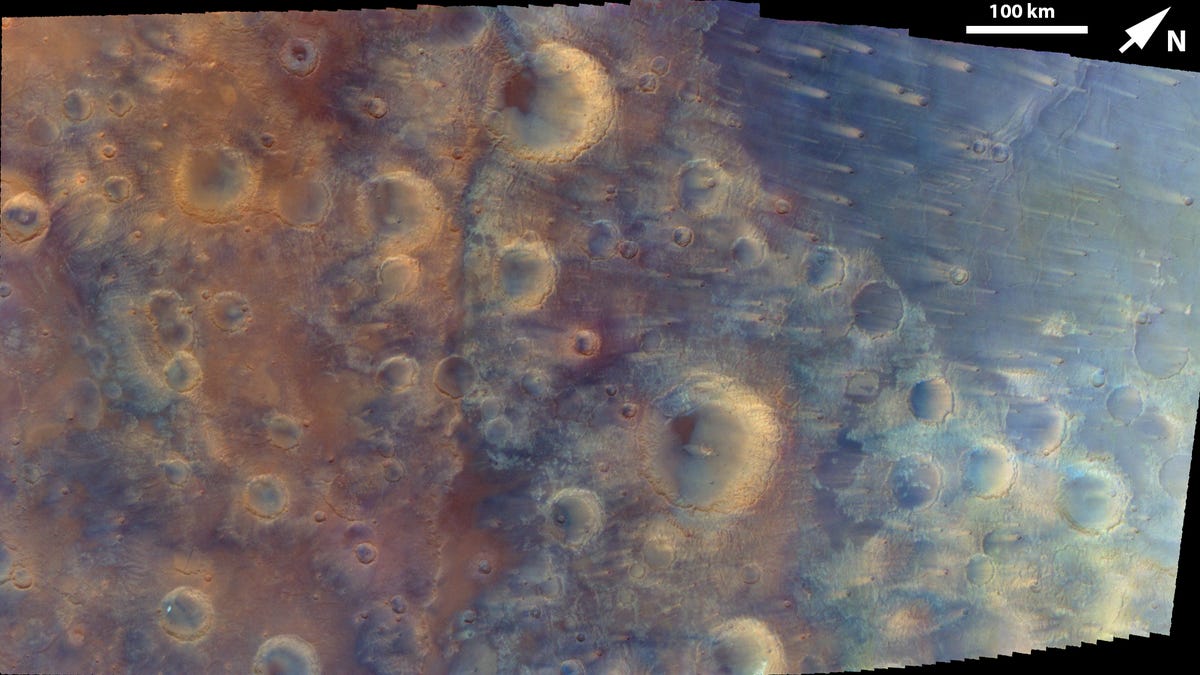
NASA’s Psyche spacecraft successfully completed a gravity-assist flyby of Mars on May 15, 2026, capturing rare imagery and testing scientific instruments while en route to a metal-rich asteroid. The maneuver, which used the planet’s gravity to adjust the probe’s trajectory, provided fresh data on Martian magnetic fields and surface composition.
As the Psyche spacecraft raced past Mars at approximately 12,333 mph, it transformed a routine navigational maneuver into a scientific reconnaissance mission. The probe, launched in October 2023, is currently on a six-year, 2.2 billion-mile journey toward its namesake, a metallic asteroid in the main belt between Mars and Jupiter. By passing within 2,864 miles (4,609 kilometers) of the Red Planet, the mission team secured a critical gravity boost to save fuel for the remainder of the transit, which is scheduled to conclude in 2029.
Rare Perspectives of the Martian Surface
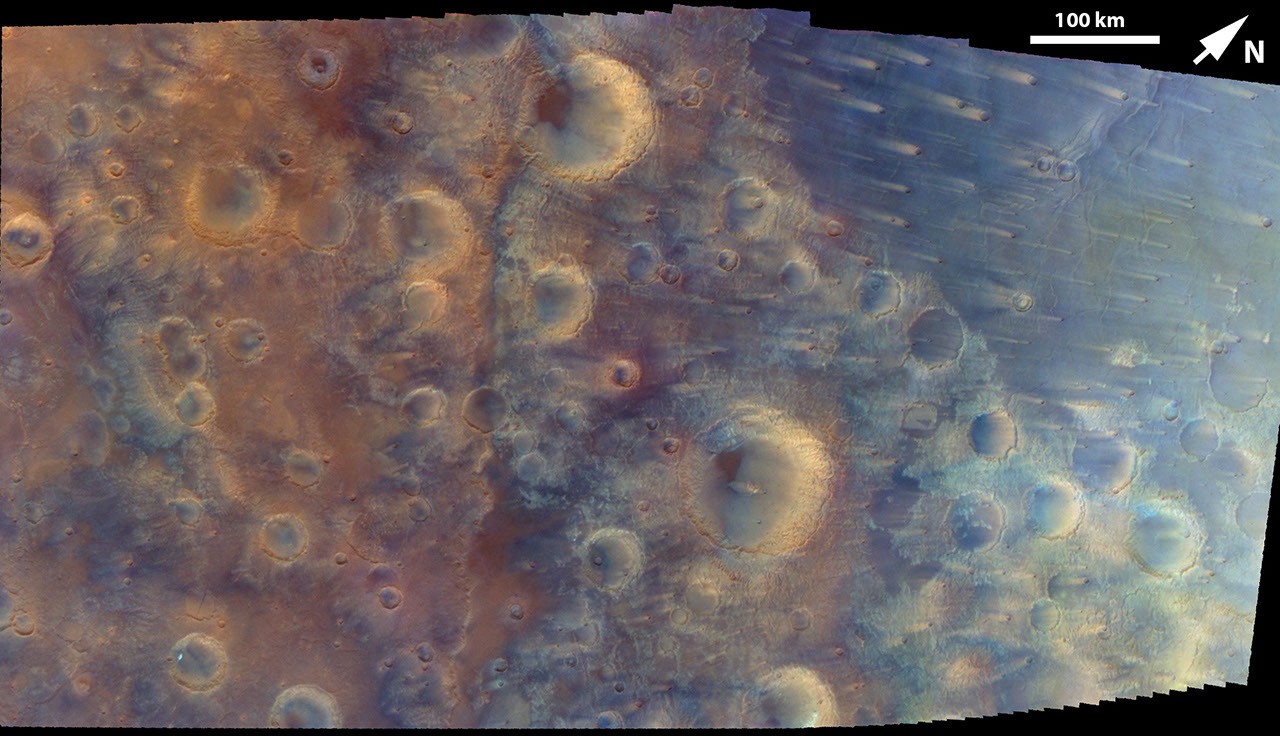
The mission’s multispectral imager, consisting of a pair of identical cameras, documented the planet’s transformation from a distant, thin crescent into a detailed globe. According to Usatoday, NASA teams spent weeks processing these views after the May 15 encounter. The images reveal diverse geological features, including the vast Valles Marineris canyon system and the southern polar ice cap, which appeared in sharp detail shortly after the spacecraft’s closest approach.

The imaging team also captured evidence of environmental processes, such as wind-swept dust streaks near crater rims. These observations serve a dual purpose: they provide new visual data and allow mission scientists to calibrate the cameras by comparing the results with existing data from Mars orbiters and rovers like Curiosity and Perseverance.
Magnetometer and Spectrometer Performance
Beyond photography, the flyby acted as a high-stakes rehearsal for the primary mission. Researchers utilized the encounter to test instruments designed to analyze the asteroid Psyche, which scientists hypothesize may be the exposed core of an ancient planetesimal. The magnetometer, in particular, recorded its first planetary magnetic signature.
The gamma-ray and neutron spectrometer also underwent rigorous testing. While the altitude of the flyby was too high to detect gamma rays from Mars, the instrument successfully identified a predicted increase in neutron emissions, according to NASA. David Lawrence, science lead for the spectrometer at the Johns Hopkins Applied Physics Laboratory, noted that the data aligned with expectations.
Gravity Assist and Mission Trajectory
The primary engineering objective of the encounter was the gravity assist, a maneuver that allows spacecraft to use a planet’s gravitational pull to alter speed and direction. By harnessing Mars’ gravity, the Psyche spacecraft tilted its trajectory and gained momentum without relying on its onboard propulsion system. This efficiency is essential for the mission’s long-term health, as it preserves propellant for the complex maneuvers required once the spacecraft reaches the asteroid in 2029.
Reflecting on the unexpected utility of the flyby, Lindy Elkins-Tanton, the mission’s principal investigator at the University of California, Berkeley, summarized the team’s perspective in a statement reported by NASA: We didn’t anticipate big discoveries, given how extensively the planet has been studied, but we did complement Mars science with the data we collected through Psyche’s unique perspective.
The spacecraft is now continuing its cruise phase, with the next major milestone being its arrival at the main belt asteroid.